Incidence of Crohn's disease in Stockholm County 1955-1989
- PMID: 9391246
- PMCID: PMC1891542
- DOI: 10.1136/gut.41.4.480
Incidence of Crohn's disease in Stockholm County 1955-1989
Abstract
Aim: To evaluate the incidence of Crohn's disease in Stockholm County between 1955 and 1989.
Methods: A cohort of 1936 patients with Crohn's disease was retrospectively assembled. Incidence rates and changes in disease distribution were assessed.
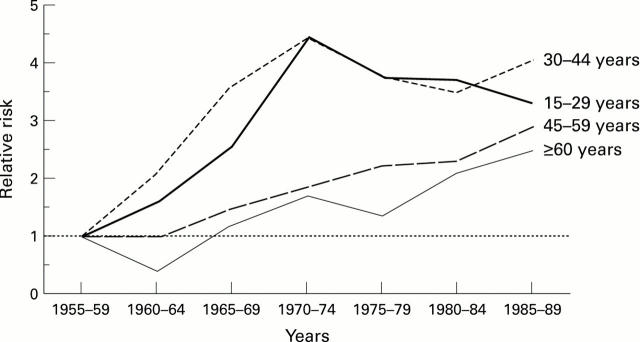
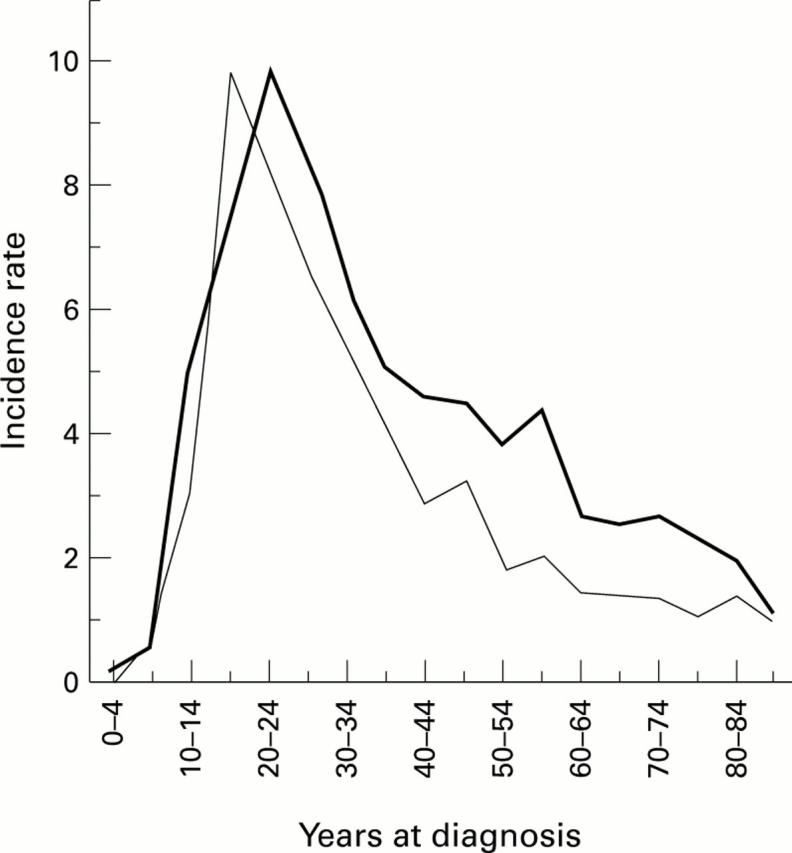
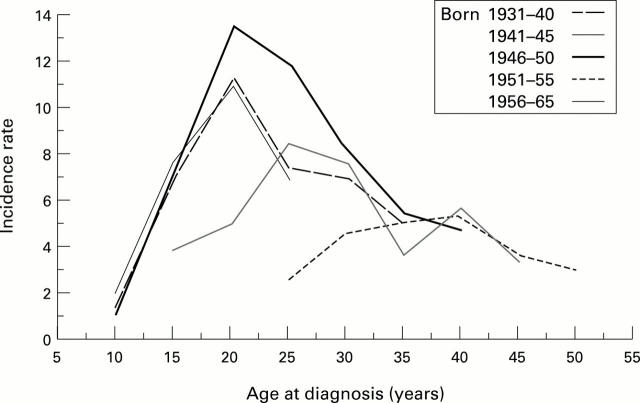
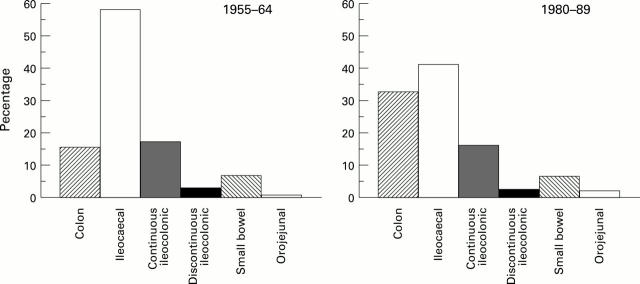
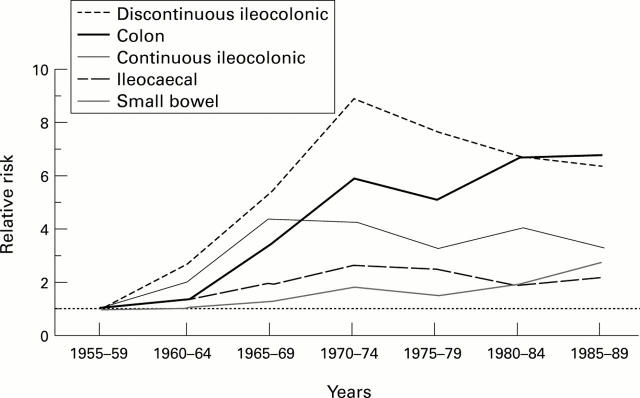
Results: The mean increase in incidence was 15% (95% confidence intervals 12% to 18%) per five year period with a mean annual incidence rate at 4.6/10(5) during the last two decades. The mean incidence for the entire study period was similar for men and women. The mean age at diagnosis increased from 25 years in 1960-64 to 32 years in 1985-89, partly because of an increasing proportion of patients aged at least 60 years at diagnosis. The proportion of patients with colonic Crohn's disease at the time of diagnosis increased from 15% to 32% (17% difference; 95% confidence intervals 12% to 23%) whereas the proportion of patients with ileocaecal disease decreased from 58% to 41% (17% difference; 95% confidence intervals 10% to 24%) during the study period. Elderly patients had a higher proportion of small bowel disease and a lower proportion of ileocolonic disease compared with the younger patients.
Conclusion: The incidence rate of Crohn's disease in Stockholm has stabilised at 4.6/10(5) and the proportion of elderly patients has increased during a 35 year period. Colonic Crohn's disease has increased in frequency with a reciprocal decrease in ileocaecal disease.
Figures
References
Publication types
MeSH terms
LinkOut - more resources
Full Text Sources
Other Literature Sources
Medical