Right ventricular dysfunction during coronary artery occlusion: pressure-volume analysis using conductance catheters during coronary angioplasty
- PMID: 9415008
- PMCID: PMC1892286
- DOI: 10.1136/hrt.78.5.480
Right ventricular dysfunction during coronary artery occlusion: pressure-volume analysis using conductance catheters during coronary angioplasty
Abstract
Objective: To study the effects of coronary artery occlusion on the pressure-volume relations of the right ventricle.
Design: Right ventricular pressure-volume cycles were studied using conductance catheters and micromanometers in 19 subjects undergoing coronary angioplasty in a tertiary referral cardiac centre.
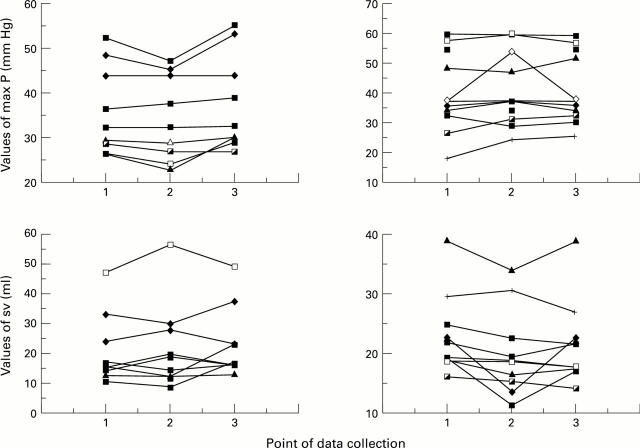
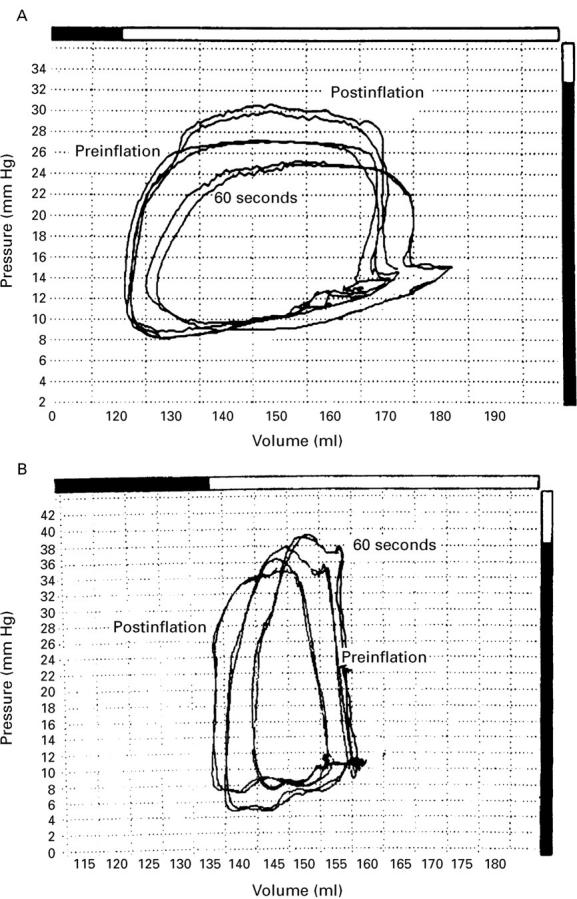
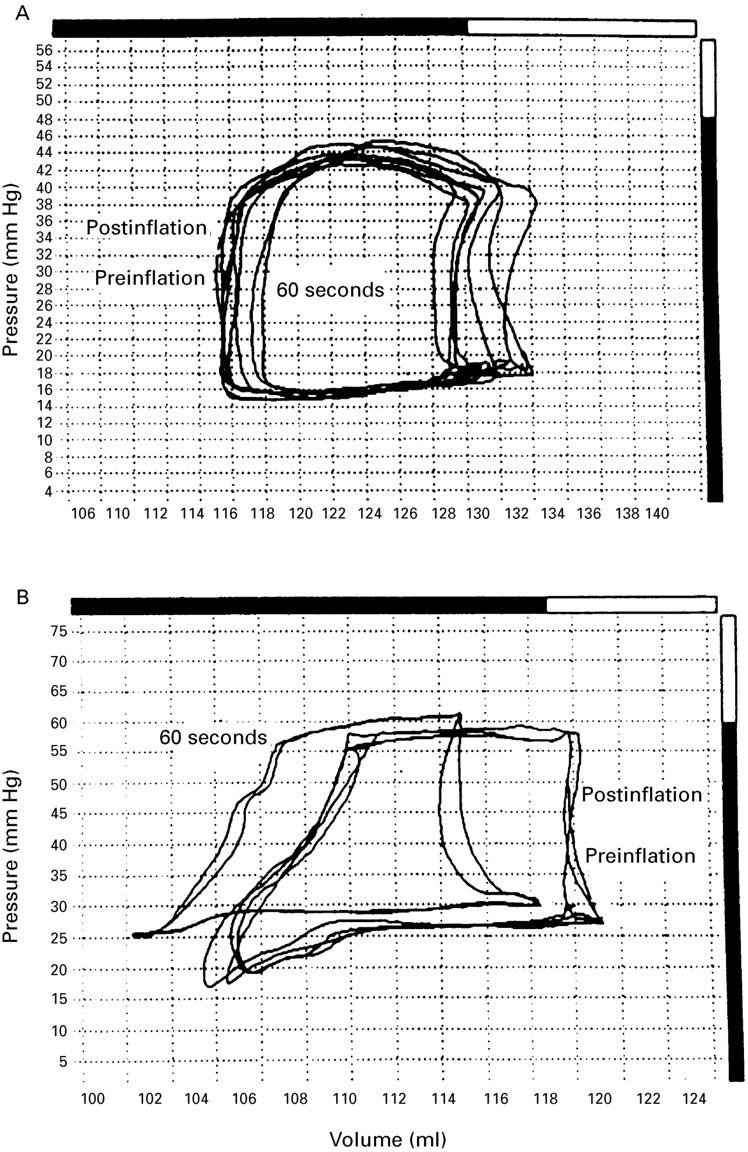
Results: Catheter occlusions of either the left anterior descending coronary artery or the right coronary artery were associated with a decline in stroke work (mean change (SD): left-13.3 (15.8)%, p = 0.008; right -13.5(16.5)%, p = 0.04). Two patterns of change were evident: an upward shift usually associated with occlusion in the left coronary artery, and a rightward shift in the right coronary artery. In the former there was an increase in maximum ventricular volume (mean change: 3.0(2.7)%, p = 0.004) and in minimum ventricular volume (mean change: 2.3(2.7)%, p = 0.01) and a fall in peak pressure (mean change: -4.8 (5.1)%, p = 0.04). In the latter there was an increase in peak pressure (mean change 9.9(16.3)%, p = 0.04) and an increase in minimum ventricular volume (mean change 3.7(5.0)%, p = 0.02) leading to a fall in stroke volume (mean change -13.3(15.8)%, p = 0.008).
Conclusions: Occlusion of the left anterior descending coronary artery or the right coronary artery is associated with a decline in right ventricular work. However, different patterns of change in indices of preload and afterload lead to different effects on overall right ventricular pump function.
Figures
References
Publication types
MeSH terms
LinkOut - more resources
Full Text Sources