


The glutamate-rich protein (GLURP) of Plasmodium falciparum is a target for antibody-dependent monocyte-mediated inhibition of parasite growth in vitro
- PMID: 9423833
- PMCID: PMC107852
- DOI: 10.1128/IAI.66.1.11-17.1998
The glutamate-rich protein (GLURP) of Plasmodium falciparum is a target for antibody-dependent monocyte-mediated inhibition of parasite growth in vitro
Abstract
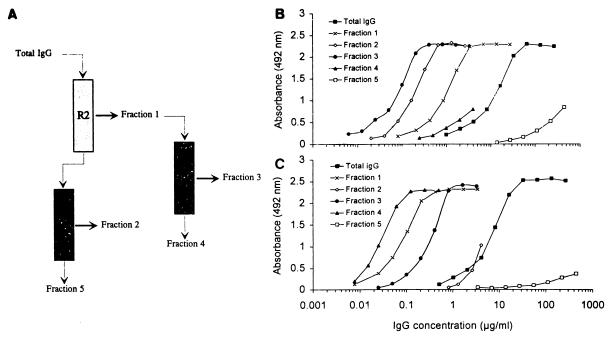
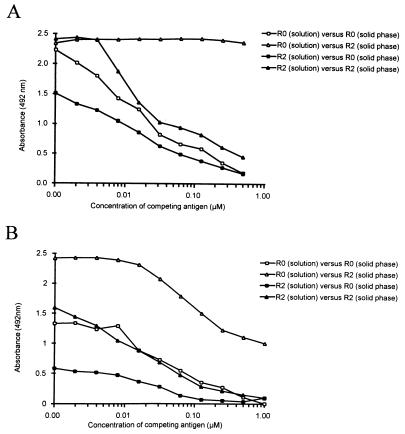
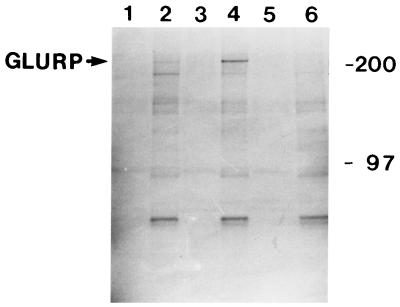
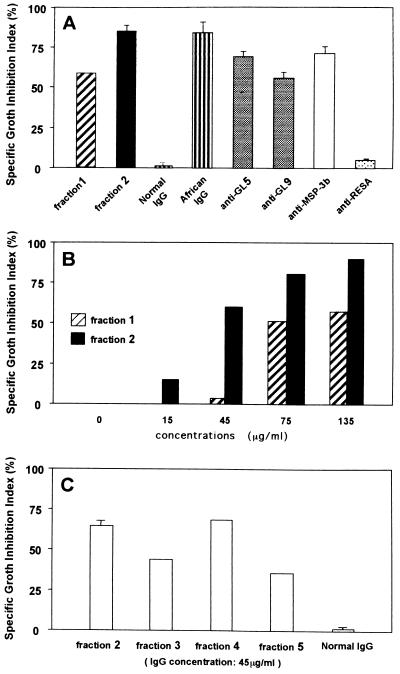
Monocyte-dependent as well as direct inhibitory effects of antimalarial antibodies point toward antigens accessible at the time of merozoite release as targets for biologically active antibodies capable of mediating protection against Plasmodium falciparum. The glutamate-rich protein (GLURP), being an antigen associated with mature schizont-infected erythrocytes, was therefore the object of the present investigation, in which we analyzed whether anti-GLURP antibodies can either interfere directly with merozoite invasion or act indirectly by promoting a monocyte-dependent growth inhibition, antibody-dependent cellular inhibition. GLURP-specific human immunoglobulin G (IgG) antibodies, from pooled IgG of healthy Liberian adults who were clinically immune to malaria, were purified by affinity chromatography on columns containing R0 (N-terminal nonrepetitive region of GLURP) or R2 (C-terminal repetitive region of GLURP) recombinant protein or synthetic peptides as ligands. Analysis of the pattern of reactivity of highly purified anti-GLURP antibodies led to the definition of at least four B-cell epitopes. One epitope was specific for R0, two were specific for R2, and the fourth displayed cross-reactivity between R0 and R2. None of the purified IgG antibodies had direct invasion-inhibitory effects, even at high concentrations. In contrast, when allowed to cooperate with monocytes, all anti-GLURP IgG preparations mediated a strong monocyte-dependent parasite growth inhibition in a dose-dependent manner.
Figures
References
-
- Anders R F. Multiple cross-reactivities amongst antigens of Plasmodium falciparum impair the development of protective immunity against malaria. Parasite Immunol. 1986;8:529–539. - PubMed
-
- Borre M B, Dziegiel M, Hogh B, Petersen E, Rieneck K, Riley E, Meis J F, Aikawa M, Nakamura K, Harada M, Wind A, Jakobsen P H, Cowland J, Jepsen S, Axelsen N H, Vuust J. Primary structure and localization of a conserved immunogenic Plasmodium falciparum glutamate rich protein (GLURP) expressed in both the preerythrocytic and erythrocytic stages of the vertebrate life cycle. Mol Biochem Parasitol. 1991;49:119–132. - PubMed
-
- Bottius E, Guanzirolli A, Trape J-F, Rogier C, Konate L, Druilhe P. Malaria: even more chronic in nature than previously thought; evidence for submicroscopic parasitaemia detectable by polymerase chain reaction. Trans R Soc Trop Med Hyg. 1996;90:15–19. - PubMed
-
- Bouharoun-Tayoun H, Attanah P, Sabchareon A, Chongsuphajaisiddhi T, Druilhe P. Antibodies that protect humans against Plasmodium falciparum blood stages do not on their own inhibit parasite growth and invasion in vitro, but act in cooperation with monocytes. J Exp Med. 1990;172:1633–1641. - PMC - PubMed
Publication types
MeSH terms
Substances
LinkOut - more resources
Full Text Sources
Other Literature Sources
Molecular Biology Databases
