


Survey of human group C rotaviruses in Japan during the winter of 1992 to 1993
- PMID: 9431910
- PMCID: PMC124797
- DOI: 10.1128/JCM.36.1.6-10.1998
Survey of human group C rotaviruses in Japan during the winter of 1992 to 1993
Abstract
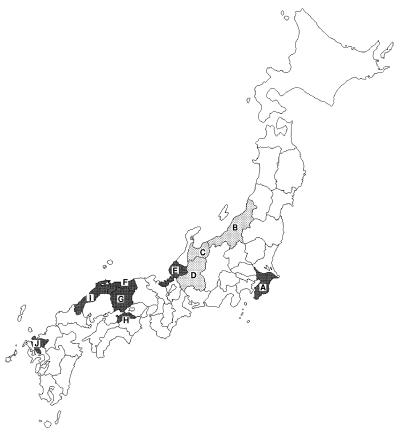
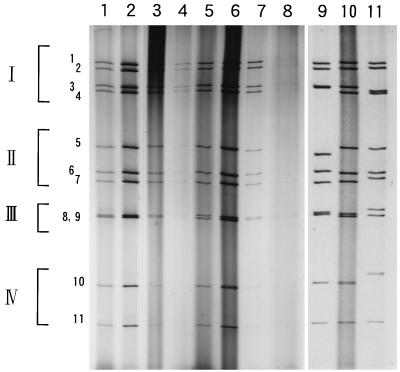
Fecal specimens from patients with acute diarrhea were collected from 10 prefectures in Japan over a 6-month period (November 1992 to April 1993), and the specimens that were negative for human group A rotaviruses were screened for the presence of human group C rotaviruses (CHRVs) by the reverse passive hemagglutination test. Of 784 specimens examined, 53 samples (6.8%) that were collected in 7 of 10 prefectures were positive for CHRV, indicating that CHRVs are widely distributed across Japan. Most of the CHRV isolates were detected in March and April, and CHRVs mainly prevailed in children ages 3 to 8 years. The genome electropherotypes of eight strains isolated in five individual prefectures were surprisingly similar to each other and were different from those of CHRV strains isolated to date. The outer capsid glycoprotein (VP7) gene homologies of the isolates retrieved in 1993 were subsequently analyzed by the dot blot hybridization method. As a result, the VP7 genes of the isolates revealed very high levels of homology not only with each other but also with the VP7 gene of the OK118 strain isolated in 1988. These results suggest that a large-scale outbreak of CHRV occurred during the winter of 1992 and 1993 in Japan.
Figures
References
Publication types
MeSH terms
Substances
Associated data
- Actions
LinkOut - more resources
Full Text Sources
Research Materials
Miscellaneous
