


Etiology of acute gastroenteritis in hospitalized children in Melbourne, Australia, from April 1980 to March 1993
- PMID: 9431936
- PMCID: PMC124823
- DOI: 10.1128/JCM.36.1.133-138.1998
Etiology of acute gastroenteritis in hospitalized children in Melbourne, Australia, from April 1980 to March 1993
Abstract
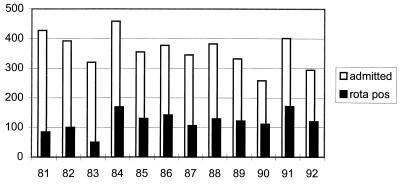
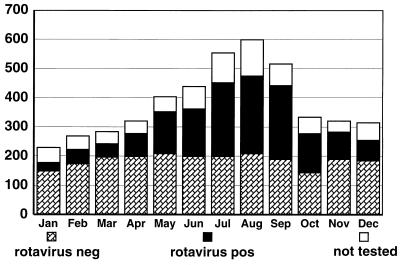
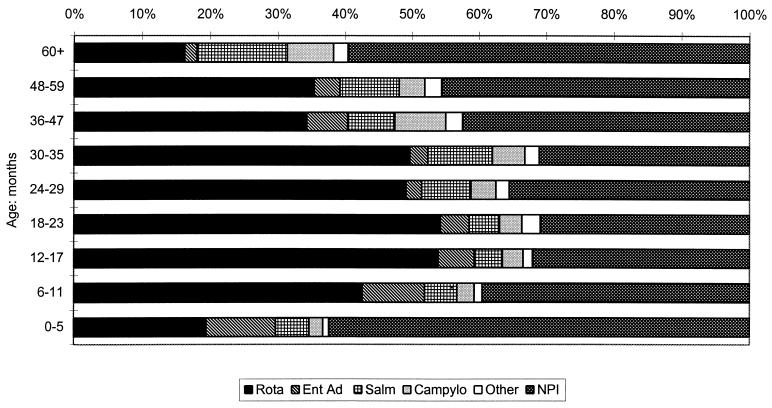
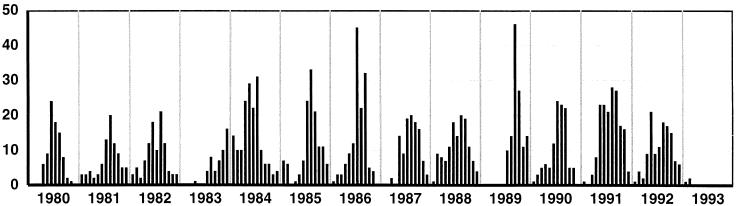
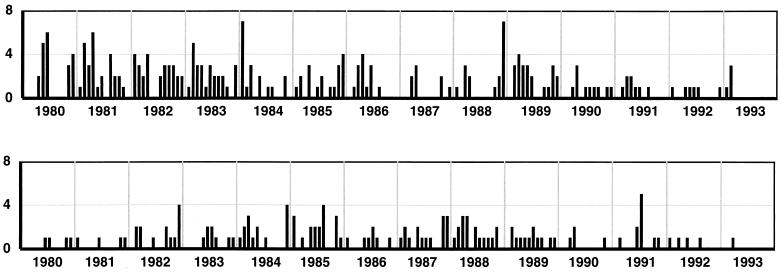
Acute infectious diarrhea is common in children. Control requires knowledge of causes. Few comprehensive long-term studies of etiology have been undertaken in developed countries. This report is of a 13-year survey of 4,637 children from 0 to 14 years of age, admitted to a large children's hospital for treatment of gastroenteritis, in which viruses, bacteria, and parasites were sought. A recognized enteric pathogen was identified in 56.6% of children. Group A rotaviruses occurred in 39.6% of children overall and in 55% of children 12 to 23 months of age. They were a frequent cause (18.7%) of acute gastroenteritis in children under 6 months and in those aged 5 to 13 years (16%). Rotaviruses were almost entirely responsible for winter admission peaks. Enteric adenovirus types 40 and 41 (6% overall) were more frequent in children under 12 months (9.4%). Salmonella spp. (5.8%) and Campylobacter jejuni (3.4%) were more common in children over 5 years (13.1% and 6.7%, respectively). The 43.5% of cases (60% in children under 6 months) where no enteric pathogen was identified are cause for concern. The involvement of small viruses (including caliciviruses and astroviruses) may be clarified when molecular biology techniques are utilized to address this gap in our knowledge. This comprehensive 13-year study of the cause of acute infectious diarrhea in children in developed countries reinforces the importance of rotavirus and highlights a large group for whom the etiology remains unknown, an issue of particular concern with babies under 6 months of age. New techniques have the potential to identify old and new pathogens causing disease in these vulnerable infants.
Figures
References
-
- Bass D M, Greenberg H B. Pathogenesis of viral gastroenteritis. In: Field M, editor. Diarrheal diseases. New York, N.Y: Elsevier; 1991. pp. 139–157.
-
- Bern C, Glass R I. Impact of diarrheal diseases worldwide. In: Kapikian A Z, editor. Viral infections of the gastrointestinal tract. 2nd ed. New York, N.Y: Marcel Dekker; 1994. pp. 1–26.
-
- Black R E. Epidemiology of diarrheal disease: implications for control by vaccines. Vaccine. 1993;11:100–106. - PubMed
Publication types
MeSH terms
LinkOut - more resources
Full Text Sources
Medical
Miscellaneous
