


Morphological and molecular identification of Trichoderma isolates on North American mushroom farms
- PMID: 9435070
- PMCID: PMC124683
- DOI: 10.1128/AEM.64.1.133-137.1998
Morphological and molecular identification of Trichoderma isolates on North American mushroom farms
Abstract
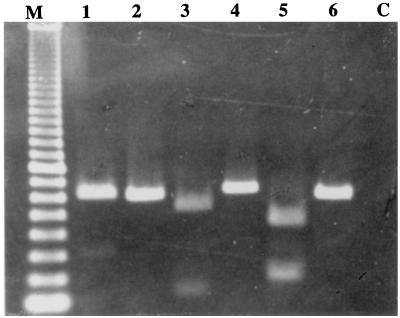
Green mold disease (causal agent, Trichoderma) has resulted in severe crop losses on mushroom farms worldwide in recent years. We analyzed 160 isolates of Trichoderma from mushroom farms for morphological, cultural, and molecular characteristics and classified these isolates into phenotypic groups. The most common group comprised approximately 40% of the isolates and was identified as a strain of Trichoderma harzianum. This group was consistently recovered from farms with severe green mold disease but not from farms with little or no problem. In addition, the strain identified as the major cause of green mold disease in Ireland and the United Kingdom grouped with these North American isolates in having very similar randomly amplified polymorphic DNA patterns.
Figures
References
-
- Bissett J. A revision of the genus Trichoderma. I. Section Longibrachiatum sect. nov. Can J Bot. 1984;62:924–931.
-
- Bissett J. A revision of the genus Trichoderma. II. Infrageneric classification. Can J Bot. 1991;69:2357–2372.
-
- Bissett J. A revision of the genus Trichoderma. III. Section Pachybasium. Can J Bot. 1991;69:2373–2417.
-
- Bissett J. A revision of the genus Trichoderma. IV. Additional notes on section Longibrachiatum. Can J Bot. 1991;69:2418–2420.
-
- Bissett, J. Unpublished data.
Publication types
MeSH terms
Substances
LinkOut - more resources
Full Text Sources
Medical
