


Identification of highly attenuated mutants of simian immunodeficiency virus
- PMID: 9445045
- PMCID: PMC124623
- DOI: 10.1128/JVI.72.2.1431-1437.1998
Identification of highly attenuated mutants of simian immunodeficiency virus
Abstract
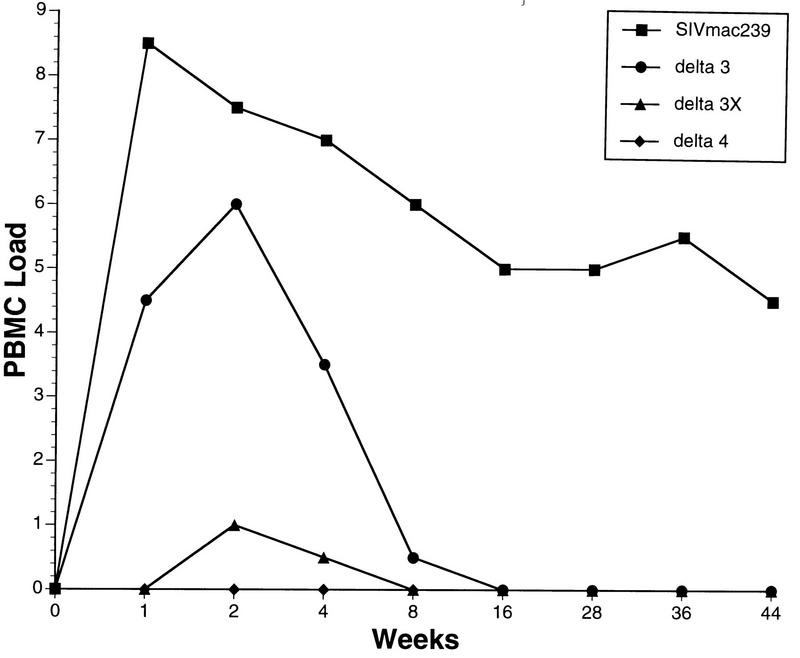
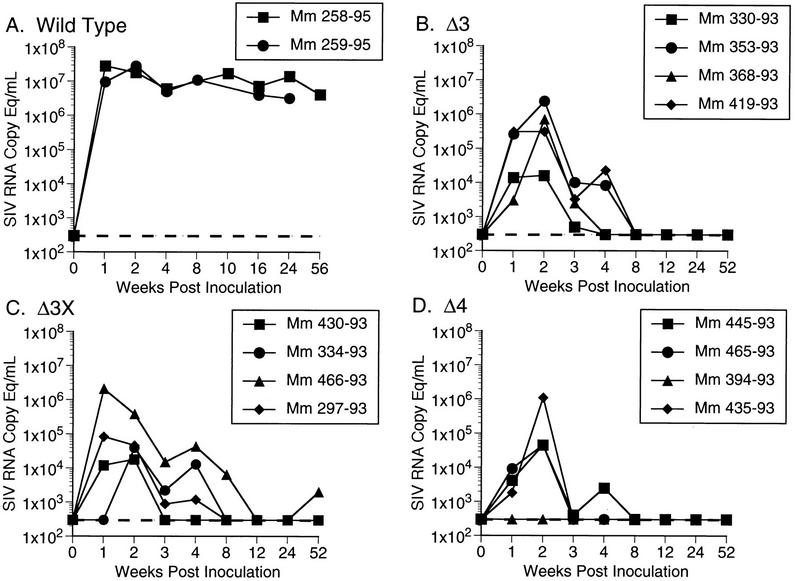
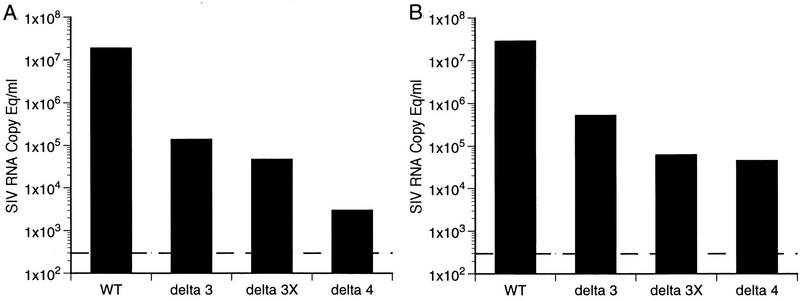
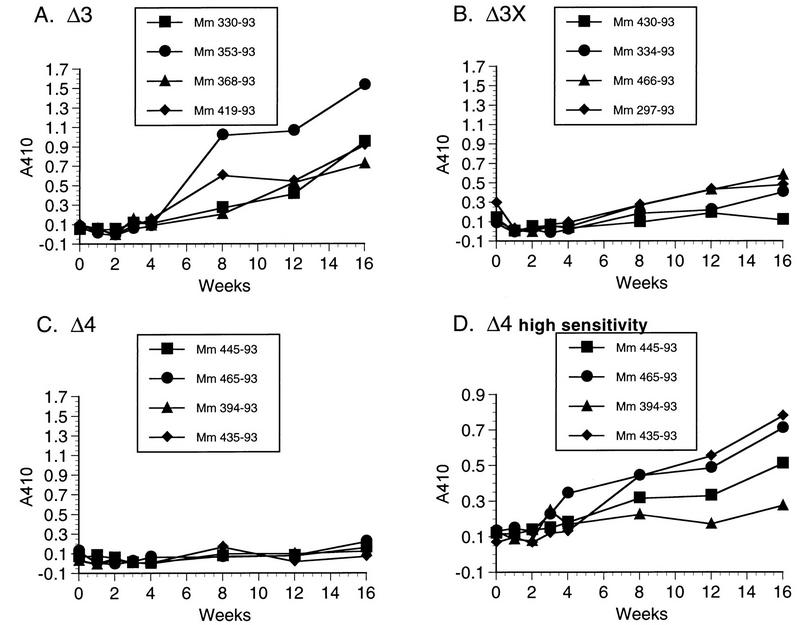
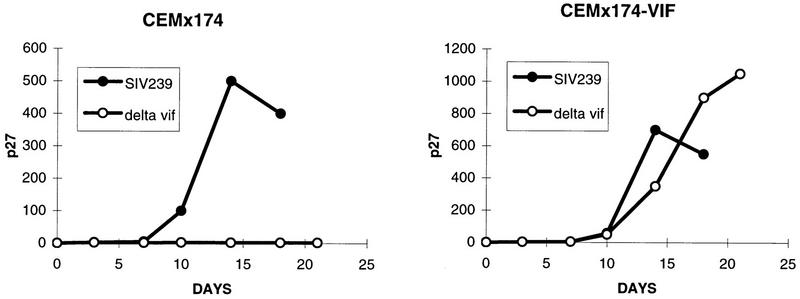
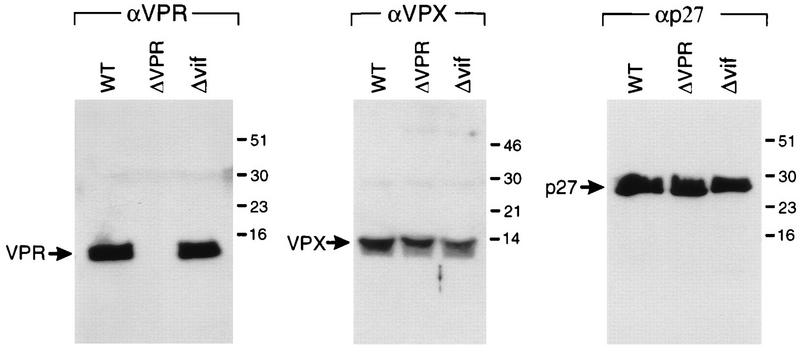
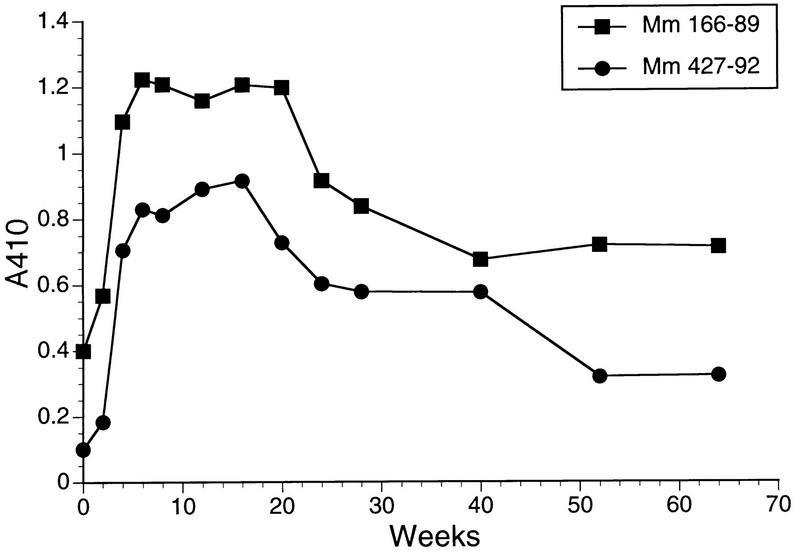
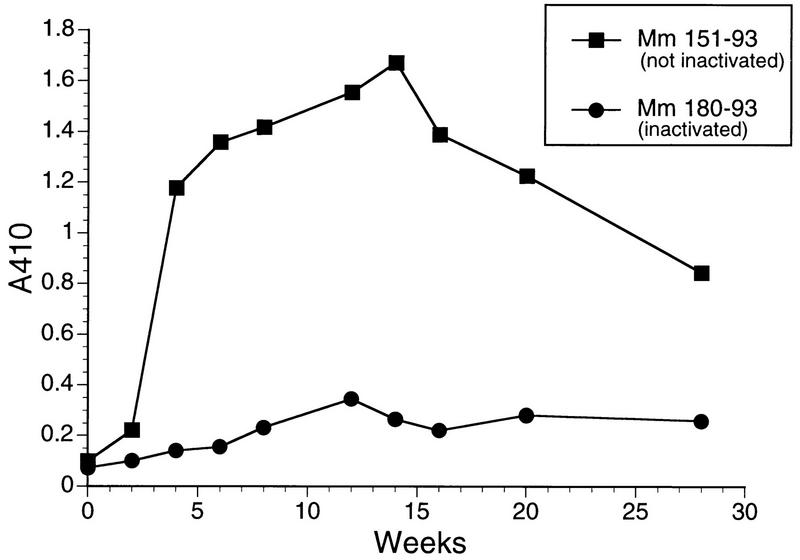
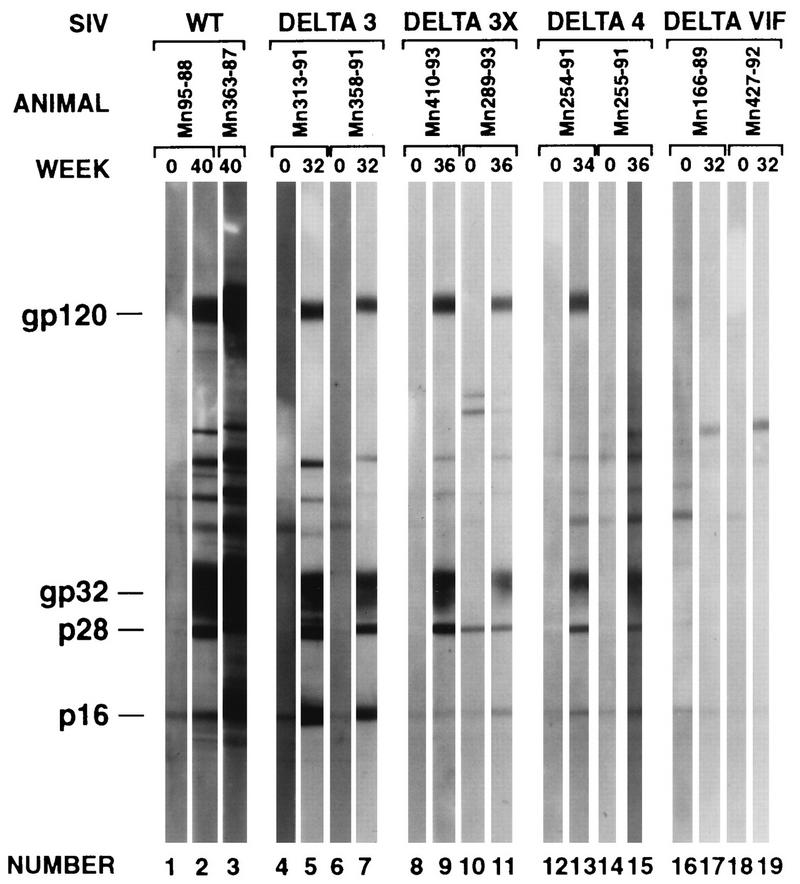
Deletion mutants of the pathogenic clone of simian immunodeficiency virus isolate 239 (SIVmac239) were derived that are missing nef, vpr, and upstream sequences (US) in the U3 region of the LTR (SIVmac239 delta3), nef, vpx, and US (SIVmac239 delta3x), and nef, vpr, vpx, and US (SIVmac239 delta4). These multiply deleted derivatives replicated well in the continuously growing CEMx174 cell line and were infectious for rhesus monkeys. However, on the basis of virus load measurements, strength of antibody responses, and lack of disease progression, these mutants were highly attenuated. Measurements of cell-associated viral load agreed well with assays of plasma viral RNA load and with the strengths of the antibody responses; thus, these measurements likely reflected the extent of viral replication in vivo. A derivative of SIVmac239 lacking vif sequences (SIVmac239 delta vif) could be consistently grown only in a vif-complementing cell line. This delta vif virus appeared to be very weakly infectious for rhesus monkeys on the basis of sensitive antibody tests only. The weak antibody responses elicited by SIVmac239 delta vif were apparently in response to low levels of replicating virus since they were not elicited by heat-inactivated virus and the anti-SIV antibody responses persisted for greater than 1 year. These results, and the results of previous studies, allow a rank ordering of the relative virulence of nine mutant strains of SIVmac according to the following order: delta vpr > delta vpx > delta vpr delta vpx approximately delta nef > delta3 > delta3x > or = delta4 > delta vif > delta5. The results also demonstrate that almost any desired level of attenuation can be achieved, ranging from still pathogenic in a significant proportion of animals (delta vpr and delta vpx) to not detectably infectious (delta5), simply by varying the number and location of deletions in these five loci.
Figures
References
-
- Almond N, Kent K, Cranage M, Rud E, Clarke B, Stott E J. Protection by attenuated simian immunodeficiency virus in macaques against challenge with virus-infected cells. Lancet. 1995;345:1342–1344. - PubMed
-
- Clements J E, Montelaro R C, Zink M C, Amedee A M, Miller S, Trichel A M, Jagerski B, Hauer D, Martin L N, Bohm R P, Murphey-Corb M. Protective immune responses induced in rhesus macaques by immunization with attenuated macrophage-tropic simian immunodeficiency virus. J Virol. 1995;69:2737–2744. - PMC - PubMed
-
- Clerici M, Clark E A, Polacino P, Axberg I, Kuller L, Casey N I, Morton W R, Shearer G M, Benveniste R E. T-cell proliferation to subinfectious SIV correlates with lack of infection after challenge of macaques. AIDS. 1994;8:1391–1395. - PubMed
-
- Daniel M D, Kirchhoff F, Czajak S C, Sehgal P K, Desrosiers R C. Protective effects of a live-attenuated SIV vaccine with a deletion in the nef gene. Science. 1992;258:1938–1941. - PubMed
-
- Daniel M D, Letvin N L, King N W, Kannagi M, Sehgal P K, Hunt R D, Kanki P J, Essex M, Desrosiers R C. Isolation of T-cell tropic HTLV-III-like retrovirus from macaques. Science. 1985;228:1201–1204. - PubMed
Publication types
MeSH terms
Grants and funding
LinkOut - more resources
Full Text Sources
Other Literature Sources
