


Activity of trovafloxacin (with or without ampicillin-sulbactam) against enterococci in an in vitro dynamic model of infection
- PMID: 9449263
- PMCID: PMC105458
- DOI: 10.1128/AAC.42.1.72
Activity of trovafloxacin (with or without ampicillin-sulbactam) against enterococci in an in vitro dynamic model of infection
Abstract
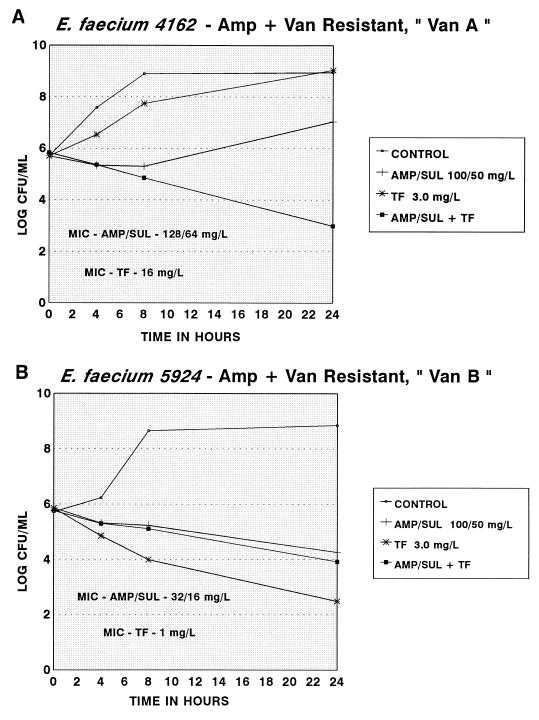
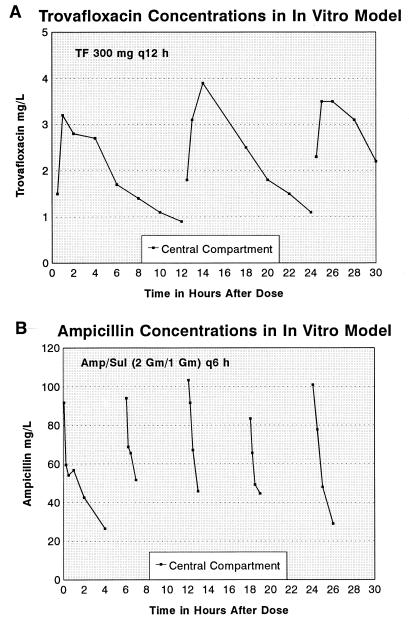
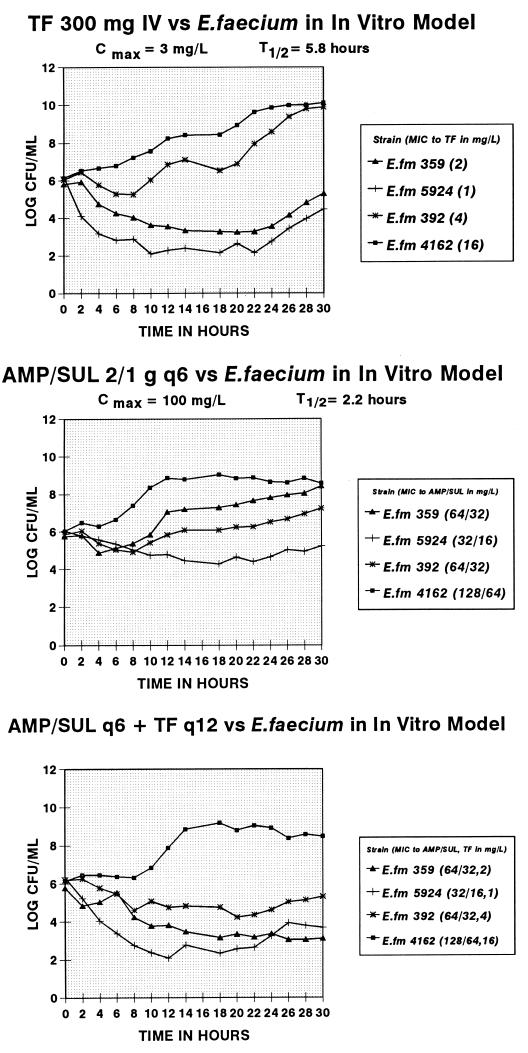
Antibiotic-resistant enterococci are being increasingly identified as causal agents of infection. Trovafloxacin is a new fluoronaphthyridone with enhanced activity against gram-positive cocci and variable activity reported against Enterococcus spp. Twenty-one strains of vancomycin-resistant Enterococcus faecium and two strains of Enterococcus faecalis (one vancomycin resistant) were studied at an initial inoculum of 10(6) CFU/ml in time-kill assays with trovafloxacin (3 mg/liter), ampicillin-sulbactam (100/50 mg/liter), and the combination. Six strains of E. faecium (five vancomycin resistant) also were studied in an in vitro two-compartment dynamic model that mimics human pharmacokinetics with trovafloxacin simulated at 300 mg every 12 h (q12h), ampicillin-sulbactam at 2/1 g q6h, and the combination. Peripheral compartments were sampled q2h for 30 h for bacterial counts. Trovafloxacin MICs ranged from 0.5 to 32 mg/liter, and the nine strains of vancomycin-resistant E. faecium for which MICs were < or =2 mg/liter were more likely to show a reduction of 2 log units or more in viable counts in time-kill assays than were strains for which MICs were higher. Synergism with ampicillin-sulbactam was found for only one strain (trovafloxacin MIC, 16 mg/liter). Similar results were obtained in the pharmacokinetic model, with 2- to 4-log-unit reductions in viable bacteria for trovafloxacin-susceptible strains. Although no convincing evidence of synergism was found, ampicillin-sulbactam in combination minimized late bacterial regrowth of two trovafloxacin-susceptible strains. These data suggest that this high dose of trovafloxacin (with or without ampicillin-sulbactam) might be useful against strains of vancomycin-resistant E. faecium for which MICs were < or =2 mg/liter.
Figures
References
-
- Bacquero F the Task Force of the General Direction for Health Planning of the Spanish Ministry of Health. Antibiotic resistance in Spain: what can be done? Clin Infect Dis. 1996;23:819–823. - PubMed
-
- Blaser, J., B. B. Stone, and S. H. Zinner. 1985. Two-compartment kinetic model with multiple artificial capillary units. J. Antimicrob. Chemother. 15(Suppl. A):131–137. - PubMed
-
- Bonilla H F, Zarins L T, Bradley S F, Kaufmann C A. Susceptibility of ciprofloxacin-resistant staphylococci and enterococci to trovafloxacin. Diagn Microbiol Infect Dis. 1996;26:17–21. - PubMed
-
- Centers for Disease Control and Prevention. Nosocomial enterococci resistant to vancomycin—United States, 1989–1993. Morbid Mortal Weekly Rep. 1993;42:597–599. - PubMed
Publication types
MeSH terms
Substances
LinkOut - more resources
Full Text Sources
Miscellaneous
