


Inoculum composition and Salmonella pathogenicity island 1 regulate M-cell invasion and epithelial destruction by Salmonella typhimurium
- PMID: 9453633
- PMCID: PMC107963
- DOI: 10.1128/IAI.66.2.724-731.1998
Inoculum composition and Salmonella pathogenicity island 1 regulate M-cell invasion and epithelial destruction by Salmonella typhimurium
Abstract
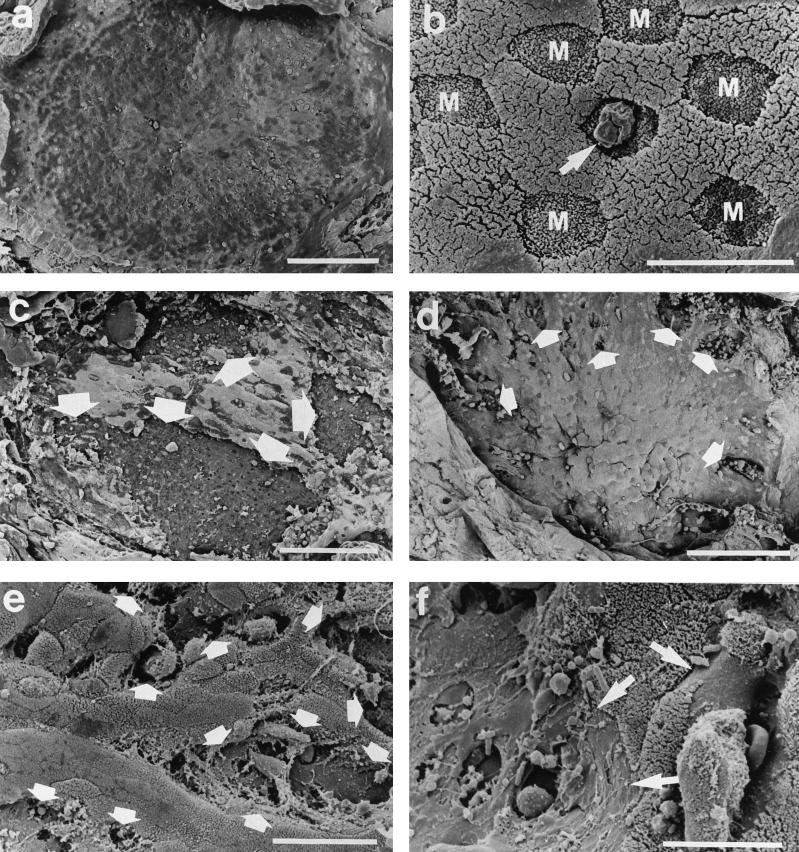
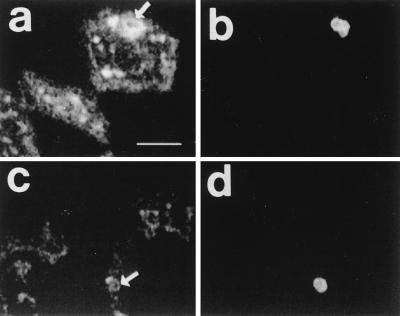
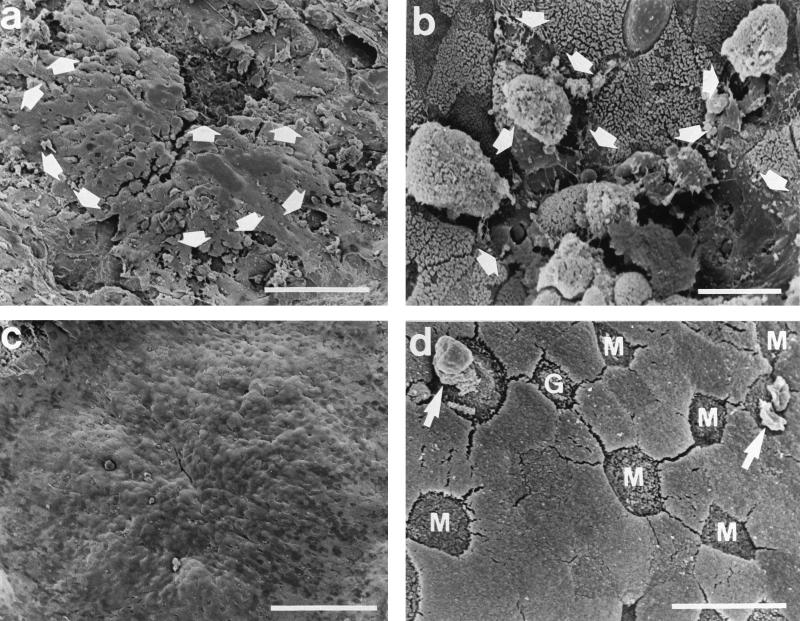
In the mouse model of Salmonella typhimurium infection, the specialized antigen-sampling intestinal M cells are the primary route of Salmonella invasion during the early stages of infection. Under certain experimental conditions, M-cell invasion is accompanied by M-cell destruction and loss of adjacent regions of the follicle-associated epithelium (FAE), although the conditions responsible for expression of the cytotoxic phenotype in a proportion of previous studies have not been defined. In the present study, we have demonstrated that the cytotoxic effect exerted by wild-type S. typhimurium on mouse Peyer's patch FAE is dependent on the inoculum composition. We have also demonstrated that the extent of FAE destruction correlates with the extent of M-cell invasion. Bacteria inoculated in Luria-Bertani (LB) broth induce extensive FAE loss and exhibit efficient M-cell invasion, whereas bacteria inoculated in phosphate-buffered saline fail to induce significant FAE disruption and invade M cells at significantly lower levels. Similarly, inoculation in LB significantly enhances invasion of Madin-Darby canine kidney cells by wild-type S. typhimurium. Mutants defective for expression of invA, a component of Salmonella pathogenicity island 1 which is vital for efficient invasion of cultured cells, fail to induce FAE destruction and, when inoculated in LB, are attenuated for M-cell invasion. Variation in inv gene expression is, therefore, one possible mechanism by which inoculate composition may regulate the virulence of wild-type S. typhimurium. Our findings suggest that the composition of the gut luminal contents may be critical in determining the outcome of naturally acquired Salmonella infections and that both vaccine formulation and dietary status of vaccine recipients may significantly affect the efficacy and safety of live Salmonella oral vaccine delivery systems.
Figures
References
-
- Bajaj V, Hwang C, Lee C A. hilA is a novel ompR/toxR family member that activates the expression of Salmonella typhimurium invasion genes. Mol Microbiol. 1995;18:715–727. - PubMed
-
- Bajaj V, Lucas R L, Hwang C, Lee C A. Co-ordinate regulation of Salmonella typhimurium invasion genes by environmental and regulatory factors is mediated by control of hilA expression. Mol Microbiol. 1996;22:703–714. - PubMed
-
- Clark C G, MacDonald L A, Ginocchio C C, Galán J E, Johnson R P. Salmonella typhimurium InvA expression probed with a monoclonal antibody to the C-terminal peptide of InvA. FEMS Microbiol Lett. 1996;136:263–268. - PubMed
Publication types
MeSH terms
Substances
LinkOut - more resources
Full Text Sources
