doi: 10.1128/CDLI.5.1.105-113.1998.
Immune function in healthy adolescents
Affiliations
- PMID: 9455890
- PMCID: PMC121401
- DOI: 10.1128/CDLI.5.1.105-113.1998
Item in Clipboard
Immune function in healthy adolescents
Clin Diagn Lab Immunol.
1998 Jan.
Abstract
In the present study, we examine immunological functioning in normal healthy African-American and Latino/Latina adolescents recruited from an inner-city high school and an inner-city clinic. A battery of tests was performed with enumerative and functional measures which encompassed both innate and adaptive immunity. We found immune differences related to age, gender, and race on both the enumerative and the functional immune measures. This data expands the available body of information concerning normal immunity in healthy adolescents.
Figures
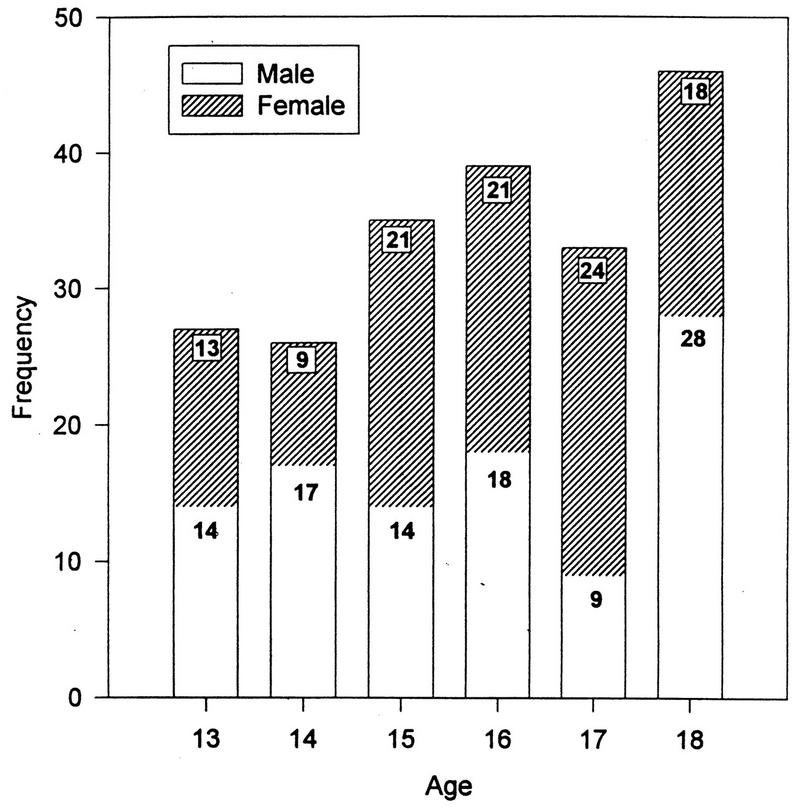
Age distribution as a function of gender (n = 206).
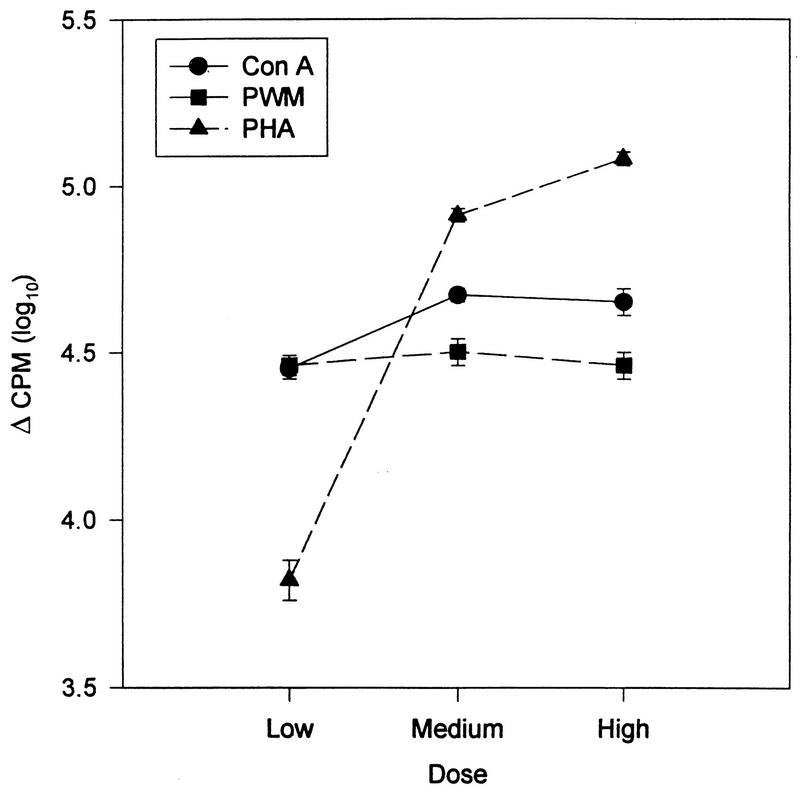
Dose-response curves of the lymphocytes to each of the three mitogens (ConA, PHA, and PWM). Data has been log transformed and is presented as the mean ± the standard error of the mean (n = 206).
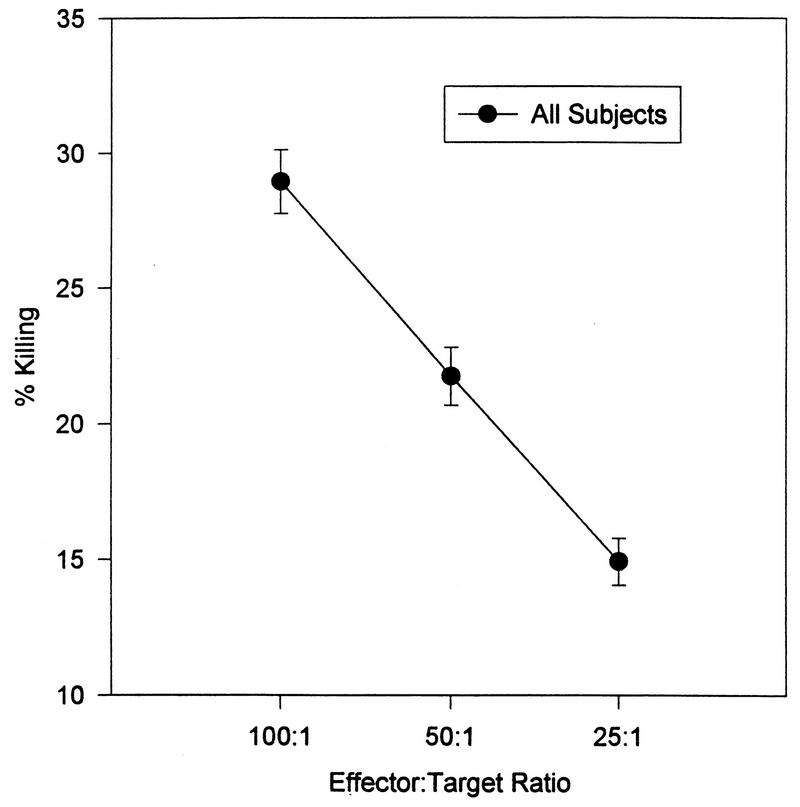
Dose-response curves of the NK cell killing at the three effector-to-target ratios. Data is presented as the mean ± the standard error of the mean (n = 206).
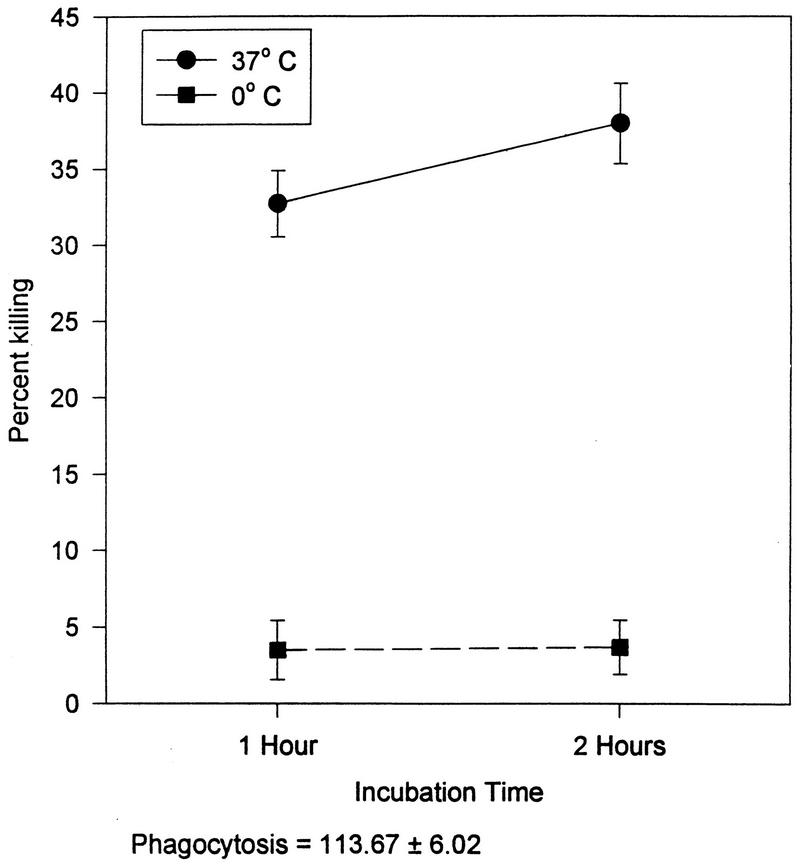
Killing of S. aureus by polymorphonuclear granulocytes. Data is presented as the mean ± the standard error of the mean (n = 206).
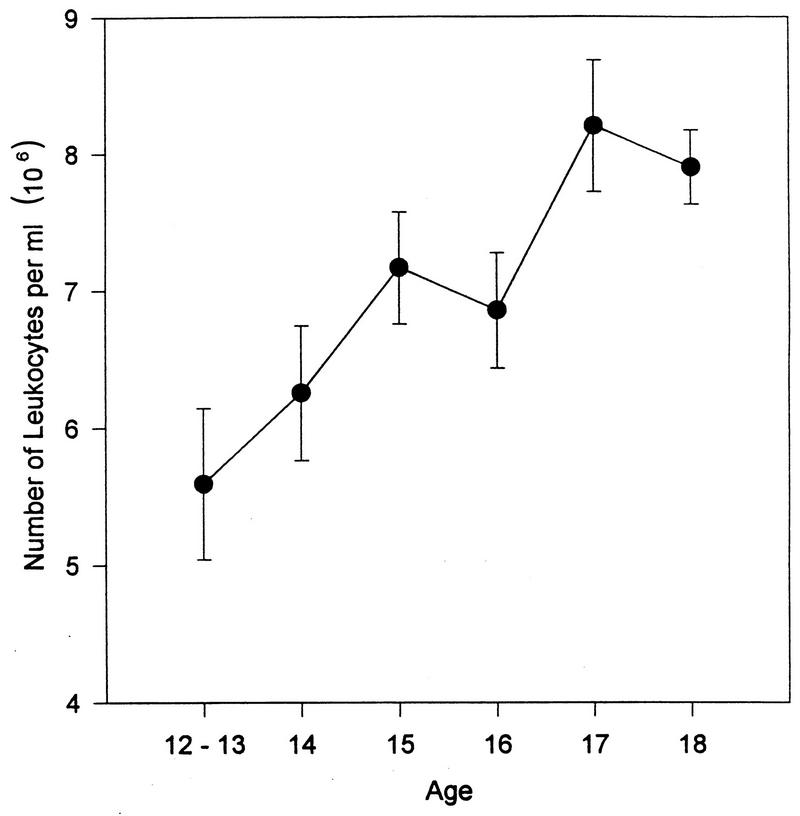
WBC (mean ± standard error) as a function of age; partial r, 0.25; P, <0.001.
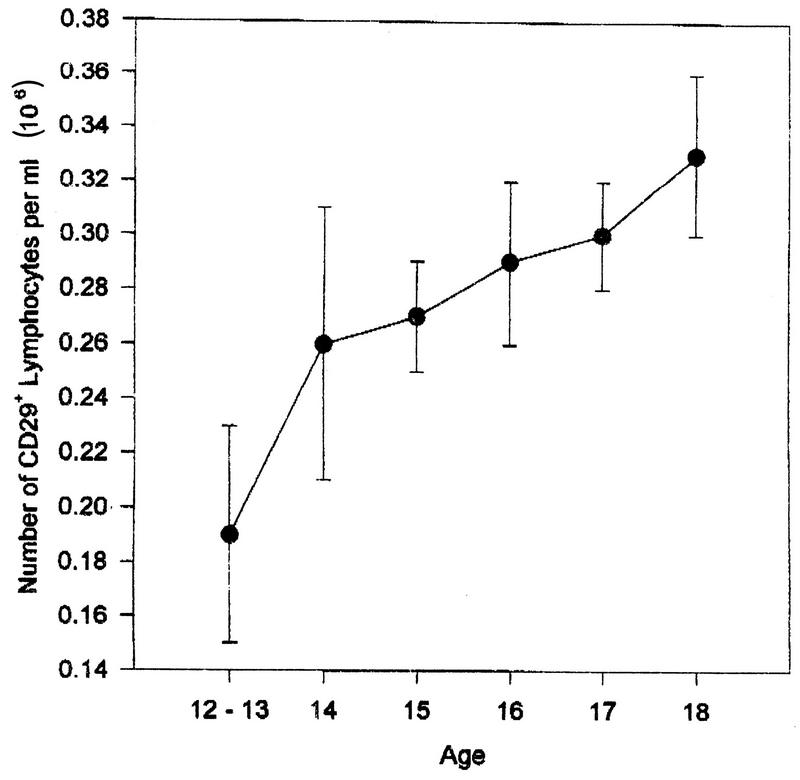
Percentage of CD29+ (inducer of help) as a function of age (mean ± standard error); partial r, 0.31, P, 0.001.
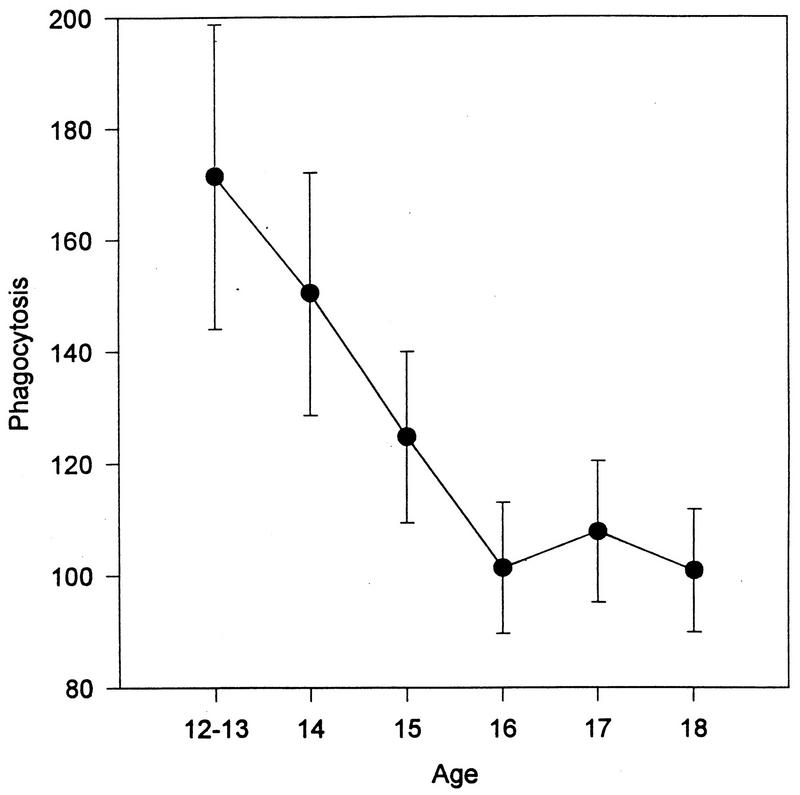
Number of S. aureus cells phagocytized as a function of age (P < 0.04). Data is presented as the mean ± standard error of the mean (n = 206). The 12- and 13-year-old subjects were combined due to the small number of subjects in these two groups.
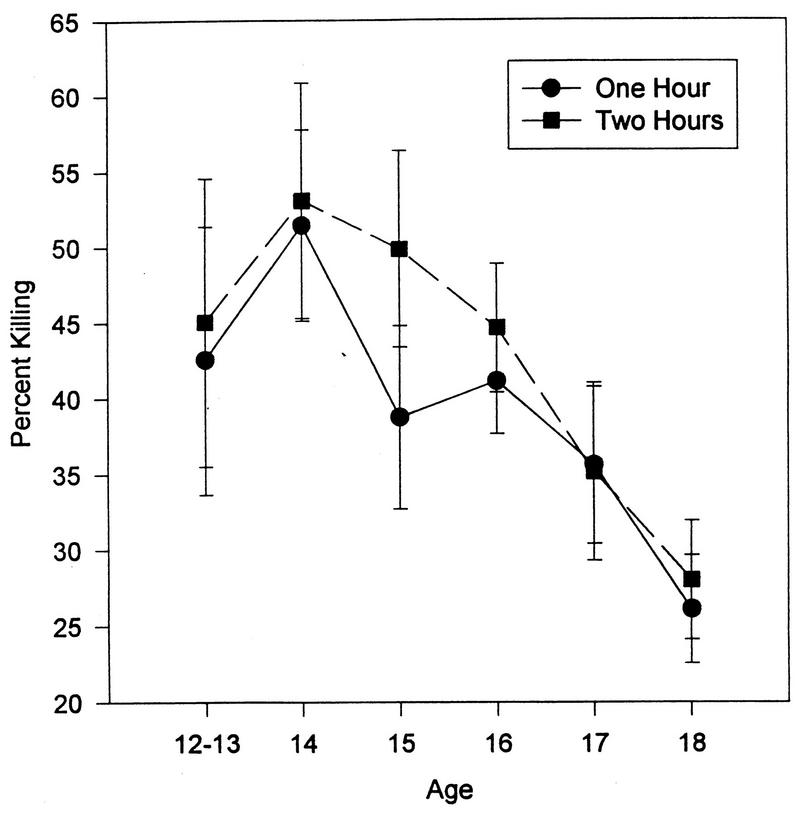
The percentage of S. aureus cells killed as a function of age (P < 0.01). The data is presented as the mean ± standard error of the mean (n = 206). The 12- and 13-year-old subjects were combined due to the small number of subjects in these two groups.
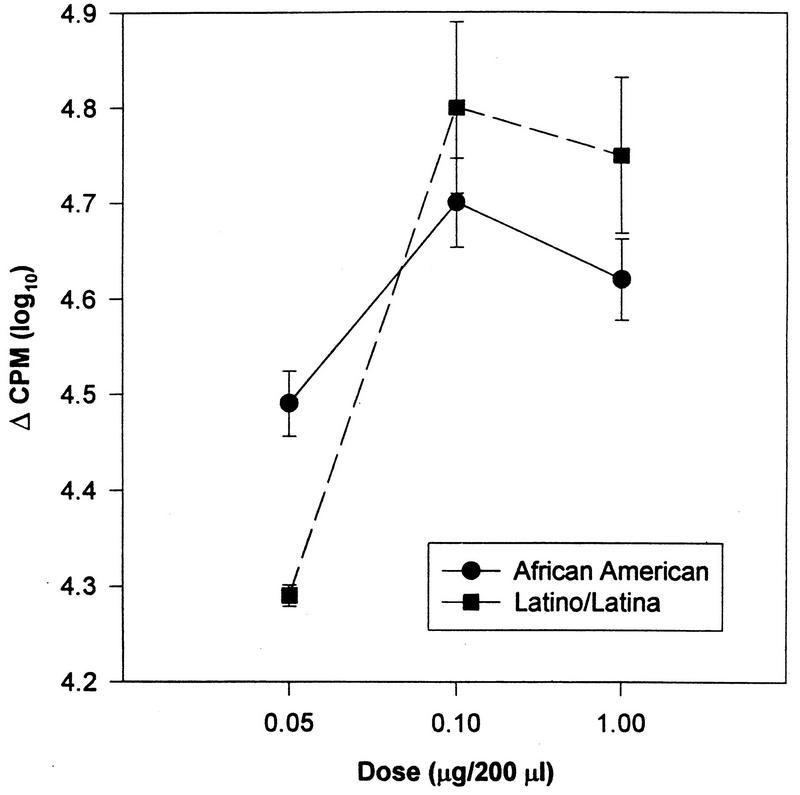
Lymphocyte proliferation in response to PWM by race (P < 0.0001). Data has been log transformed and is presented as the mean ± standard error of the mean (n = 206).
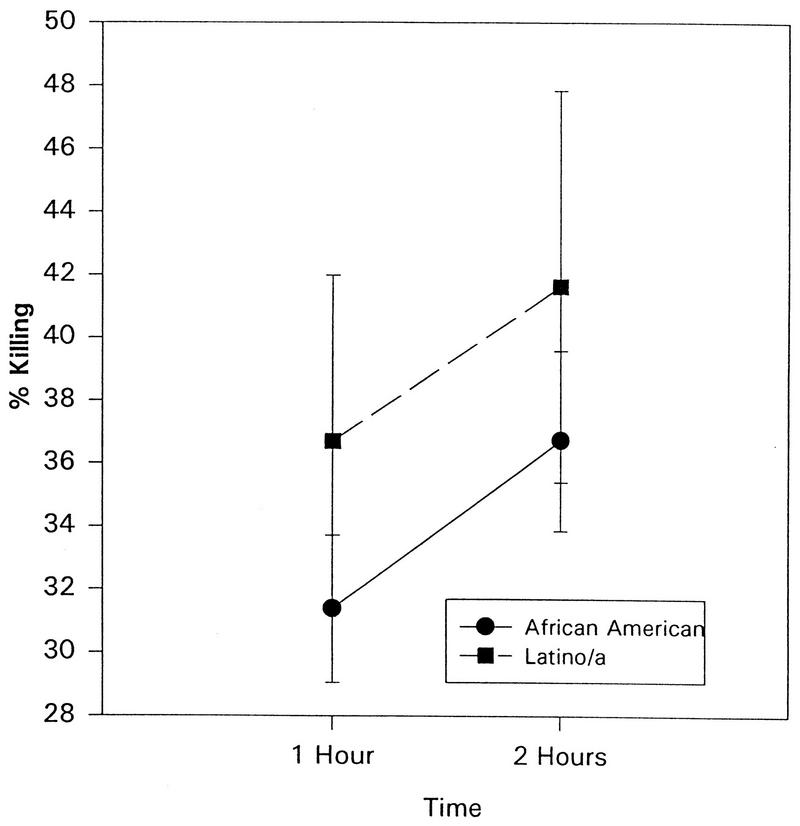
The percentage of S. aureus cells killed as a function of race (P < 0.05). The data is presented as the mean ± standard error of the mean (n = 206).
References
-
- Allen D B, Johanson A J, Blizzard R M. Growth hormone treatment. In: Lifshitz F, editor. Pediatric endocrinology. New York, N.Y: Marcel Dekker, Inc.; 1996.
-
- Athreya B H, Pletcher J, Zulian F, Weiner D B, Williams W V. Subset specific effects of sex hormones and pituitary gonadotropins on human lymphocyte proliferation in vitro. Clin Immunol Immunopathol. 1993;66:210–211. - PubMed
-
- Birmaher B, Rabin B S, Garcia M R, Jain U, Whiteside T L, Williamson D E, al-Shabbout M, Nelson B C, Dahl R E, Ryan N D. Cellular immunity in depressed, conduct disorder, and normal adolescents: role of adverse life events. J Am Acad Child Adolesc Psychiatry. 1994;33:671–678. - PubMed
-
- Callewaert D M, Moudgil V K, Radcliff G, Waite R. Hormone specific regulation of natural killer cells by cortisol. Direct inactivation of the cytotoxic function of cloned human NK cells without an effect on cellular proliferation. FEBS Lett. 1991;285:108–110. - PubMed
-
- Campbell R M, Scanes C G. Endocrine peptides ‘moonlighting’ as immune modulators: roles for somatostatin and GH-releasing factor. J Endocrinol. 1995;147:383–396. - PubMed
MeSH terms
Substances
LinkOut - more resources
Full Text Sources