


Size-selective predation on groundwater bacteria by nanoflagellates in an organic-contaminated aquifer
- PMID: 9464400
- PMCID: PMC106092
- DOI: 10.1128/AEM.64.2.618-625.1998
Size-selective predation on groundwater bacteria by nanoflagellates in an organic-contaminated aquifer
Abstract
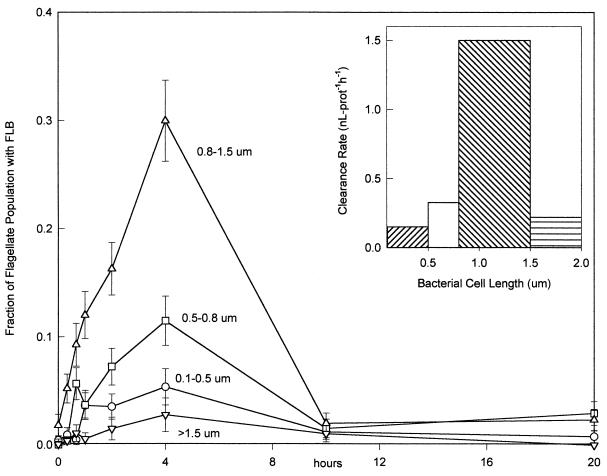
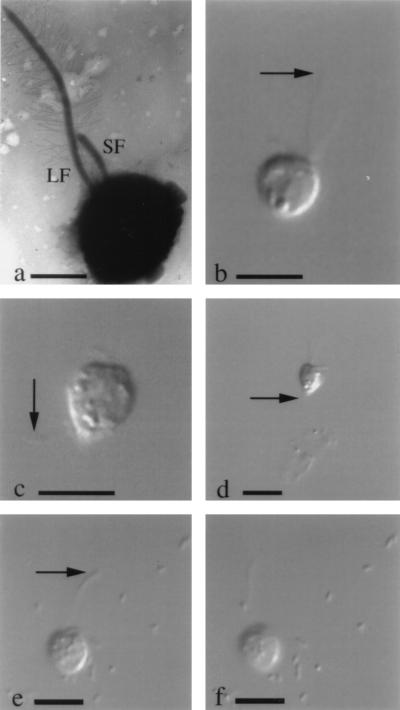
Time series incubations were conducted to provide estimates for the size selectivities and rates of protistan grazing that may be occurring in a sandy, contaminated aquifer. The experiments involved four size classes of fluorescently labeled groundwater bacteria (FLB) and 2- to 3-microns-long nanoflagellates, primarily Spumella guttula (Ehrenberg) Kent, that were isolated from contaminated aquifer sediments (Cape Cod, Mass.). The greatest uptake and clearance rates (0.77 bacteria.flagellate-1.h-1 and 1.4 nl.flagellate-1.h-1, respectively) were observed for 0.8- to 1.5-microns-long FLB (0.21-microns3 average cell volume), which represent the fastest growing bacteria within the pore fluids of the contaminated aquifer sediments. The 19:1 to 67:1 volume ratios of nanoflagellate predators to preferred bacterial prey were in the lower end of the range commonly reported for other aquatic habitats. The grazing data suggest that the aquifer nanoflagellates can consume as much as 12 to 74% of the unattached bacterial community in 1 day and are likely to have a substantive effect upon bacterial degradation of organic groundwater contaminants.
Figures
References
-
- Andersson A, Larsson U, Hagström Å. Size-selective grazing by a microflagellate on pelagic bacteria. Mar Ecol Prog Ser. 1986;33:51–57.
-
- Barcina I, Ayo B, Muela A, Egea L, Iriberri J. Predation rates of flagellate and ciliated protozoa on bacterioplankton in a river. FEMS Microbiol Ecol. 1991;85:141–150.
-
- Beloin R M, Sinclair J L, Ghiorse W C. Distribution and activity of microorganisms in subsurface sediments of a pristine study rate in Oklahoma. Microb Ecol. 1988;16:85–97. - PubMed
Publication types
MeSH terms
LinkOut - more resources
Full Text Sources
