


Genetic dissection of functional contributions of specific potassium channel subunits in habituation of an escape circuit in Drosophila
- PMID: 9482810
- PMCID: PMC6792913
- DOI: 10.1523/JNEUROSCI.18-06-02254.1998
Genetic dissection of functional contributions of specific potassium channel subunits in habituation of an escape circuit in Drosophila
Abstract
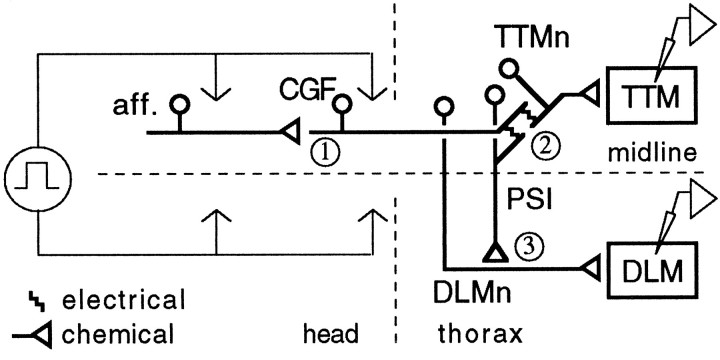
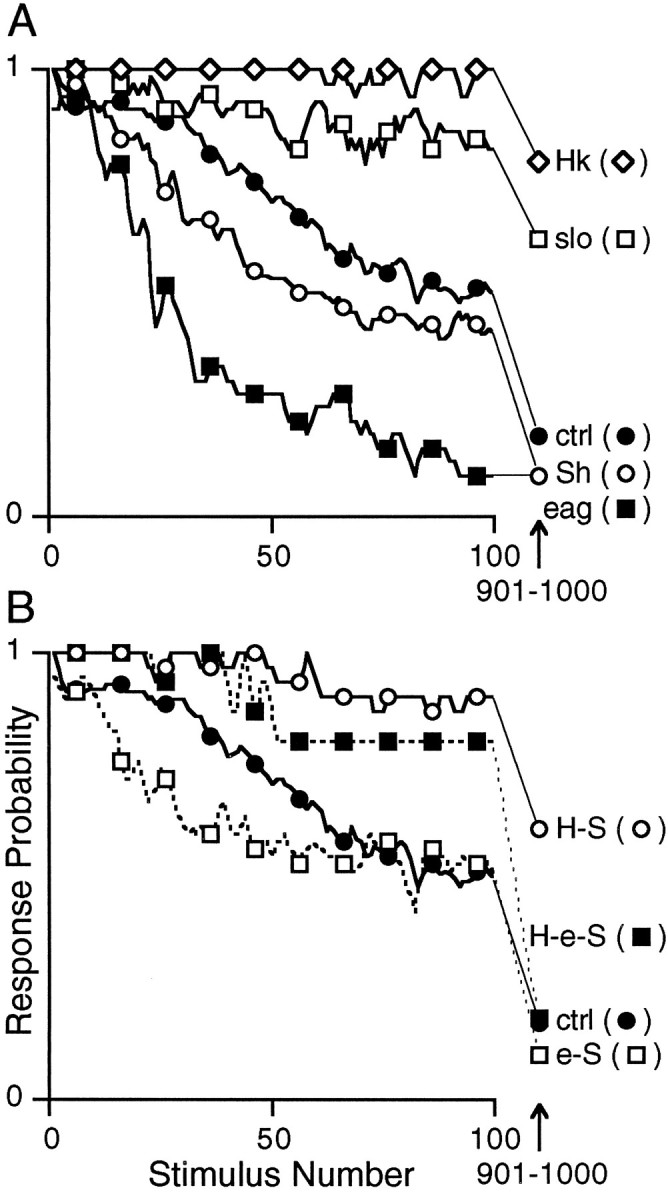
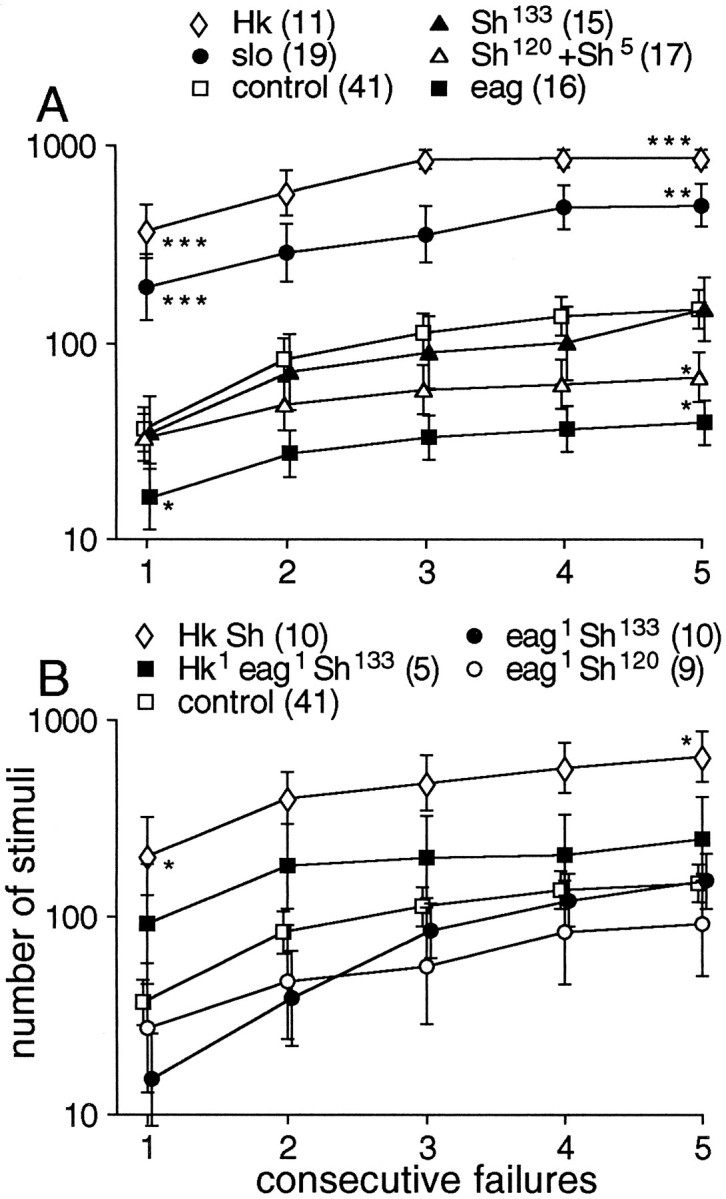
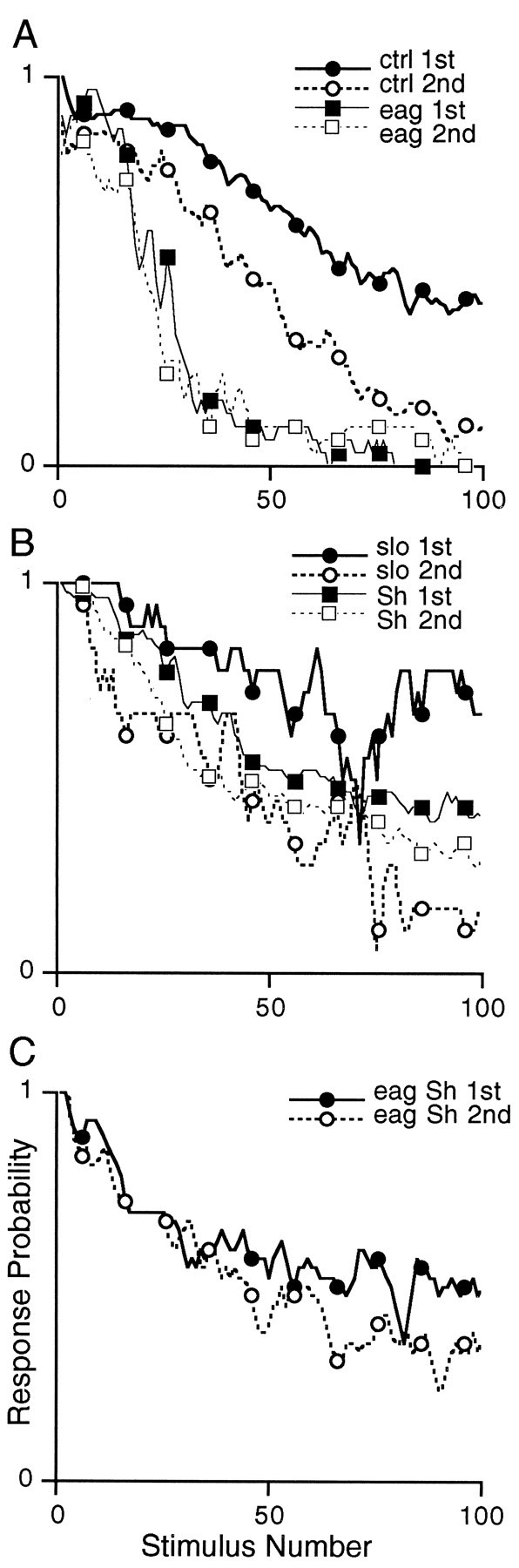
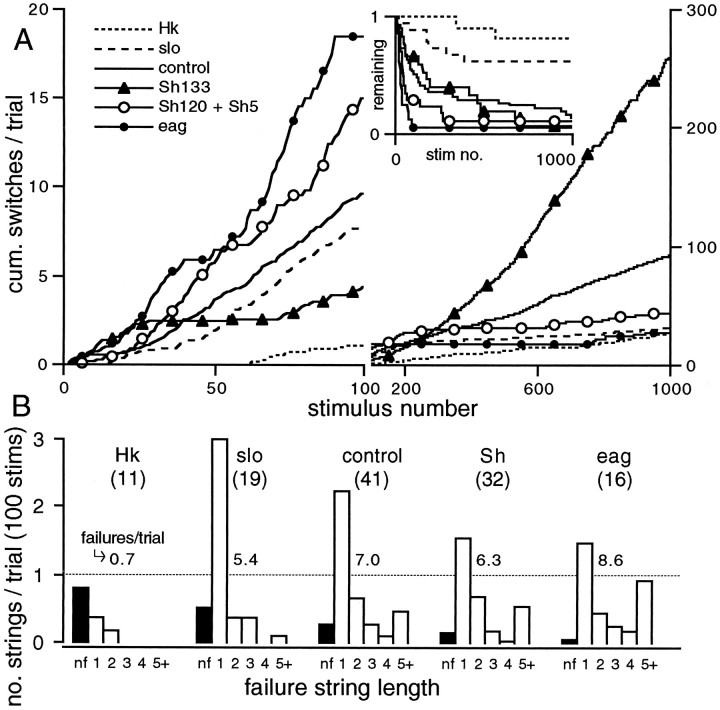
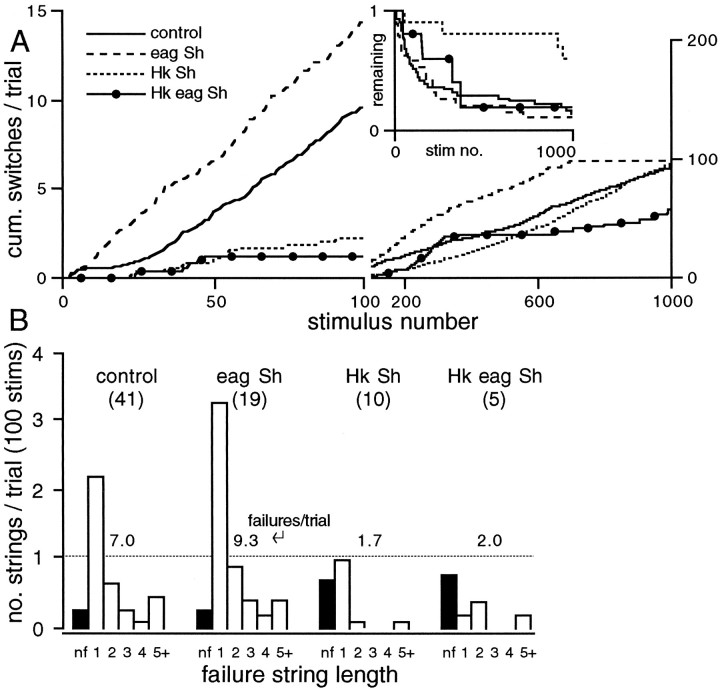
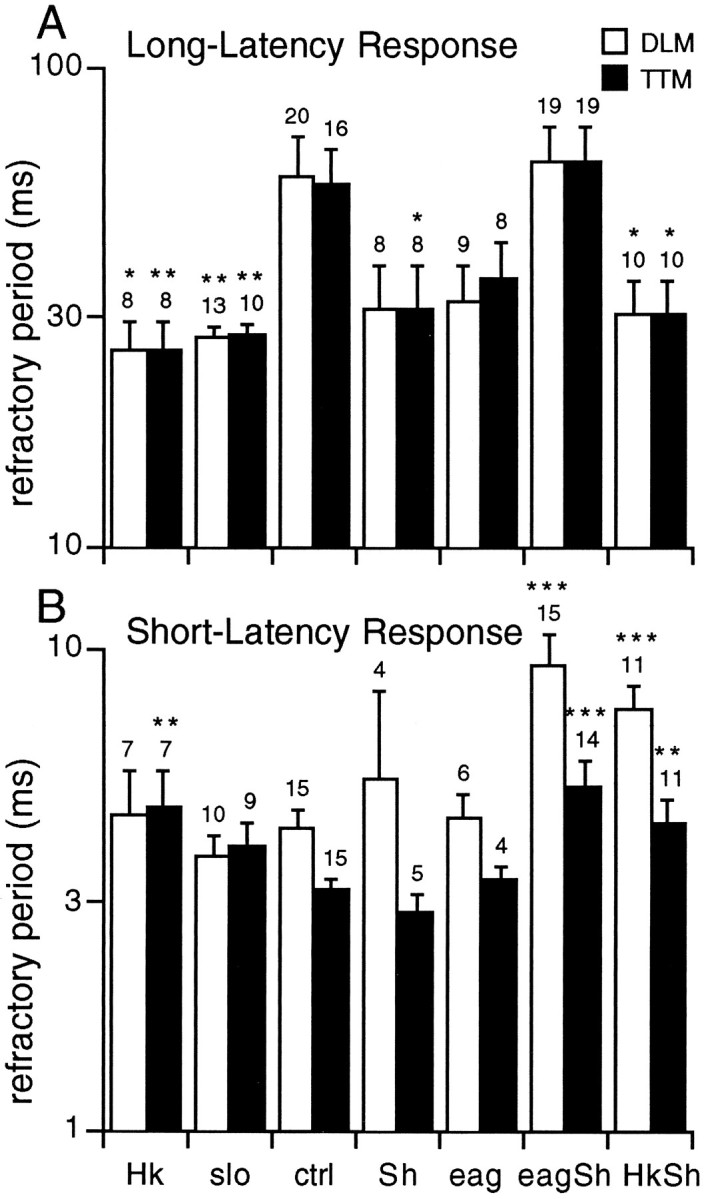
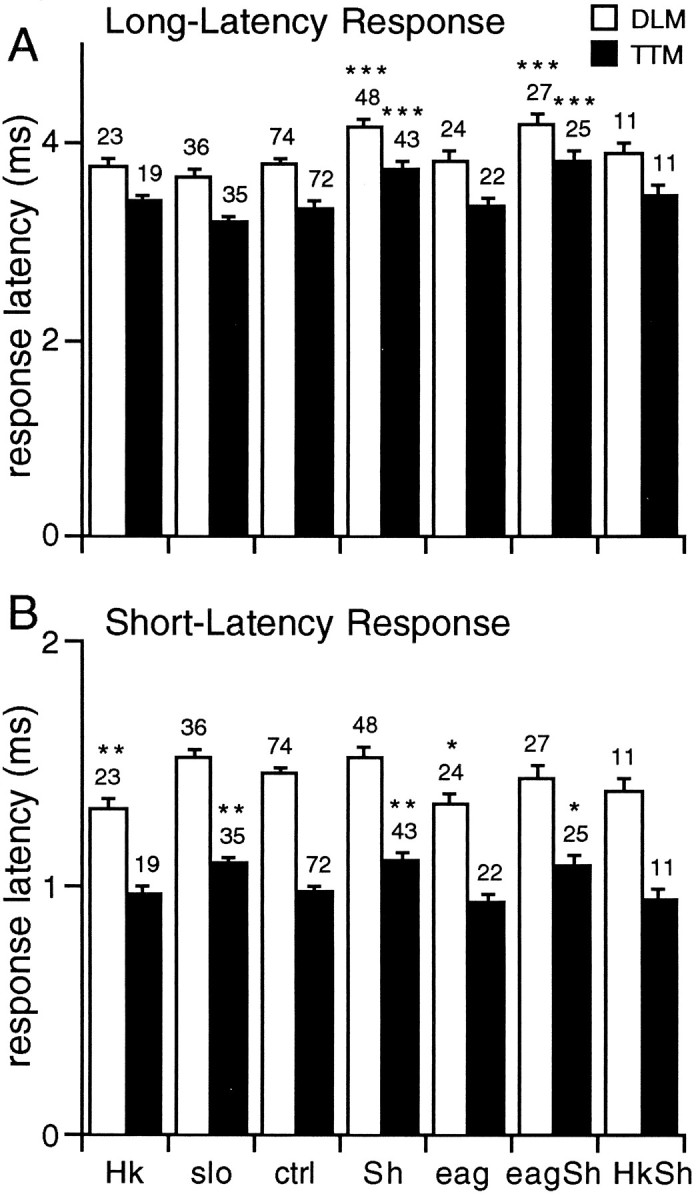
Potassium channels have been implicated in central roles in activity-dependent neural plasticity. The giant fiber escape pathway of Drosophila has been established as a model for analyzing habituation and its modification by memory mutations in an identified circuit. Several genes in Drosophila encoding K+ channel subunits have been characterized, permitting examination of the contributions of specific channel subunits to simple conditioning in an identified circuit that is amenable to genetic analysis. Our results show that mutations altering each of four K+ channel subunits (Sh, slo, eag, and Hk) have distinct effects on habituation at least as strong as those of dunce and rutabaga, memory mutants with defective cAMP metabolism (). Habituation, spontaneous recovery, and dishabituation of the electrically stimulated long-latency giant fiber pathway response were shown in each mutant type. Mutations of Sh (voltage-gated) and slo (Ca2+-gated) subunits enhanced and slowed habituation, respectively. However, mutations of eag and Hk subunits, which confer K+-current modulation, had even more extreme phenotypes, again enhancing and slowing habituation, respectively. In double mutants, Sh mutations moderated the strong phenotypes of eag and Hk, suggesting that their modulatory functions are best expressed in the presence of intact Sh subunits. Nonactivity-dependent responses (refractory period and latency) at two stages of the circuit were altered only in some mutants and do not account for modifications of habituation. Furthermore, failures of the long-latency response during habituation, which normally occur in labile connections in the brain, could be induced in the thoracic circuit stage in Hk mutants. Our work indicates that different K+ channel subunits play distinct roles in activity-dependent neural plasticity and thus can be incorporated along with second messenger "memory" loci to enrich the genetic analysis of learning and memory.
Figures


References
-
- Alkon DL. Biophysics of memory. In: Colatsky TJ, editor. Potassium channels: basic function and therapeutic aspects. Liss; New York: 1990. pp. 273–277.
-
- Atkinson NS, Robertson GA, Ganetzky B. A component of calcium-activated potassium channels encoded by the Drosophila slo locus. Science. 1991;253:551–554. - PubMed
-
- Baro DJ, Levini RM, Kim MT, Willms AR, Lanning CC, Rodriguez HE, Harris-Warrick RM. Quantitative single-cell-reverse transcription-PCR demonstrates that A-current magnitude varies as a linear function of shal gene expression in identified stomatogastric neurons. J Neurosci. 1997;17:6597–6610. - PMC - PubMed
Publication types
MeSH terms
Substances
Grants and funding
LinkOut - more resources
Full Text Sources
Molecular Biology Databases
Miscellaneous
