


Grass genomes
- PMID: 9482817
- PMCID: PMC33825
- DOI: 10.1073/pnas.95.5.1975
Grass genomes
Abstract
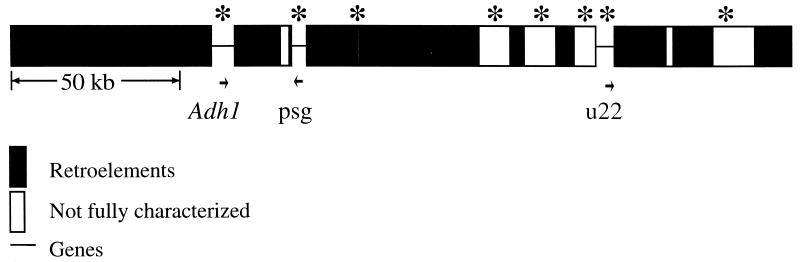
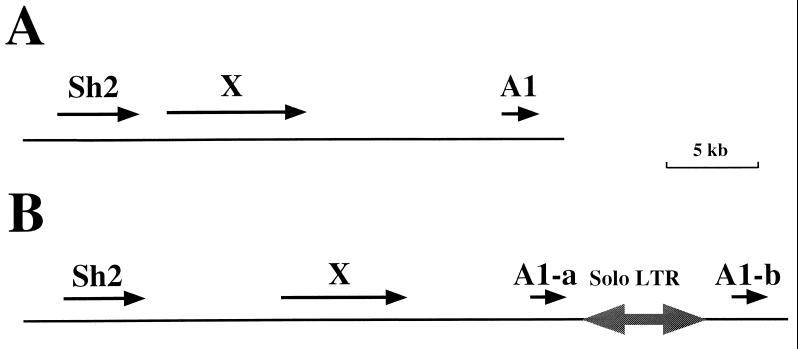
For the most part, studies of grass genome structure have been limited to the generation of whole-genome genetic maps or the fine structure and sequence analysis of single genes or gene clusters. We have investigated large contiguous segments of the genomes of maize, sorghum, and rice, primarily focusing on intergenic spaces. Our data indicate that much (>50%) of the maize genome is composed of interspersed repetitive DNAs, primarily nested retrotransposons that insert between genes. These retroelements are less abundant in smaller genome plants, including rice and sorghum. Although 5- to 200-kb blocks of methylated, presumably heterochromatic, retrotransposons flank most maize genes, rice and sorghum genes are often adjacent. Similar genes are commonly found in the same relative chromosomal locations and orientations in each of these three species, although there are numerous exceptions to this collinearity (i.e., rearrangements) that can be detected at the levels of both the recombinational map and cloned DNA. Evolutionarily conserved sequences are largely confined to genes and their regulatory elements. Our results indicate that a knowledge of grass genome structure will be a useful tool for gene discovery and isolation, but the general rules and biological significance of grass genome organization remain to be determined. Moreover, the nature and frequency of exceptions to the general patterns of grass genome structure and collinearity are still largely unknown and will require extensive further investigation.
Figures
References
-
- Bennett M D, Leitch I J. Ann Bot (London) 1995;76:113–176.
-
- Flavell R B, Bennett M D, Smith J B, Smith D B. Biochem Genet. 1974;12:257–269. - PubMed
-
- Hake S, Walbot V. Chromosoma. 1980;79:251–270.
LinkOut - more resources
Full Text Sources
