


Floral scent production in Clarkia breweri. III. Enzymatic synthesis and emission of benzenoid esters
- PMID: 9489012
- PMCID: PMC35117
- DOI: 10.1104/pp.116.2.599
Floral scent production in Clarkia breweri. III. Enzymatic synthesis and emission of benzenoid esters
Abstract
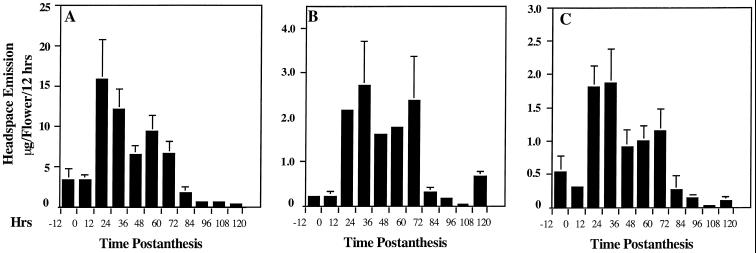
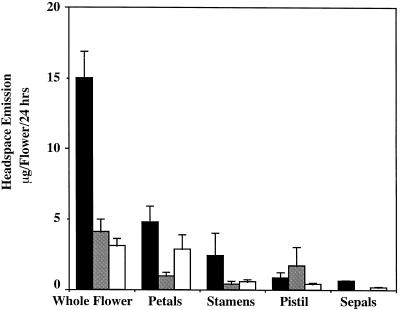
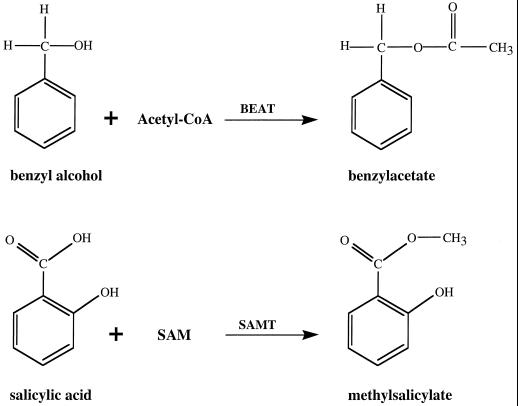
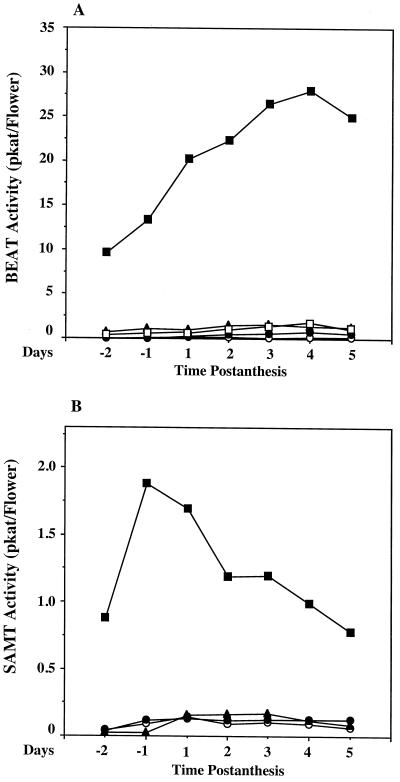
The fragrance of Clarkia breweri (Onagraceae), a California annual plant, includes three benzenoid esters: benzylacetate, benzylbenzoate, and methylsalicylate. Here we report that petal tissue was responsible for the benzylacetate and methylsalicylate emission, whereas the pistil was the main source of benzylbenzoate. The activities of two novel enzymes, acetyl-coenzyme A:benzylalcohol acetyltransferase (BEAT), which catalyzes the acetyl esterification of benzylalcohol, and S-adenosyl-L-methionine:salicylic acid carboxyl methyltransferase, which catalyzes the methyl esterification of salicylic acid, were also highest in petal tissue and absent in leaves. In addition, the activity of both enzymes in the various floral organs was developmentally and differentially regulated. S-Adenosyl-L-methionine:salicylic acid carboxyl methyltransferase activity in petals peaked in mature buds and declined during the next few days after anthesis, and it showed a strong, positive correlation with the emission of methylsalicylate. The levels of BEAT activity and benzylacetate emission in petals also increased in parallel as the buds matured and the flowers opened, but as emission began to decline on the 2nd d after anthesis, BEAT activity continued to increase and remained high until the end of the lifespan of the flower.
Figures
References
-
- Clarke S. Protein isoprenylation and methylation at carboxyl-terminal cysteine residues. Annu Rev Biochem. 1992;61:355–386. - PubMed
-
- Croteau R, Karp F (1991) Origin of natural odorants. In PM Muller, D Lamparsky, eds, Perfumes: Art, Science and Technology. Elsevier Applied Science, New York, pp 101–126
-
- Dicke M, Van Beek TA, Posthumus MA, Ben Dam N, Van Bokhoven H, de Groot A. Isolation and identification of volatile kairomone that affects acarine predator-prey interactions. J Chem Ecol. 1990;16:381–396. - PubMed
Publication types
MeSH terms
Substances
LinkOut - more resources
Full Text Sources
Other Literature Sources
Molecular Biology Databases
