


Moderately High Temperatures Inhibit Ribulose-1,5-Bisphosphate Carboxylase/Oxygenase (Rubisco) Activase-Mediated Activation of Rubisco
- PMID: 9490757
- PMCID: PMC35111
- DOI: 10.1104/pp.116.2.539
Moderately High Temperatures Inhibit Ribulose-1,5-Bisphosphate Carboxylase/Oxygenase (Rubisco) Activase-Mediated Activation of Rubisco
Abstract
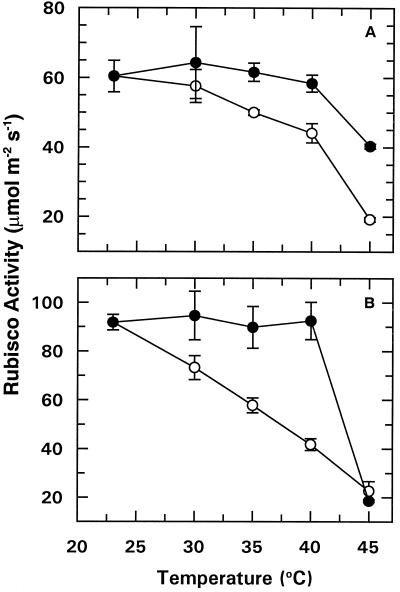
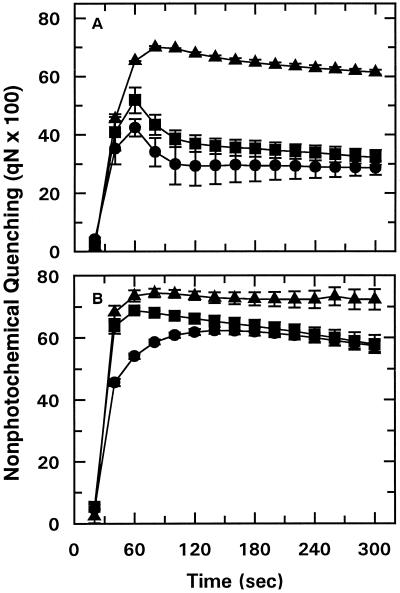
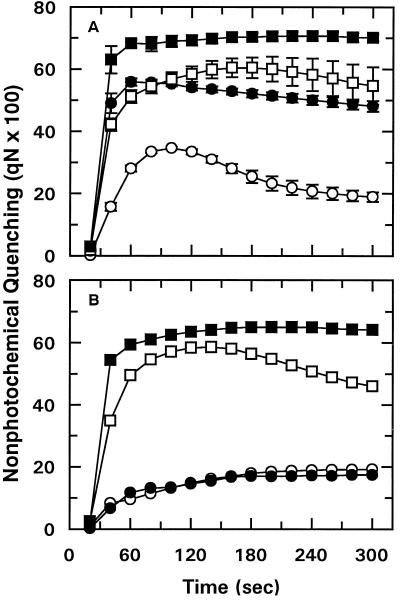
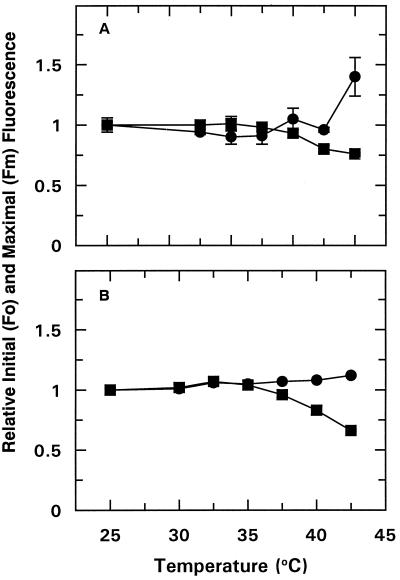
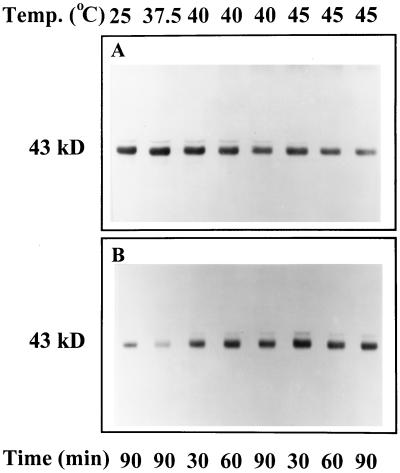
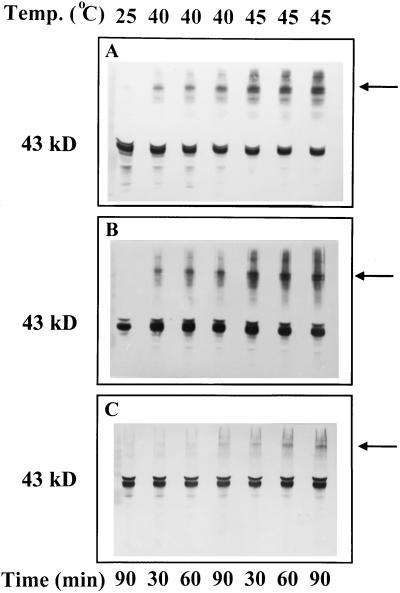
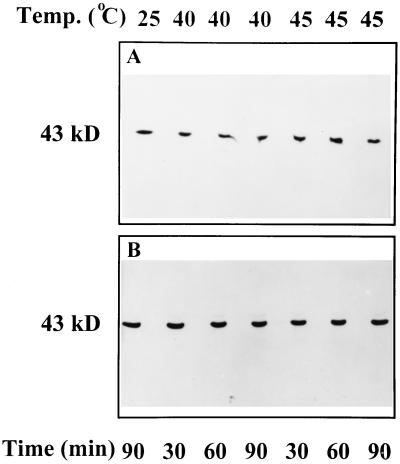
We tested the hypothesis that light activation of ribulose-1,5-bisphosphate carboxylase/oxygenase (Rubisco) is inhibited by moderately elevated temperature through an effect on Rubisco activase. When cotton (Gossypium hirsutum L.) or wheat (Triticum aestivum L.) leaf tissue was exposed to increasing temperatures in the light, activation of Rubisco was inhibited above 35 and 30 degreesC, respectively, and the relative inhibition was greater for wheat than for cotton. The temperature-induced inhibition of Rubisco activation was fully reversible at temperatures below 40 degreesC. In contrast to activation state, total Rubisco activity was not affected by temperatures as high as 45 degreesC. Nonphotochemical fluorescence quenching increased at temperatures that inhibited Rubisco activation, consistent with inhibition of Calvin cycle activity. Initial and maximal chlorophyll fluorescence were not significantly altered until temperatures exceeded 40 degreesC. Thus, electron transport, as measured by Chl fluorescence, appeared to be more stable to moderately elevated temperatures than Rubisco activation. Western-blot analysis revealed the formation of high-molecular-weight aggregates of activase at temperatures above 40 degreesC for both wheat and cotton when inhibition of Rubisco activation was irreversible. Physical perturbation of other soluble stromal enzymes, including Rubisco, phosphoribulokinase, and glutamine synthetase, was not detected at the elevated temperatures. Our evidence indicates that moderately elevated temperatures inhibit light activation of Rubisco via a direct effect on Rubisco activase.
Figures
References
-
- Andrews TJ, Hudson GS, Mate CJ, von Caemmerer S, Evans JR, Avridsson YBC. Rubisco, consequences of altering its expression and activation in transgenic plants. J Exp Bot. 1995;46:1293–1300.
-
- Berry JA, Björkman O. Photosynthetic response and adaptation to temperature in higher plants. Annu Rev Plant Physiol. 1980;31:491–543.
-
- Bilger W, Schreiber U, Lange OL. Chlorophyll fluorescence as an indicator of heat induced limitation of photosynthesis in Arbutus unedo L. In: Tenhunen JD, Catarino FM, Lange OL, editors. Plant Response to Stress. Berlin: Springer; 1987. pp. 391–399.
-
- Bradford MM. A rapid and sensitive method for the quantitation of microgram quantities of proteins utilizing the principle of protein-dye binding. Anal Biochem. 1976;72:248–259. - PubMed
LinkOut - more resources
Full Text Sources
