


Proliferation of granule cell precursors in the dentate gyrus of adult monkeys is diminished by stress
- PMID: 9501234
- PMCID: PMC19713
- DOI: 10.1073/pnas.95.6.3168
Proliferation of granule cell precursors in the dentate gyrus of adult monkeys is diminished by stress
Abstract
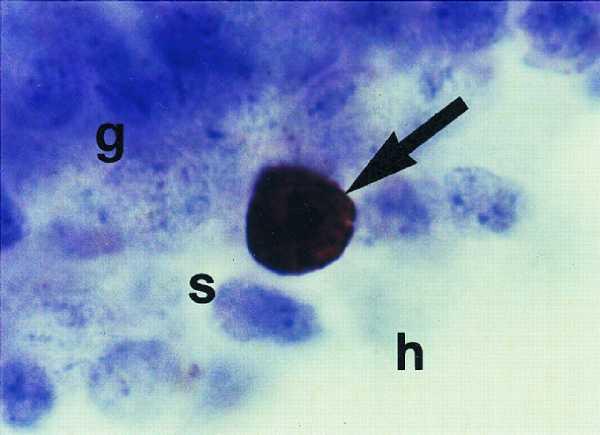
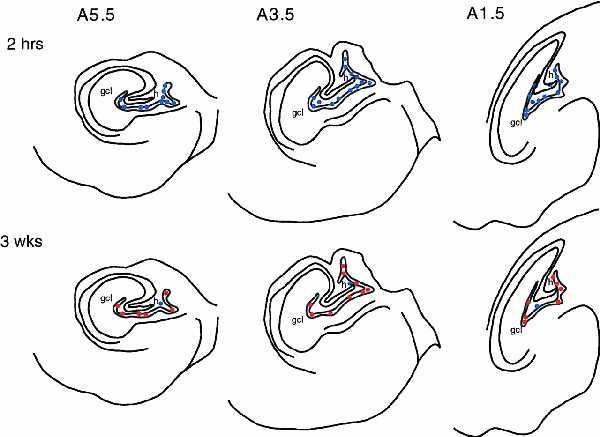
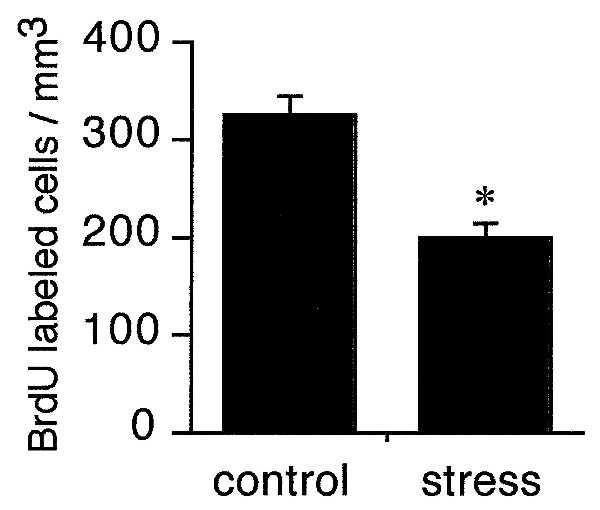
Although granule cells continue to be added to the dentate gyrus of adult rats and tree shrews, this phenomenon has not been demonstrated in the dentate gyrus of adult primates. To determine whether neurons are produced in the dentate gyrus of adult primates, adult marmoset monkeys (Callithrix jacchus) were injected with BrdU and perfused 2 hr or 3 weeks later. BrdU is a thymidine analog that is incorporated into proliferating cells during S phase. A substantial number of cells in the dentate gyrus of adult monkeys incorporated BrdU and approximately 80% of these cells had morphological characteristics of granule neurons and expressed a neuronal marker by the 3-week time point. Previous studies suggest that the proliferation of granule cell precursors in the adult dentate gyrus can be inhibited by stress in rats and tree shrews. To test whether an aversive experience has a similar effect on cell proliferation in the primate brain, adult marmoset monkeys were exposed to a resident-intruder model of stress. After 1 hr in this condition, the intruder monkeys were injected with BrdU and perfused 2 hr later. The number of proliferating cells in the dentate gyrus of the intruder monkeys was compared with that of unstressed control monkeys. We found that a single exposure to this stressful experience resulted in a significant reduction in the number of these proliferating cells. Our results suggest that neurons are produced in the dentate gyrus of adult monkeys and that the rate of precursor cell proliferation can be affected by a stressful experience.
Figures
References
Publication types
MeSH terms
Grants and funding
LinkOut - more resources
Full Text Sources
Other Literature Sources
Medical
