


Randomised trial of elective stenting after successful percutaneous transluminal coronary angioplasty of occluded coronary arteries
- PMID: 9505913
- PMCID: PMC1728574
- DOI: 10.1136/hrt.79.1.18
Randomised trial of elective stenting after successful percutaneous transluminal coronary angioplasty of occluded coronary arteries
Abstract
Background: The value of angioplasty in occluded coronary arteries is limited by a restenosis/reocclusion rate of 50-70%. In patients with subtotal occlusion, stent implantation has been shown to reduce clinical and angiographic restenosis. Retrospective observational studies have suggested that stenting could reduce restenosis in total occlusions. The value of sustained coronary patency on global and regional left ventricular function in this clinical setting has not been defined clearly.
Objectives: To assess the medium term effect of elective intracoronary stent deployment after successful percutaneous transluminal coronary angioplasty (PTCA) of an occluded coronary artery.
Methods: Sixty patients with a total coronary occlusion successfully treated by PTCA were randomised to receive an intracoronary stent or no stent. Patients underwent clinical and angiographic follow up at six months.
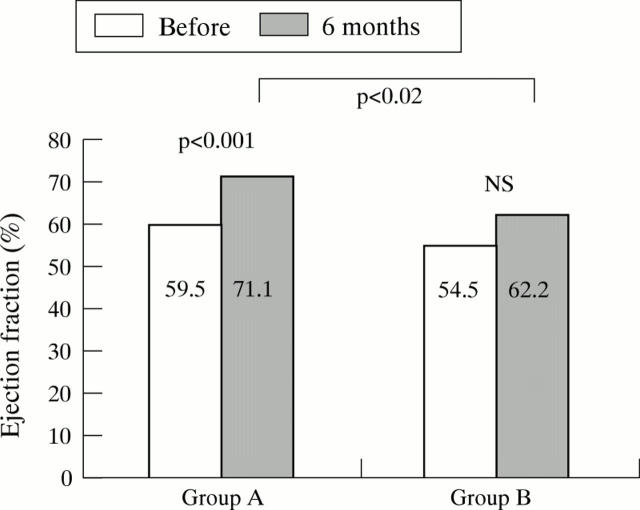
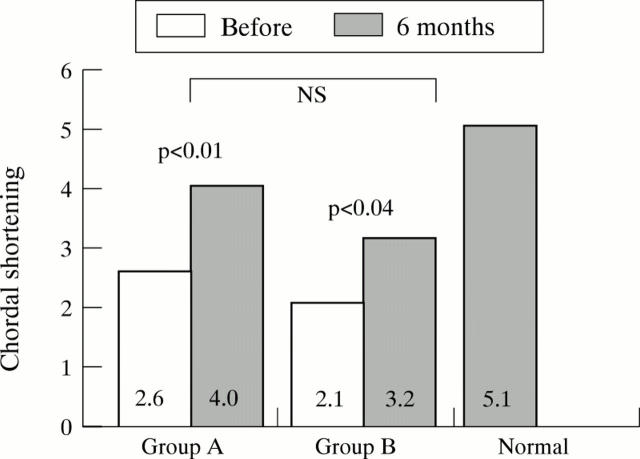
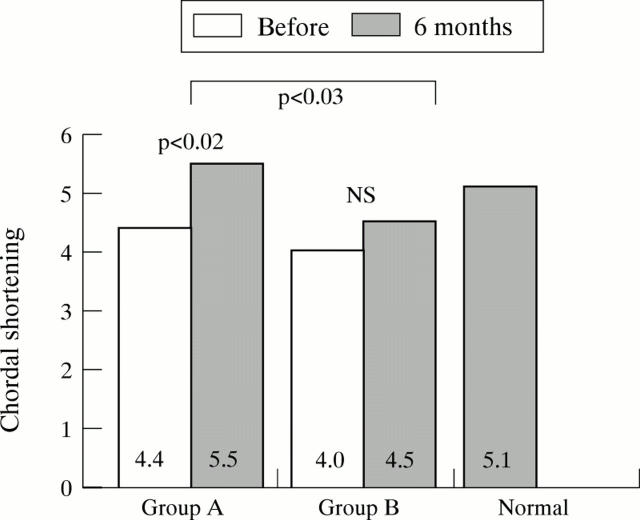
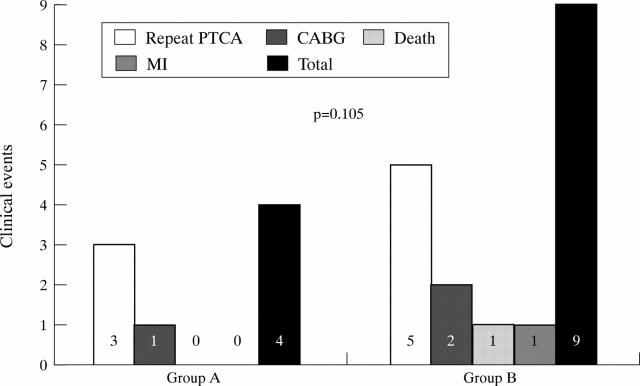
Results: Thirty patients received a stent (group A) and 30 were treated by angioplasty alone (group B), all with initial success. One patient in group B required repeat angioplasty with stenting at 24 hours and one patient died after 10 days. Angiographic follow up was available for 57 patients. This showed a significantly reduced reocclusion rate in group A compared with group B (7% v 29%, p < 0.01) and a tendency to a reduced restenosis rate (22% v 40%, p = 0.105) in patients with no reocclusion. Left ventricular function, both global and regional, improved in group A. Only the regional left ventricular function in the area supplied by the target coronary artery improved in group B. Recurrence of symptoms and clinical events such as repeat angioplasty, coronary artery bypass grafting, death or myocardial infarction tended to be reduced in group A (4 (13%) v 9 (30%)).
Conclusions: Intracoronary stent insertion is effective in reducing the rate of reocclusion and shows a trend towards reduced restenosis after opening of a total coronary occlusion by balloon angioplasty. Sustained patency of the target coronary artery is associated with improvement in global and regional left ventricular function.
Figures
References
Publication types
MeSH terms
LinkOut - more resources
Full Text Sources
