


Altered srf expression in Bacillus subtilis resulting from changes in culture pH is dependent on the Spo0K oligopeptide permease and the ComQX system of extracellular control
- PMID: 9515911
- PMCID: PMC107042
- DOI: 10.1128/JB.180.6.1438-1445.1998
Altered srf expression in Bacillus subtilis resulting from changes in culture pH is dependent on the Spo0K oligopeptide permease and the ComQX system of extracellular control
Abstract
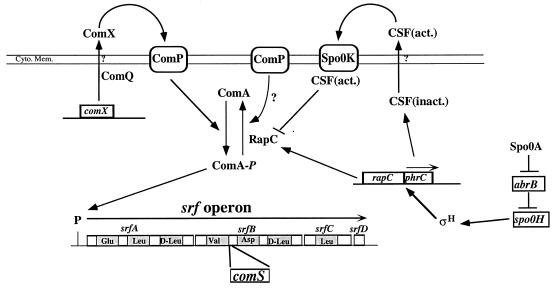
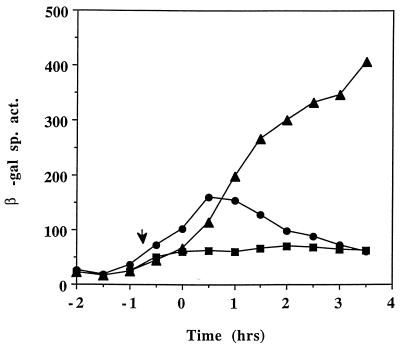
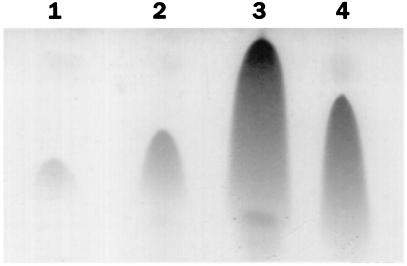
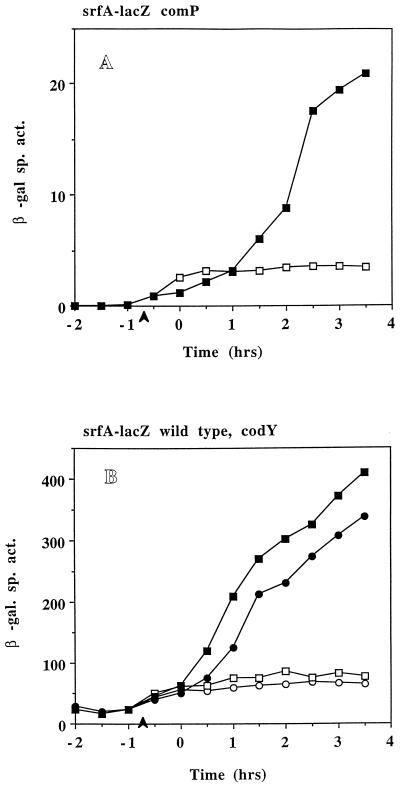
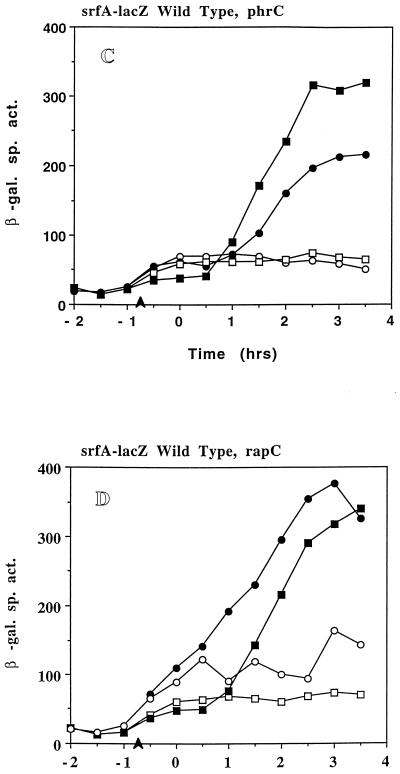
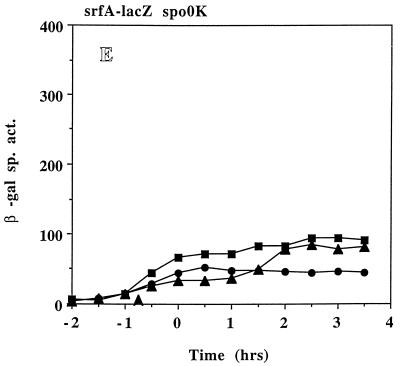
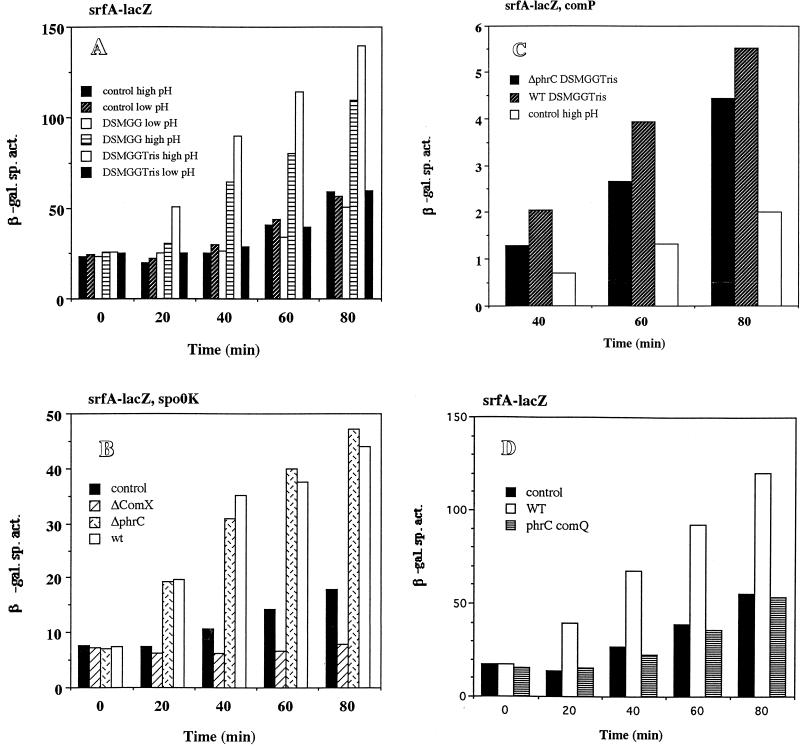
The expression of the srf operon of Bacillus subtilis, encoding surfactin synthetase and the competence regulatory protein ComS, was observed to be reduced when cells were grown in a rich glucose- and glutamine-containing medium in which late-growth culture pH was 5.0 or lower. The production of the surfactin synthetase subunits and of surfactin itself was also reduced. Raising the pH to near neutrality resulted in dramatic increases in srf expression and surfactin production. This apparent pH-dependent induction of srf expression required spo0K, which encodes the oligopeptide permease that functions in cell-density-dependent control of sporulation and competence, but not CSF, the competence-inducing pheromone that regulates srf expression in a Spo0K-dependent manner. Both ComP and ComA, the two-component regulatory pair that stimulates cell-density-dependent srf transcription, were required for optimal expression of srf at low and high pHs, but ComP was not required for pH-dependent srf induction. The known negative regulators of srf, RapC and CodY, were found not to function significantly in pH-dependent srf expression. Late-growth culture supernatants at low pH were not active in inducing srf expression in cells of low-density cultures but were rendered active when their pH was raised to near neutrality. ComQ (and very likely the srf-inducing pheromone ComX) and Spo0K were found to be required for the extracellular induction of srf-lacZ at neutral pH. The results suggest that srf expression, in response to changes in culture pH, requires Spo0K and another, as yet unidentified, extracellular factor. The study also provides evidence consistent with the hypothesis that ComP acts both positively and negatively in the regulation of ComA and that both activities are controlled by the ComX pheromone.
Figures
References
-
- Arima K, Kainuma A, Tamura G. Surfactin, a crystalline peptide lipid surfactant produced by Bacillus subtilis: isolation, characterization, and its inhibition of fibrin clot formation. Biochem Biophys Res Commun. 1968;31:488–494. - PubMed
-
- Bernheimer A W, Avegad L S. Nature and properties of a cytolytic agent produced by Bacillus subtilis. J Gen Microbiol. 1970;61:361–369. - PubMed
-
- Bradford M M. A rapid and sensitive method for the quantitation of microgram quantities of protein utilizing the principle of protein-dye binding. Anal Biochem. 1976;72:248–254. - PubMed
-
- Cosmina P, Rodriguez F, de Ferra F, Grandi G, Perego M, Venema G, van Sinderen D. Sequence and analysis of the genetic locus responsible for surfactin synthesis in Bacillus subtilis. Mol Microbiol. 1993;8:821–831. - PubMed
Publication types
MeSH terms
Substances
Grants and funding
LinkOut - more resources
Full Text Sources
Other Literature Sources
Molecular Biology Databases
Miscellaneous
