


Unusual organization of the genes coding for HydSL, the stable [NiFe]hydrogenase in the photosynthetic bacterium Thiocapsa roseopersicina BBS
- PMID: 9515914
- PMCID: PMC107045
- DOI: 10.1128/JB.180.6.1460-1465.1998
Unusual organization of the genes coding for HydSL, the stable [NiFe]hydrogenase in the photosynthetic bacterium Thiocapsa roseopersicina BBS
Abstract
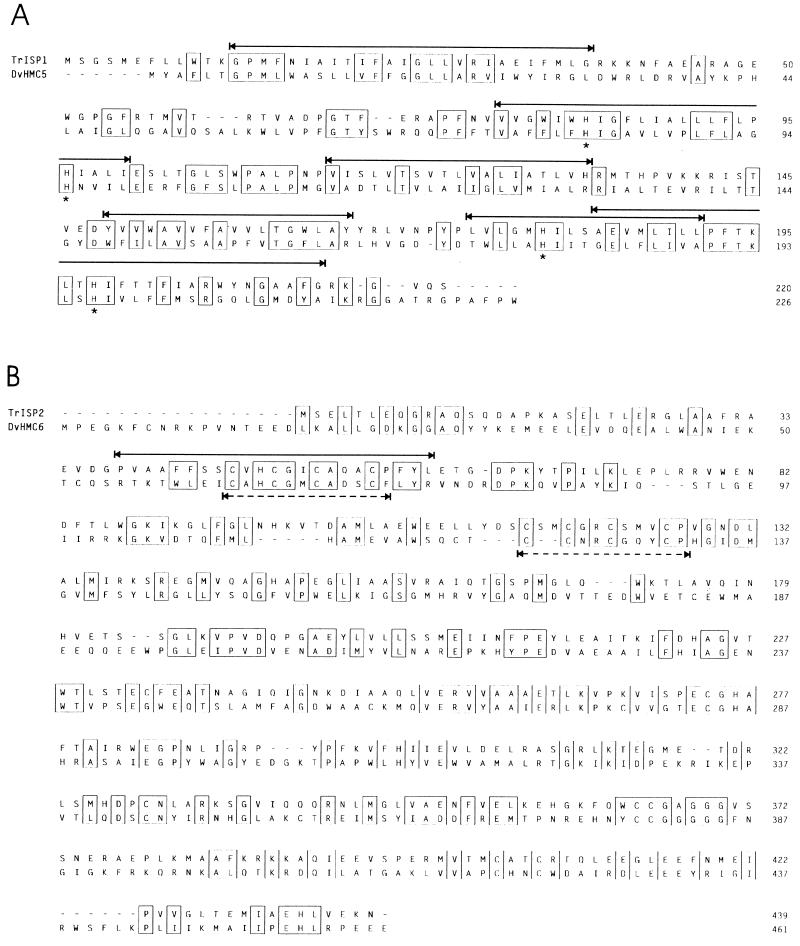
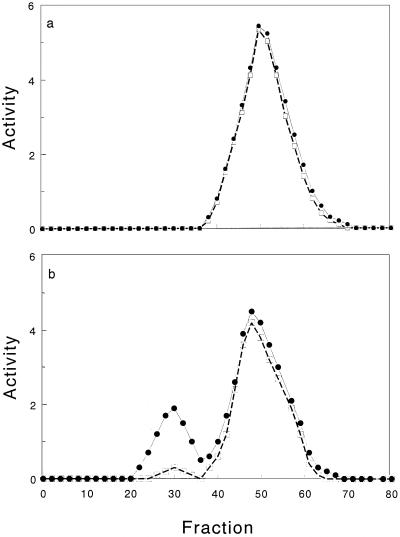
The characterization of a hyd gene cluster encoding the stable, bidirectional [NiFe]hydrogenase 1 enzyme in Thiocapsa roseopersicina BBS, a purple sulfur photosynthetic bacterium belonging to the family Chromatiaceae, is presented. The heterodimeric hydrogenase 1 had been purified to homogeneity and thoroughly characterized (K. L. Kovacs et al., J. Biol. Chem. 266:947-951, 1991; C. Bagyinka et al., J. Am. Chem. Soc. 115:3567-3585, 1993). As an unusual feature, a 1,979-bp intergenic sequence (IS) separates the structural genes hydS and hydL, which encode the small and the large subunits, respectively. This IS harbors two sequential open reading frames (ORFs) which may code for electron transfer proteins ISP1 and ISP2. ISP1 and ISP2 are homologous to ORF5 and ORF6 in the hmc operon, coding for a transmembrane electron transfer complex in Desulfovibrio vulgaris. Other accessory proteins are not found immediately downstream or upstream of hydSL. A hup gene cluster coding for a typical hydrogen uptake [NiFe]hydrogenase in T. roseopersicina was reported earlier (A. Colbeau et al. Gene 140:25-31, 1994). The deduced amino acid sequences of the two small (hupS and hydS) and large subunit (hupL and hydL) sequences share 46 and 58% identity, respectively. The hup and hyd genes differ in the arrangement of accessory genes, and the genes encoding the two enzymes are located at least 15 kb apart on the chromosome. Both hydrogenases are associated with the photosynthetic membrane. A stable and an unstable hydrogenase activity can be detected in cells grown under nitrogen-fixing conditions; the latter activity is missing in cells supplied with ammonia as the nitrogen source. The apparently constitutive and stable activity corresponds to hydrogenase 1, coded by hydSL, and the inducible and unstable second hydrogenase may be the product of the hup gene cluster.
Figures

References
-
- Adams M W W, Hall D O. Physical and catalytic properties of the hydrogenase of Rhodospirillum rubrum. In: Schlegel H G, Schneider K, editors. Hydrogenases: their catalytic activity, structure and function. Göttingen, Germany: Goltze K. G.; 1979. pp. 159–169.
-
- Albracht S P J. Nickel hydrogenases: in search of the active site. Biochim Biophys Acta. 1994;1188:167–204. - PubMed
-
- Bagyinka C, Zorin N A, Kovacs K L. Unconsidered factors affecting hydrogenase activity measurement. Anal Biochem. 1984;142:7–15. - PubMed
-
- Bagyinka C, Whitehead J P, Maroney M J. An X-ray absorption study of nickel redox chemistry in hydrogenase. J Am Chem Soc. 1993;115:3567–3585.
Publication types
MeSH terms
Substances
Associated data
- Actions
LinkOut - more resources
Full Text Sources
Other Literature Sources
Research Materials
