


Virulence of antibiotic-resistant Salmonella typhimurium
- PMID: 9520473
- PMCID: PMC19943
- DOI: 10.1073/pnas.95.7.3949
Virulence of antibiotic-resistant Salmonella typhimurium
Abstract
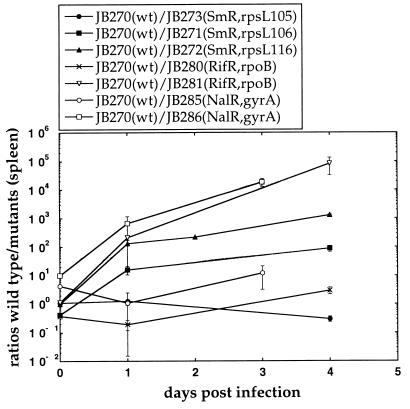
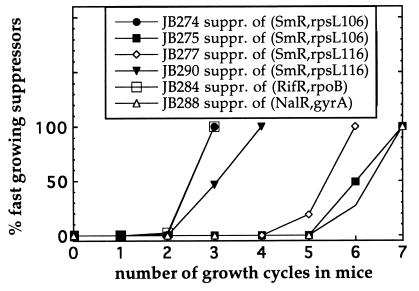
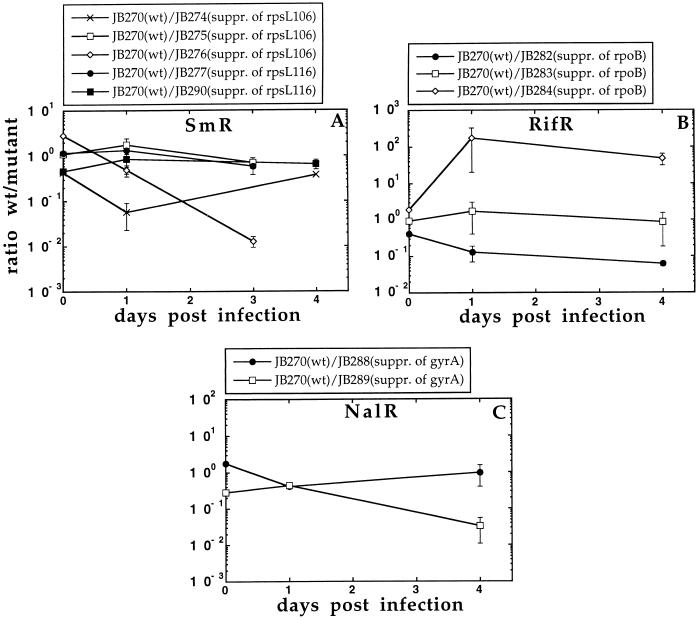
We show that most Salmonella typhimurium mutants resistant to streptomycin, rifampicin, and nalidixic acid are avirulent in mice. Of seven resistant mutants examined, six were avirulent and one was similar to the wild type in competition experiments in mice. The avirulent-resistant mutants rapidly accumulated various types of compensatory mutations that restored virulence without concomitant loss of resistance. Such second-site compensatory mutations were more common then reversion to the sensitive wild type. We infer from these results that a reduction in the use of antibiotics might not result in the disappearance of the resistant bacteria already present in human and environmental reservoirs. Thus, second-site compensatory mutations could increase the fitness of resistant bacteria and allow them to persist and compete successfully with sensitive strains even in an antibiotic-free environment.
Figures
References
Publication types
MeSH terms
Associated data
- Actions
- Actions
LinkOut - more resources
Full Text Sources
Other Literature Sources
Medical
