


Calcimimetics with potent and selective activity on the parathyroid calcium receptor
- PMID: 9520489
- PMCID: PMC19959
- DOI: 10.1073/pnas.95.7.4040
Calcimimetics with potent and selective activity on the parathyroid calcium receptor
Abstract
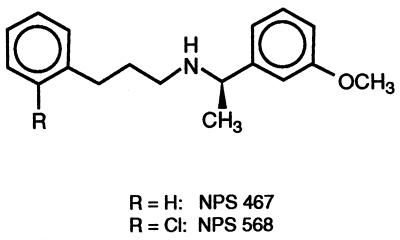
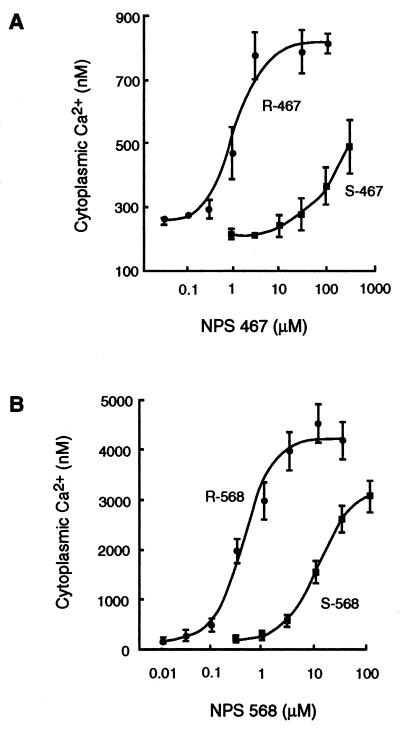
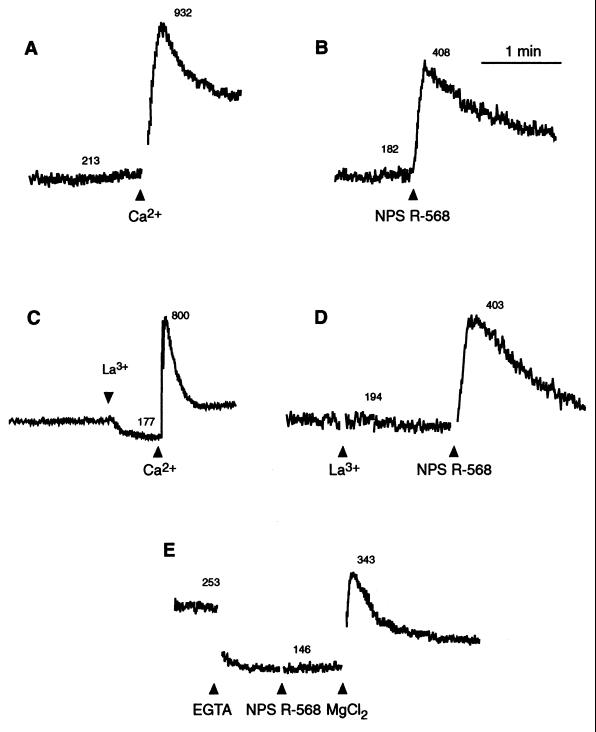
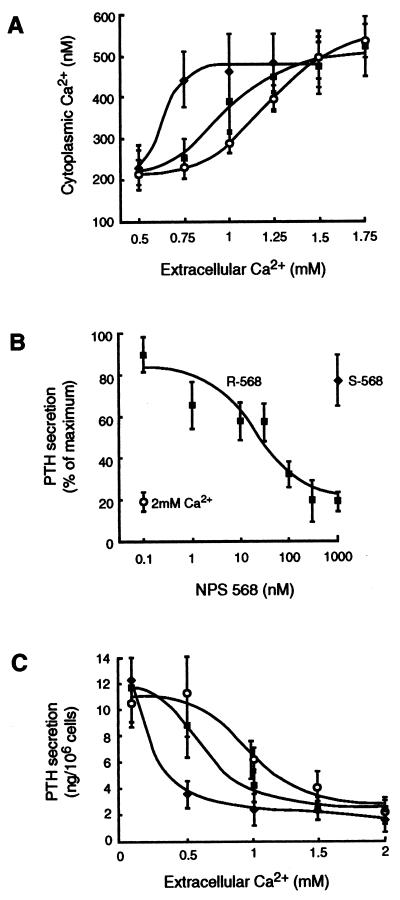
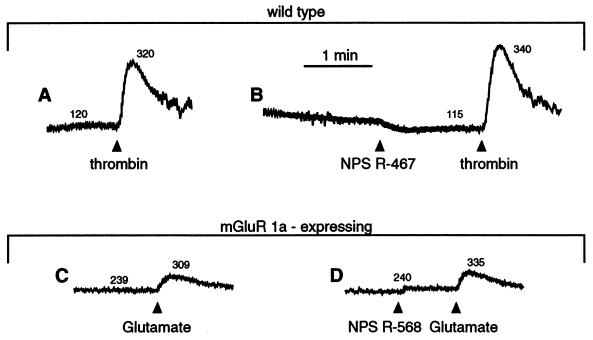
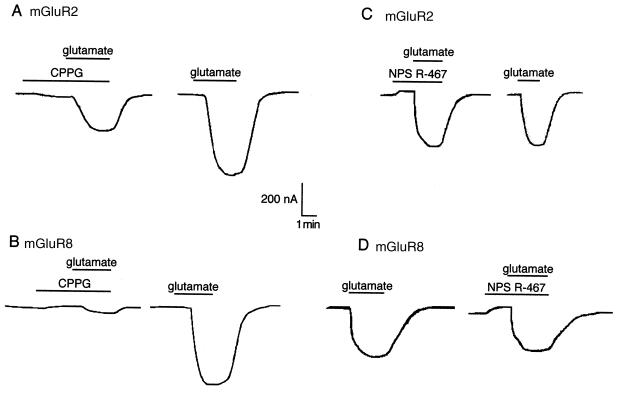
Parathyroid hormone (PTH) secretion is regulated by a cell surface Ca2+ receptor that detects small changes in the level of plasma Ca2+. Because this G protein-coupled receptor conceivably provides a distinct molecular target for drugs useful in treating bone and mineral-related disorders, we sought to design small organic molecules that act on the Ca2+ receptor. We discovered that certain phenylalkylamine compounds, typified by NPS R-568 and its deschloro derivative NPS R-467, increased the concentration of cytoplasmic Ca2+ ([Ca2+]i) in bovine parathyroid cells and inhibited PTH secretion at nanomolar concentrations. These effects were stereoselective and the R enantiomers were 10- to 100-fold more potent than the S enantiomers. NPS R-568 potentiated the effects of extracellular Ca2+ on [Ca2+]i and PTH secretion but was without effect in the absence of extracellular Ca2+. Both compounds shifted the concentration-response curves for extracellular Ca2+ to the left. Presumably, these compounds act as positive allosteric modulators to increase the sensitivity of the Ca2+ receptor to activation by extracellular Ca2+. Both NPS R-467 and NPS R-568 increased [Ca2+]i in HEK 293 cells expressing the human parathyroid Ca2+ receptor but were without effect in wild-type HEK 293 cells. Neither compound affected the cytoplasmic Ca2+ responses elicited by several other G protein-coupled receptors in HEK 293 cells or in bovine parathyroid cells. Significantly, these compounds did not affect responses elicited by the homologous metabotropic glutamate receptors, mGluR1a, mGluR2, or mGluR8. These compounds therefore act selectively on the Ca2+ receptor. Compounds that mimic or potentiate the effects of extracellular Ca2+ at the Ca2+ receptor are termed calcimimetics. The discovery of calcimimetic compounds with potent and selective activity enables a pharmacological approach to regulating plasma levels of PTH. Calcimimetic compounds could conceivably provide a specific medical therapy for primary hyperparathyroidism.
Figures
References
-
- Nemeth E F, Scarpa A. FEBS Lett. 1986;203:15–19. - PubMed
-
- Nemeth E F, Scarpa A. J Biol Chem. 1987;262:5188–5196. - PubMed
-
- Brown E M. Physiol Rev. 1991;71:371–411. - PubMed
-
- Brown E M, Gamba G, Riccardi D, Lombardi M, Butters R, Kifor O, Sun A, Hediger M A, Lytton J, Hebert S C. Nature (London) 1993;366:575–580. - PubMed
-
- Garrett J E, Capuano I V, Hammerland L G, Hung B C P, Brown E M, Hebert S C, Nemeth E F, Fuller F H. J Biol Chem. 1995;270:12919–12925. - PubMed
Publication types
MeSH terms
Substances
Grants and funding
LinkOut - more resources
Full Text Sources
Other Literature Sources
Molecular Biology Databases
Miscellaneous
