Decline of measles-specific immunoglobulin M antibodies after primary measles, mumps, and rubella vaccination
- PMID: 9521134
- PMCID: PMC121349
- DOI: 10.1128/CDLI.5.2.135-138.1998
Decline of measles-specific immunoglobulin M antibodies after primary measles, mumps, and rubella vaccination
Abstract
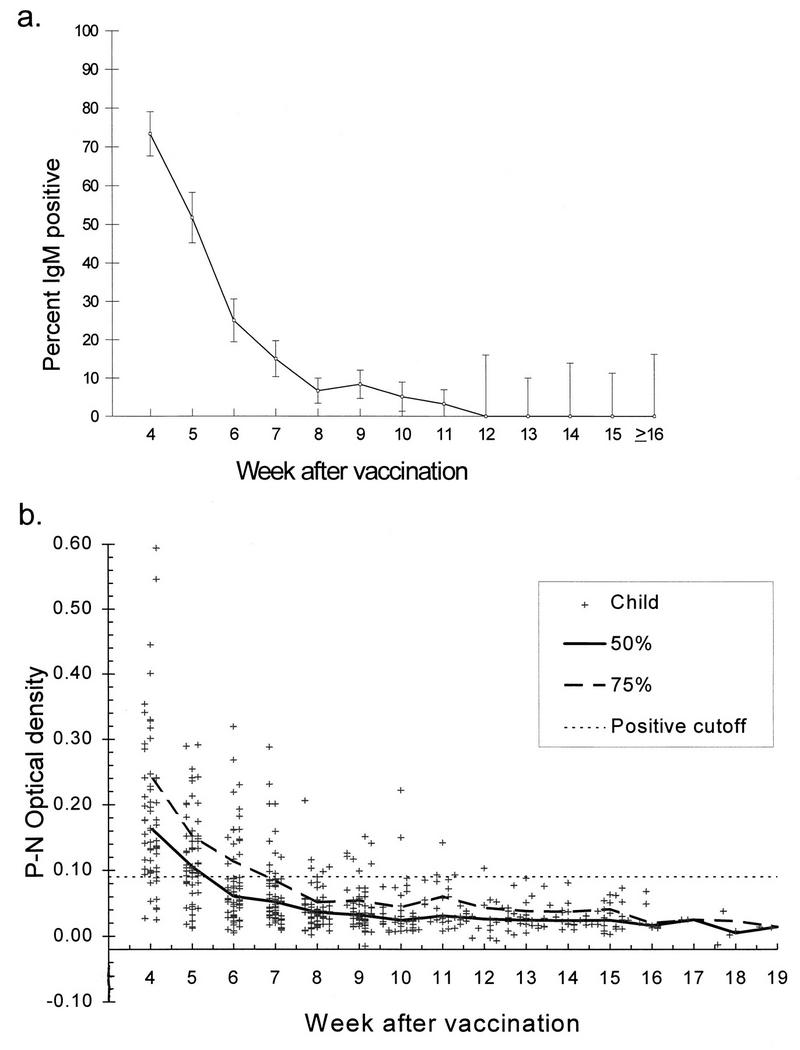
Detection of measles-specific immunoglobulin M (IgM) has become the standard diagnostic method for laboratory confirmation of measles. In outbreaks, the interpretation of an IgM-positive result can be complicated when persons with suspected measles receive a dose of measles vaccine as part of outbreak control measures. This investigation evaluated the decay of measles-specific IgM antibodies 1 to 4 months after primary vaccination with measles, mumps, and rubella vaccine (MMRII). Serum samples were obtained from 536 infants vaccinated when they were 15 months old as part of a study to assess primary and secondary measles vaccine failure. Sixty serum specimens per week were selected from specimens collected between 4 and 9 weeks after MMRII vaccination; all 176 available serum specimens collected between 10 and > or = 16 weeks were included. Specimens were tested for the presence of measles-specific IgM by an antibody-capture enzyme immunoassay. The proportion of IgM-positive specimens dropped from 73% at 4 weeks after vaccination to 52% at 5 weeks after vaccination and then declined to 7% by 8 weeks after vaccination. Less than 10% of children remained IgM positive between 9 and 11 weeks. An IgM-negative result helps rule out the diagnosis of measles in a person with suspected infection and a history of recent vaccination. The interpretation of a positive IgM result from a person with a clinically suspected case of measles and a recent history of measles vaccination (especially within 8 weeks) is problematic, and the diagnosis of measles should be based on epidemiologic linkage to a confirmed case or on detection of wild-type measles virus.
Figures
References
-
- Atkinson W, Markowitz L, Baughman A, Sullivan B, Nordin J, Heath J, Erdman D, Nelson A, Patricia P. Program and abstracts of the 32nd Interscience Conference on Antimicrobial Agents and Chemotherapy. Washington, D.C: American Society for Microbiology; 1992. Response to measles revaccination among children who fail to respond to the first dose of measles vaccine, abstr. 421; p. 181.
-
- Centers for Disease Control and Prevention. Case definitions for infectious conditions under public health surveillance. Morbid Mortal Weekly Rep. 1997;46RR-10:1–64. - PubMed
-
- Centers for Disease Control and Prevention. Unpublished data.
-
- Helfand R F, Heath J L, Anderson L J, Maes E F, Guris D, Bellini W J. Diagnosis of measles with an IgM capture EIA: the optimal timing of specimen collection after rash onset. J Infect Dis. 1997;175:195–199. - PubMed
MeSH terms
Substances
LinkOut - more resources
Full Text Sources
Medical