


Deletion of a CD2-like gene, 8-DR, from African swine fever virus affects viral infection in domestic swine
- PMID: 9525608
- PMCID: PMC109733
- DOI: 10.1128/JVI.72.4.2881-2889.1998
Deletion of a CD2-like gene, 8-DR, from African swine fever virus affects viral infection in domestic swine
Abstract
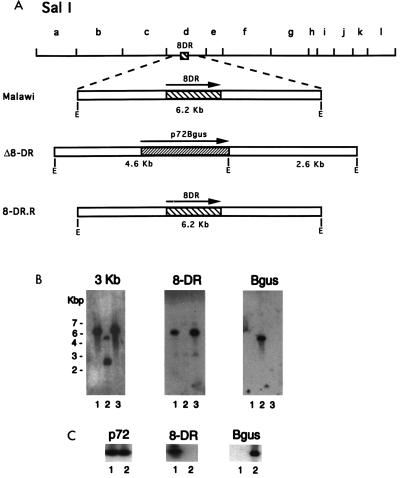
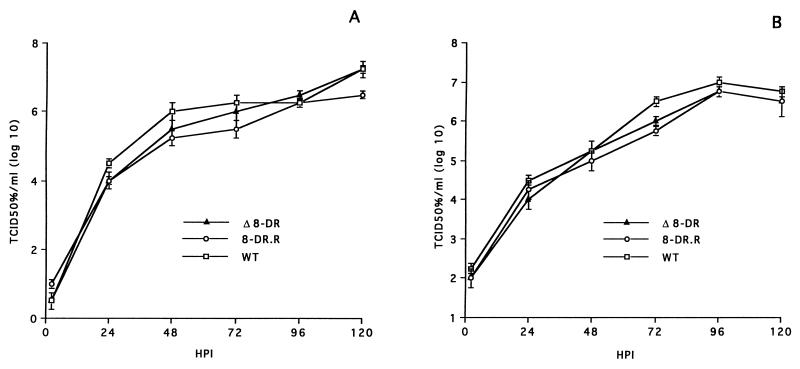
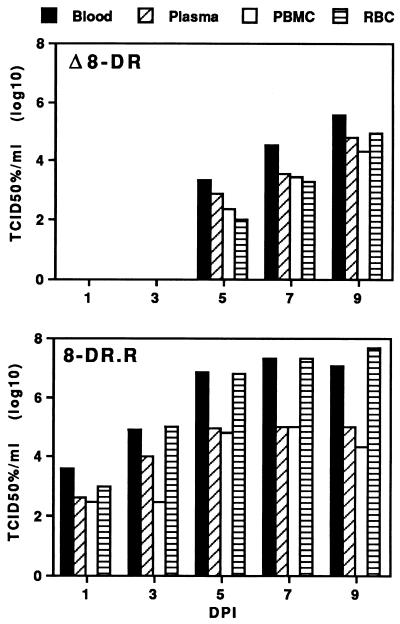
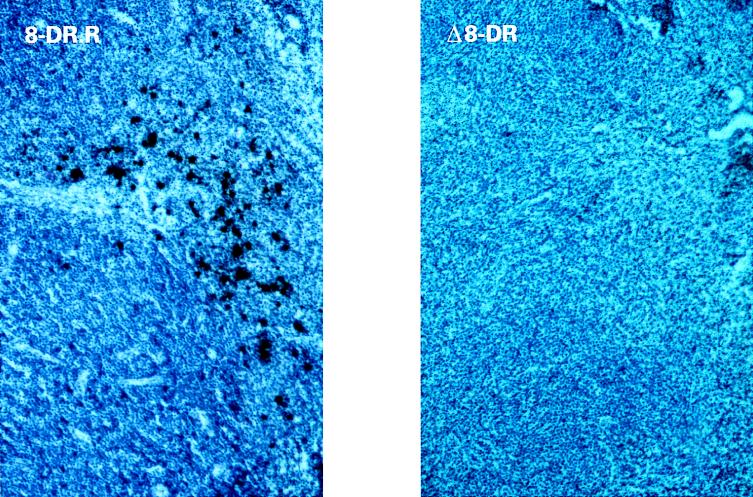
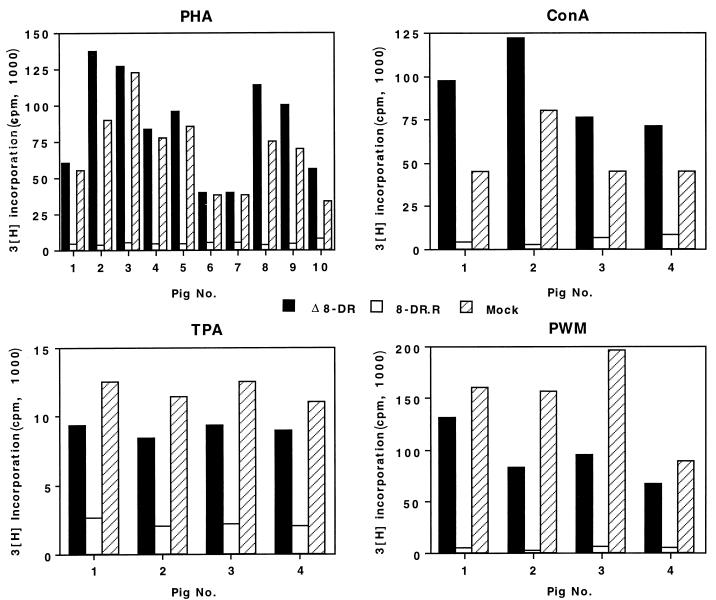
An African swine fever virus (ASFV) gene with similarity to the T-lymphocyte surface antigen CD2 has been found in the pathogenic African isolate Malawi Lil-20/1 (open reading frame [ORF] 8-DR) and a cell culture-adapted European virus, BA71V (ORF EP402R) and has been shown to be responsible for the hemadsorption phenomenon observed for ASFV-infected cells. The structural and functional similarities of the ASFV gene product to CD2, a cellular protein involved in cell-cell adhesion and T-cell-mediated immune responses, suggested a possible role for this gene in tissue tropism and/or immune evasion in the swine host. In this study, we constructed an ASFV 8-DR gene deletion mutant (delta8-DR) and its revertant (8-DR.R) from the Malawi Lil-20/1 isolate to examine gene function in vivo. In vitro, delta8-DR, 8-DR.R, and the parental virus exhibited indistinguishable growth characteristics on primary porcine macrophage cell cultures. In vivo, 8-DR had no obvious effect on viral virulence in domestic pigs; disease onset, disease course, and mortality were similar for the mutant delta8-DR, its revertant 8-DR.R, and the parental virus. Altered viral infection was, however, observed for pigs infected with delta8-DR. A delay in spread to and/or replication of delta8-DR in the draining lymph node, a delay in generalization of infection, and a 100- to 1,000-fold reduction in virus titers in lymphoid tissue and bone marrow were observed. Onset of viremia for delta8-DR-infected animals was significantly delayed (by 2 to 5 days), and mean viremia titers were reduced approximately 10,000-fold at 5 days postinfection and 30- to 100-fold at later times; moreover, unlike in 8-DR.R-infected animals, the viremia was no longer predominantly erythrocyte associated but rather was equally distributed among erythrocyte, leukocyte, and plasma fractions. Mitogen-dependent lymphocyte proliferation of swine peripheral blood mononuclear cells in vitro was reduced by 90 to 95% following infection with 8-DR.R but remained unaltered following infection with delta8-DR, suggesting that 8-DR has immunosuppressive activity in vitro. Together, these results suggest an immunosuppressive role for 8-DR in the swine host which facilitates early events in viral infection. This may be of most significance for ASFV infection of its highly adapted natural host, the warthog.
Figures
References
-
- Beyers A D, Barclay A N, Law D A, He Q, Williams A F. Activation of T lymphocytes via monoclonal antibodies against rat cell surface antigens with particular reference to CD2 antigen. Immunol Rev. 1989;111:59–77. - PubMed
-
- Bierer B E, Burakoff S J. T-lymphocyte activation: the biology and function of CD2 and CD4. Immunol Rev. 1989;111:267–294. - PubMed
-
- Borca M V, Kutish G F, Afonso C L, Irusta P, Carrillo C, Brun A, Sussman M, Rock D L. An African swine fever virus gene with similarity to the T-lymphocyte surface antigen CD2 mediates hemadsorption. Virology. 1994;199:463–468. - PubMed
-
- Brown F. The classification and nomenclature of viruses: summary of results of meetings of the International Committee on Taxonomy of Viruses in Sendai, September 1984. Intervirology. 1986;25:141–143. - PubMed
-
- Canals A, Alonso F, Tomillo J, Domínguez J. Analysis of T lymphocyte subsets proliferating in response to infective and UV-inactivated African swine fever virus. Vet Microbiol. 1992;33:117–127. - PubMed
MeSH terms
Substances
LinkOut - more resources
Full Text Sources
Other Literature Sources
