


Female preference for swords in Xiphophorus helleri reflects a bias for large apparent size
- PMID: 9539754
- PMCID: PMC22506
- DOI: 10.1073/pnas.95.8.4431
Female preference for swords in Xiphophorus helleri reflects a bias for large apparent size
Abstract
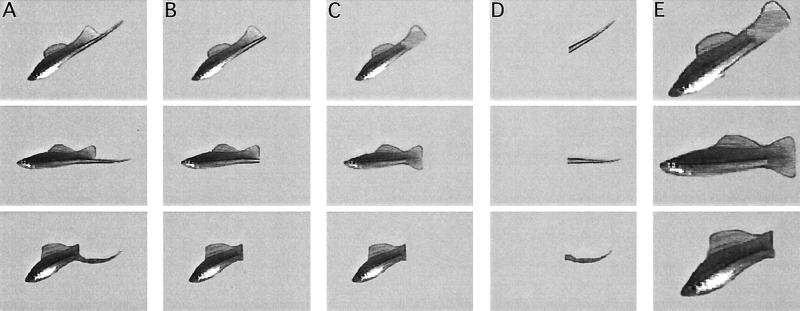
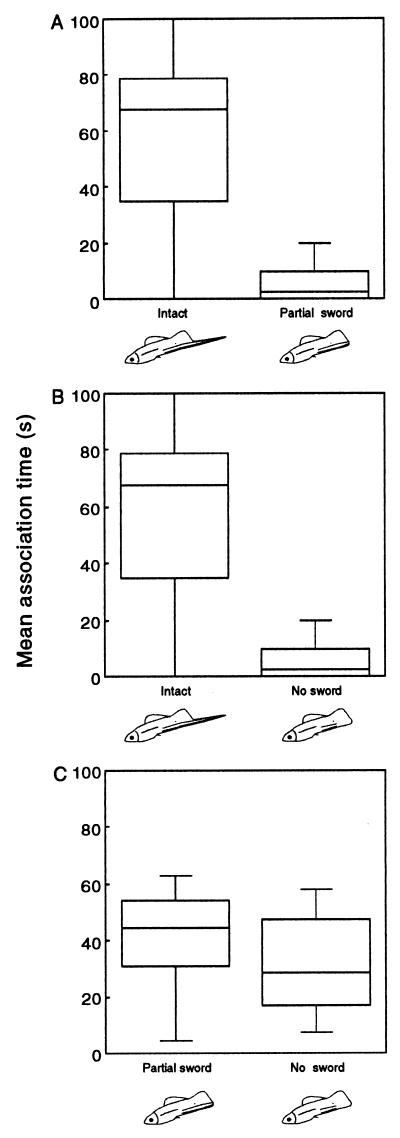
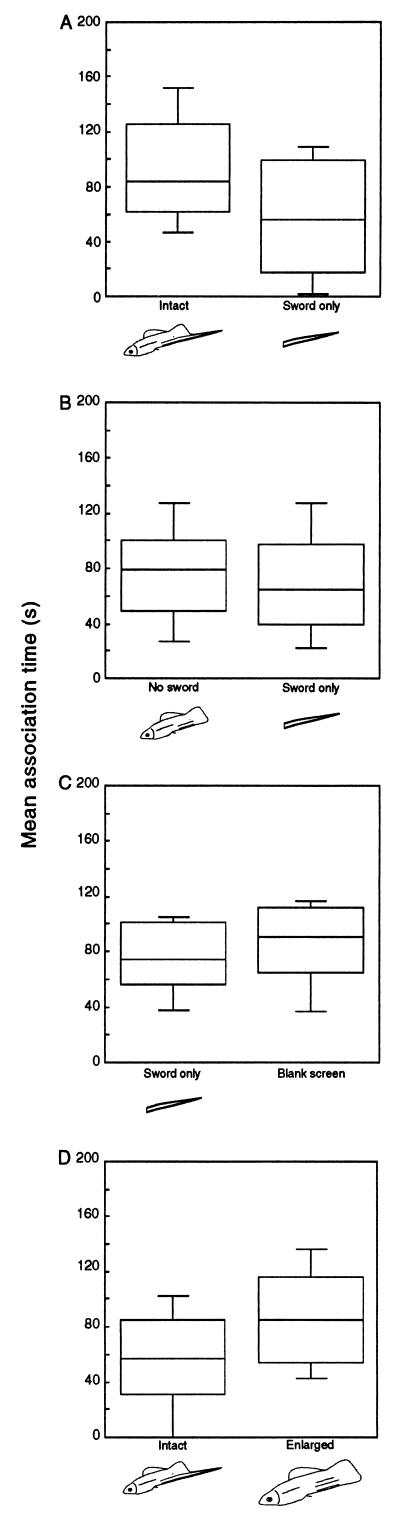
Swordtail fish (Poeciliidae: genus Xiphophorus) are a paradigmatic case of sexual selection by sensory exploitation. Female preference for males with a conspicuous "sword" ornament is ancestral, suggesting that male morphology has evolved in response to a preexisting bias. The perceptual mechanisms underlying female mate choice have not been identified, complicating efforts to understand the selection pressures acting on ornament design. We consider two alternative models of receiver behavior, each consistent with previous results. Females could respond either to specific characteristics of the sword or to more general cues, such as the apparent size of potential mates. We showed female swordtails a series of computer-altered video sequences depicting a courting male. Footage of an intact male was preferred strongly to otherwise identical sequences in which portions of the sword had been deleted selectively, but a disembodied courting sword was less attractive than an intact male. There was no difference between responses to an isolated sword and to a swordless male of comparable length, or between an isolated sword and a homogenous background. Female preference for a sworded male was abolished by enlarging the image of a swordless male to compensate for the reduction in length caused by removing the ornament. This pattern of results is consistent with mate choice being mediated by a general preference for large males rather than by specific characters. Similar processes may account for the evolution of exaggerated traits in other systems.
Figures
References
Publication types
MeSH terms
LinkOut - more resources
Full Text Sources
