


Targeted mutation reveals a central role for SR-BI in hepatic selective uptake of high density lipoprotein cholesterol
- PMID: 9539787
- PMCID: PMC22539
- DOI: 10.1073/pnas.95.8.4619
Targeted mutation reveals a central role for SR-BI in hepatic selective uptake of high density lipoprotein cholesterol
Abstract
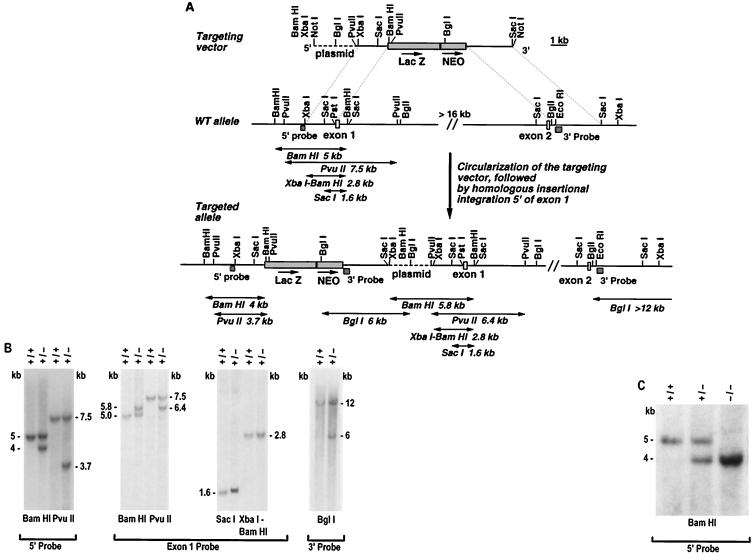
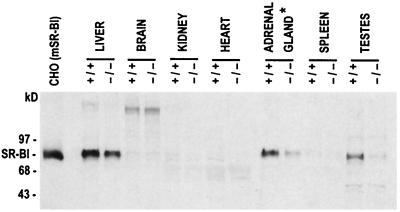
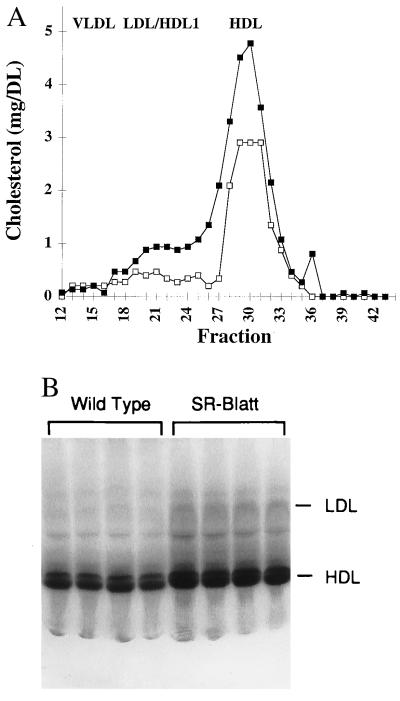
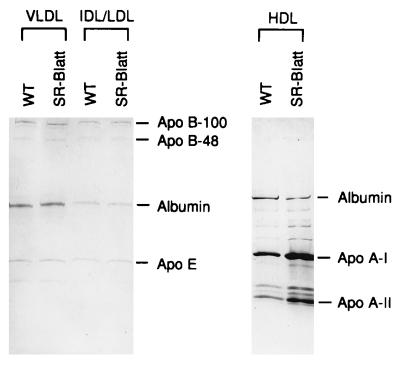
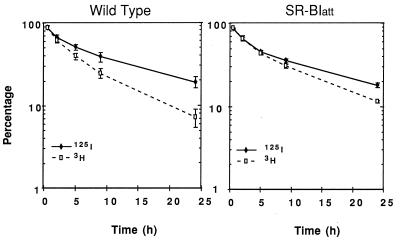
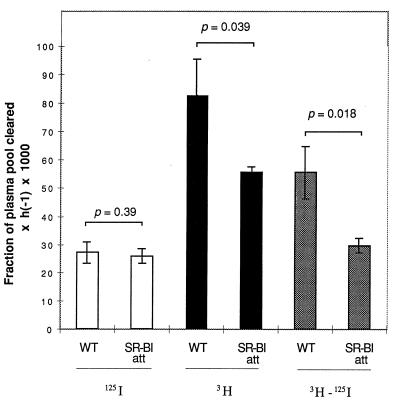
Scavenger receptor BI (SR-BI) is a cell surface receptor that binds high density lipoproteins (HDL) and mediates selective uptake of HDL cholesteryl esters (CE) in transfected cells. To address the physiological role of SR-BI in HDL cholesterol homeostasis, mice were generated bearing an SR-BI promoter mutation that resulted in decreased expression of the receptor in homozygous mutant (designated SR-BI att) mice. Hepatic expression of the receptor was reduced by 53% with a corresponding increase in total plasma cholesterol levels of 50-70% in SR-BI att mice, attributable almost exclusively to elevated plasma HDL. In addition to increased HDL-CE, HDL phospholipids and apo A-1 levels were elevated, and there was an increase in HDL particle size in mutant mice. Metabolic studies using HDL bearing nondegradable radiolabels in both the protein and lipid components demonstrated that reducing hepatic SR-BI expression by half was associated with a decrease of 47% in selective uptake of CE by the liver, and a corresponding reduction of 53% in selective removal of HDL-CE from plasma. Taken together, these findings strongly support a pivotal role for hepatic SR-BI expression in regulating plasma HDL levels and indicate that SR-BI is the major molecule mediating selective CE uptake by the liver. The inverse correlation between plasma HDL levels and atherosclerosis further suggests that SR-BI may influence the development of coronary artery disease.
Figures
Comment in
-
The "best" of cholesterols, the "worst" of cholesterols: a tale of two receptors.Proc Natl Acad Sci U S A. 1998 Apr 14;95(8):4077-80. doi: 10.1073/pnas.95.8.4077. Proc Natl Acad Sci U S A. 1998. PMID: 9539689 Free PMC article. Review. No abstract available.
References
Publication types
MeSH terms
Substances
Grants and funding
LinkOut - more resources
Full Text Sources
Other Literature Sources
Medical
Molecular Biology Databases
Research Materials
