


Functional role of hepatitis C virus chimeric glycoproteins in the infectivity of pseudotyped virus
- PMID: 9557633
- PMCID: PMC109573
- DOI: 10.1128/JVI.72.5.3539-3546.1998
Functional role of hepatitis C virus chimeric glycoproteins in the infectivity of pseudotyped virus
Abstract
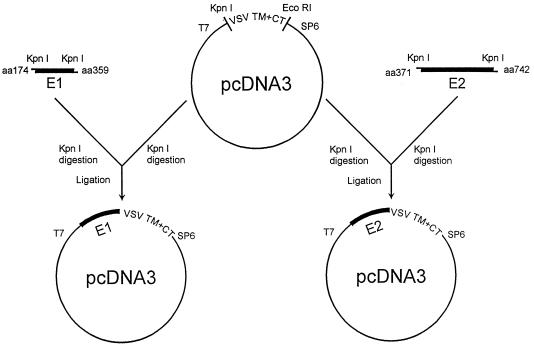
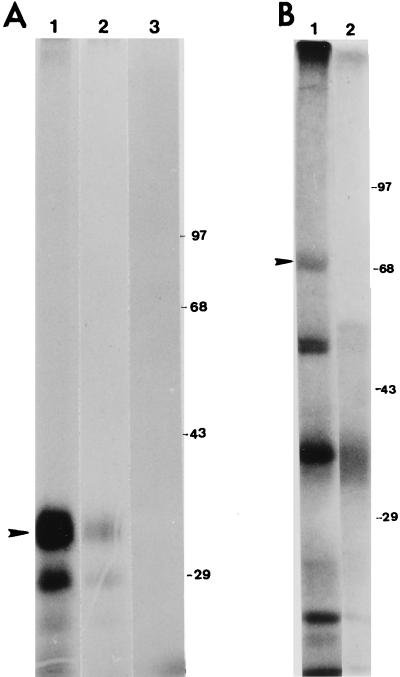
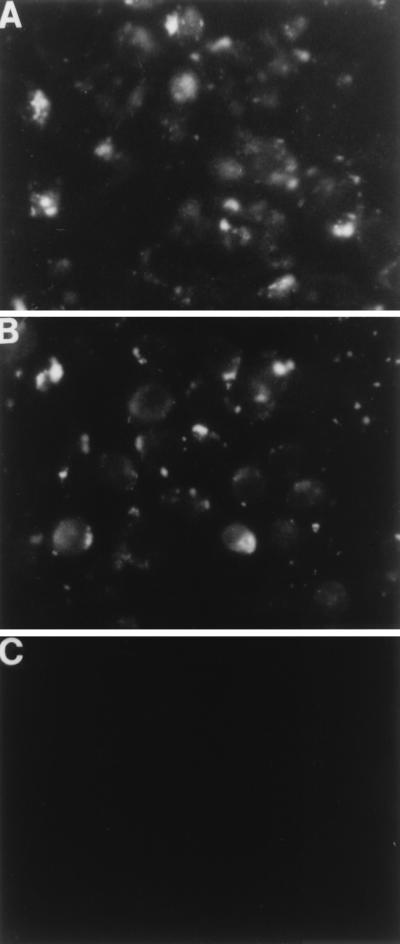
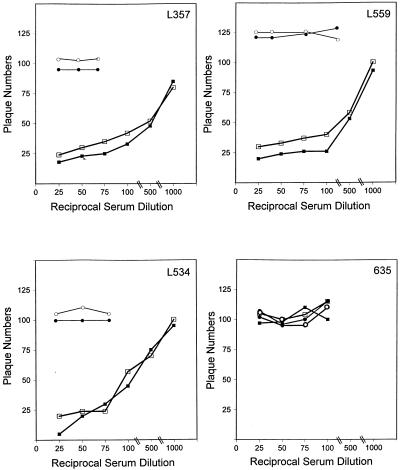
The putative envelope glycoproteins of hepatitis C virus (HCV) likely play an important role in the initiation of viral infection. Available information suggests that the genomic regions encoding the putative envelope glycoproteins, when expressed as recombinant proteins in mammalian cells, largely accumulate in the endoplasmic reticulum. In this study, genomic regions which include the putative ectodomain of the E1 (amino acids 174 to 359) and E2 (amino acids 371 to 742) glycoproteins were appended to the transmembrane domain and cytoplasmic tail of vesicular stomatitis virus (VSV) G protein. This provided a membrane anchor signal and the VSV incorporation signal at the carboxy termini of the E1 and E2 glycoproteins. The chimeric gene constructs exhibited expression of the recombinant proteins on the cell surface in a transient expression assay. When infected with a temperature-sensitive VSV mutant (ts045) and grown at the nonpermissive temperature (40.5 degrees C), cells transiently expressing the E1 or E2 chimeric glycoprotein generated VSV/HCV pseudotyped virus. The resulting pseudotyped virus generated from E1 or E2 surprisingly exhibited the ability to infect mammalian cells and sera derived from chimpanzees immunized with the homologous HCV envelope glycoproteins neutralized pseudotyped virus infectivity. Results from this study suggested a potential functional role for both the E1 and E2 glycoproteins in the infectivity of VSV/HCV pseudotyped virus in mammalian cells. These observations further suggest the importance of using both viral glycoproteins in a candidate subunit vaccine and the potential for using a VSV/HCV pseudotyped virus to determine HCV neutralizing antibodies.
Figures
References
-
- Alter H J, Purcell R H, Shih J W, Melpolder J C, Houghton M, Choo Q L, Kuo G. Detection of antibody to hepatitis C virus in prospectively followed transfusion recipients with acute and chronic non-A, non-B hepatitis. N Engl J Med. 1989;321:1494–1500. - PubMed
-
- Beach, M. (Centers for Disease Control and Prevention, Atlanta, Ga.). Personal communication.
-
- Bertolini L, Iacovacci S, Ponzetto A, Battaglia M, Carloni G. The human bone-marrow-derived B-cell line CE, susceptible to hepatitis C virus infection. Res Virol. 1993;144:281–285. - PubMed
-
- Choo Q L, Kuo G, Weiner A J, Overby L R, Bradley D W, Houghton M. Isolation of a cDNA clone derived from a blood-borne non-A, non-B viral hepatitis genome. Science. 1989;244:359–362. - PubMed
Publication types
MeSH terms
Substances
Grants and funding
LinkOut - more resources
Full Text Sources
Other Literature Sources
