


The mouse H-2A region influences the envelope gene structure of tumor-associated murine leukemia viruses
- PMID: 9557684
- PMCID: PMC109624
- DOI: 10.1128/JVI.72.5.3973-3979.1998
The mouse H-2A region influences the envelope gene structure of tumor-associated murine leukemia viruses
Abstract
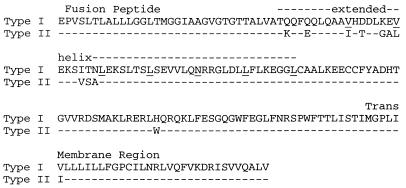
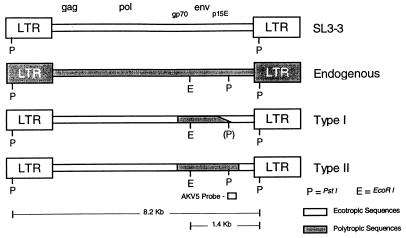
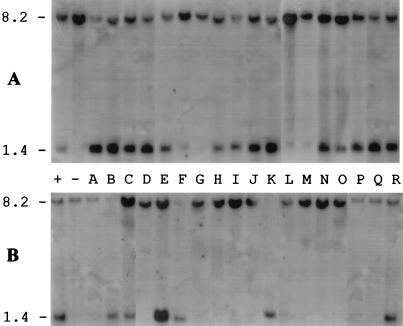
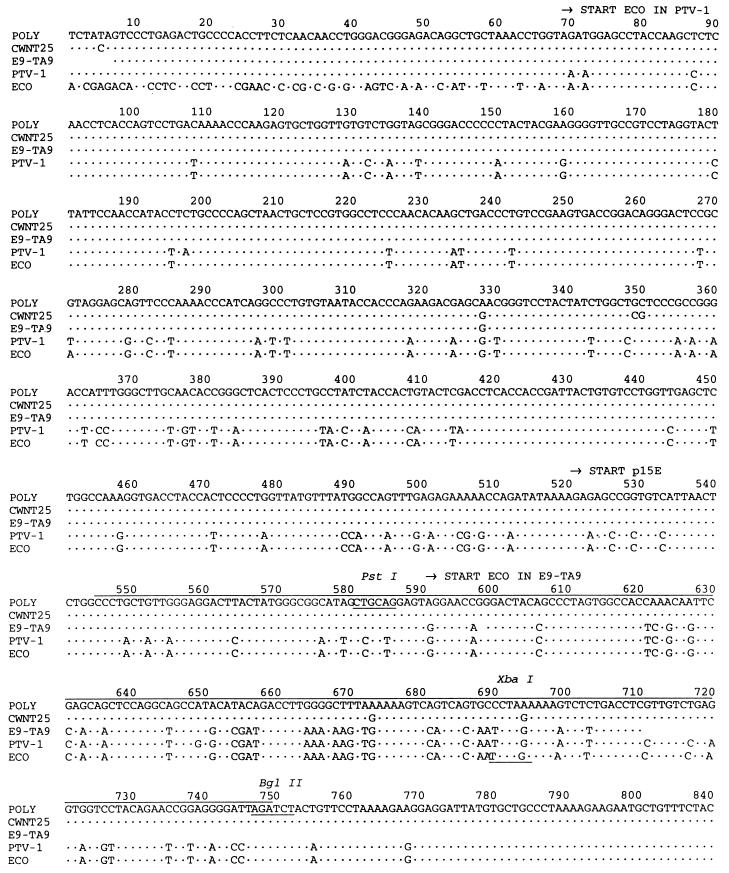
C57BL/10 (B10) strains congenic at the mouse major histocompatibility locus (H-2) were injected with a modified ecotropic SL3-3 murine leukemia virus (MuLV) to determine the effect of the H-2 genes on the envelope gene structure of recombinant MuLVs. All tested strains rapidly developed T-cell lymphomas, and recombinant proviruses were detected in the tumor DNAs by Southern blot. The B10.D2 (H-2d), B10.Br (H-2k), B10.Q (H-2q), and B10.RIII (H-2r) strains exhibited a TI phenotype in which almost all tumors contained type I recombinants. These recombinants characteristically acquire envelope gene sequences from the endogenous polytropic viruses but retain the 5' p15E (TM) gene sequences from the ecotropic virus. The parental B10 (H-2b) strain, however, had a novel phenotype that was designated NS for nonselective. Only 30% of the B10 tumors had detectable type I recombinants, whereas a proportion of the others appeared to contain type II recombinants that lacked the type I-specific ecotropic p15E gene sequences. Studies of other B10 congenic strains with hybrid H-2 loci and selected F1 animals revealed that the NS phenotype was regulated by a dominant gene(s) that mapped to the A region of H-2b. These results demonstrate that a host gene within the major histocompatibility complex can influence the genetic evolution of pathogenic retroviruses in vivo.
Figures
References
-
- Attaya M, Jameson S, Martinez C K, Hermel E, Aldrich C, Forman J, Lindahl K F, Bevan M J, Monaco J J. Ham-2 corrects the class I antigen-processing defect in RMA-S cells. Nature. 1992;355:647–649. - PubMed
-
- Chattopadhyay S K, Cloyd M W, Linemeyer D L, Lander M R, Rands E, Lowy D R. Cellular origin and role of mink cell focus-forming viruses in murine thymic lymphomas. Nature. 1982;295:25–31. - PubMed
-
- Coffin J M. Genetic diversity and evolution of retroviruses. Curr Top Microbiol Immunol. 1992;176:143–164. . (Review.) - PubMed
-
- Coffin J M, Stoye J P, Frankel W N. Genetics of endogenous murine leukemia viruses. Ann N Y Acad Sci. 1989;567:39–49. - PubMed
Publication types
MeSH terms
Substances
Grants and funding
LinkOut - more resources
Full Text Sources
Miscellaneous
