


A calcineurin-dependent transcriptional pathway for cardiac hypertrophy
- PMID: 9568714
- PMCID: PMC4459646
- DOI: 10.1016/s0092-8674(00)81573-1
A calcineurin-dependent transcriptional pathway for cardiac hypertrophy
Abstract
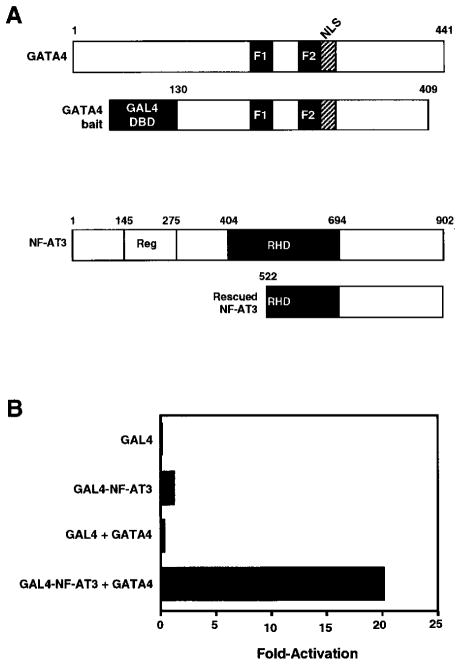
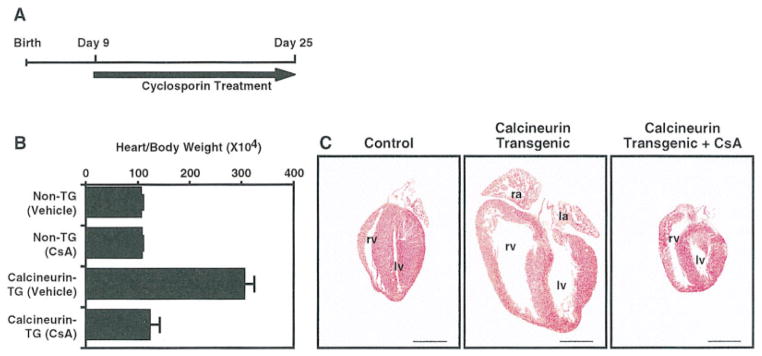
In response to numerous pathologic stimuli, the myocardium undergoes a hypertrophic response characterized by increased myocardial cell size and activation of fetal cardiac genes. We show that cardiac hypertrophy is induced by the calcium-dependent phosphatase calcineurin, which dephosphorylates the transcription factor NF-AT3, enabling it to translocate to the nucleus. NF-AT3 interacts with the cardiac zinc finger transcription factor GATA4, resulting in synergistic activation of cardiac transcription. Transgenic mice that express activated forms of calcineurin or NF-AT3 in the heart develop cardiac hypertrophy and heart failure that mimic human heart disease. Pharmacologic inhibition of calcineurin activity blocks hypertrophy in vivo and in vitro. These results define a novel hypertrophic signaling pathway and suggest pharmacologic approaches to prevent cardiac hypertrophy and heart failure.
Figures




References
-
- Botinelli R, Coviello DA, Redwood CS, Pellegrino MA, Maron BJ, Spirito P, Watkins H, Reggiani C. A mutant tropomyosin that causes hypertrophic cardiomyopathy is expressed in vivo and associated with an increased calcium sensitivity. Circ Res. 1997;82:106–115. - PubMed
-
- Bustamante JO, Ruknudin A, Sachs F. Stretch-activated channels in heart cells: relevance to cardiac hypertrophy. J Cardiovasc Pharmacol. 1991;17:S110–S113. - PubMed
-
- Chien KR, Zhu H, Knowlton KU, Miller-Hance W, van Bilsen M, Obrein TX, Evans SM. Transcriptional regulation during cardiac growth and development. Annu Rev Physiol. 1993;55:77–95. - PubMed
-
- Dolmetsch RE, Lewis RS, Goodnow CC, Healy JI. Differential activation of transcription factors induced by Ca2+ response amplitude and duration. Nature. 1997;386:855–858. - PubMed
-
- Emmel EA, Verweij CL, Durand DB, Higgins KM, Lacy E, Crabtree GR. Cyclosporin A specifically inhibits function of nuclear proteins involved in T cell activation. Science. 1989;246:1617–1620. - PubMed
Publication types
MeSH terms
Substances
Grants and funding
LinkOut - more resources
Full Text Sources
Other Literature Sources
Medical
Molecular Biology Databases
Research Materials
Miscellaneous
