


Polyreactive anti-DNA monoclonal antibodies and a derived peptide as vectors for the intracytoplasmic and intranuclear translocation of macromolecules
- PMID: 9576929
- PMCID: PMC20424
- DOI: 10.1073/pnas.95.10.5601
Polyreactive anti-DNA monoclonal antibodies and a derived peptide as vectors for the intracytoplasmic and intranuclear translocation of macromolecules
Abstract
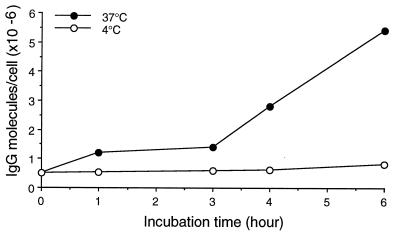
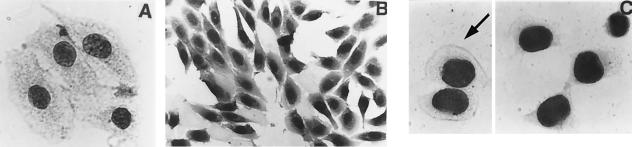
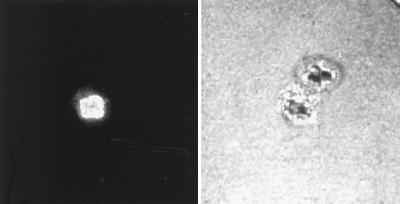
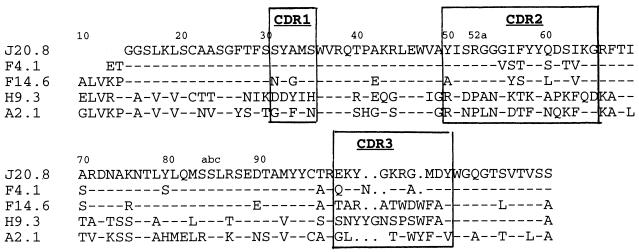
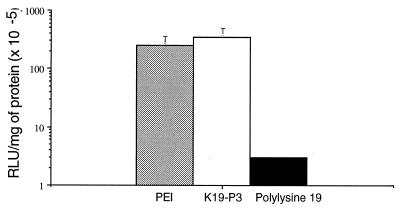
Naturally occurring polyreactive anti-DNA mAbs derived from a nonimmunized (NZB x NZW)F1 mouse with spontaneous lupus erythematosus penetrated and accumulated in the nuclei of a variety of cultured cells. These mAbs and their F(ab')2 and Fab' fragments, covalently coupled to fluorescein, peroxidase, or a 15-mer polynucleotide, also translocated to the cell nuclei. A 30-amino acid peptide corresponding to the combined sequences of the complementary-determining regions 2 and 3 of the heavy chain variable region of one mAb was able to penetrate into the cytoplasm and nucleus of cells of several lines. This peptide recognized DNA and was strongly polyreactive. Streptavidin-peroxidase conjugates complexed with the N-biotinylated peptide were rapidly translocated into cells. Similarly, peroxidase or anti-peroxidase polyclonal antibodies covalently coupled to the N-cysteinylated peptide through an heterobifunctional maleimide cross-linker were also rapidly internalized and frequently accumulated in nuclei. The peptide carrying 19 lysine residues at its N-terminal was highly effective in transfecting 3T3 cells with a plasmid containing the luciferase gene. Thus, penetrating mAbs and derived peptides are versatile vectors for the intracellular delivery of proteins and genes.
Figures
References
-
- Alarcon-Segovia D S, Ruiz-Argüelles A, Fishbein E. Nature (London) 1978;271:67–69. - PubMed
-
- Yanase K, Smith R M, Cisman B, Foster M H, Peachey L D, Jarett L, Madaio M P. Lab Invest. 1994;71:52–60. - PubMed
-
- Koren E, Koscec M, Wolfson-Reichlin M, Ebling F M, Tsao B, Hahn B H, Reichlin M. J Immunol. 1995;154:4857–4864. - PubMed
-
- Zack D J, Stempniak M, Wong A L, Taylor C, Weisbart H. J Immunol. 1996;157:2082–2088. - PubMed
Publication types
MeSH terms
Substances
Associated data
- Actions
- Actions
- Actions
- Actions
- Actions
LinkOut - more resources
Full Text Sources
Other Literature Sources
Miscellaneous
