


Pharmacodynamics of fluconazole in a murine model of systemic candidiasis
- PMID: 9593135
- PMCID: PMC105753
- DOI: 10.1128/AAC.42.5.1105
Pharmacodynamics of fluconazole in a murine model of systemic candidiasis
Abstract
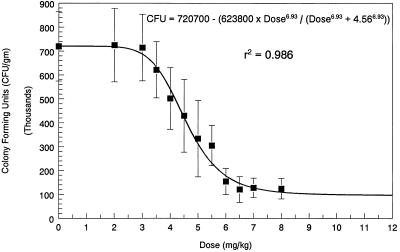
In this study we defined the pharmacodynamic parameter that optimizes outcome in deep-seated Candida albicans infections treated with fluconazole. Using a murine model of systemic candidiasis, we conducted single-dose dose-ranging studies with fluconazole to determine the dosage of this drug that resulted in a 50% reduction in fungal densities (50% effective dose [ED50]) in kidneys versus the fungal densities in the kidneys of untreated controls. We found that the ED50 of fluconazole given intraperitoneally was 4.56 mg/kg of body weight/day (95% confidence interval, 3.60 to 5.53 mg/kg/day), and the dose-response relationship was best described by an inhibitory sigmoid maximal effect (Emax) curve. To define the pharmacodynamics of fluconazole, we gave dosages lower than, approximating, and higher than the ED50 of fluconazole (range, 3.5 to 5.5 mg/kg/day, equivalent to the ED16 to the ED75) to various groups of infected animals using three dose-fractionation schedules. For each total dose of fluconazole examined, the dose-fractionation schedules optimized the ratio of the area under the concentration-time curve (AUC) to the MIC (the AUC/MIC ratio), the ratio of the maximum concentration of drug in serum (Cmax) to the MIC, and the time that the drug remained above the MIC for the infecting C. albicans isolate. Similar reductions in fungal densities in kidneys were seen between groups that received the same total dose of fluconazole in one, two, or four equally divided doses. Thus, dose-fractionation studies demonstrated that the pharmacodynamic parameter of fluconazole that best predicted outcome was the AUC/MIC ratio.
Figures
References
-
- Akaike H. A new look at the statistical model identification. IEEE Trans Automated Control. 1974;19:716–723.
-
- Anaissie E J, Darouiche R O, Abi-Said D, Uzun O, Mera J, Gentry L O, Williams T, Kontoyiannis D P, Karl C L, Bodey G P. Management of invasive candidal infections: results of a prospective, randomized, multicenter study of fluconazole versus amphotericin B and review of the literature. Clin Infect Dis. 1996;23:964–972. - PubMed
-
- Beck-Sague C M, Jarvis W R the National Nosocomial Infections Surveillance System. Secular trends in the epidemiology of nosocomial fungal infections in the United States, 1980–1990. J Infect Dis. 1993;167:1247–1251. - PubMed
Publication types
MeSH terms
Substances
LinkOut - more resources
Full Text Sources
Medical
