


The influence of huntingtin protein size on nuclear localization and cellular toxicity
- PMID: 9606203
- PMCID: PMC2137174
- DOI: 10.1083/jcb.141.5.1097
The influence of huntingtin protein size on nuclear localization and cellular toxicity
Abstract
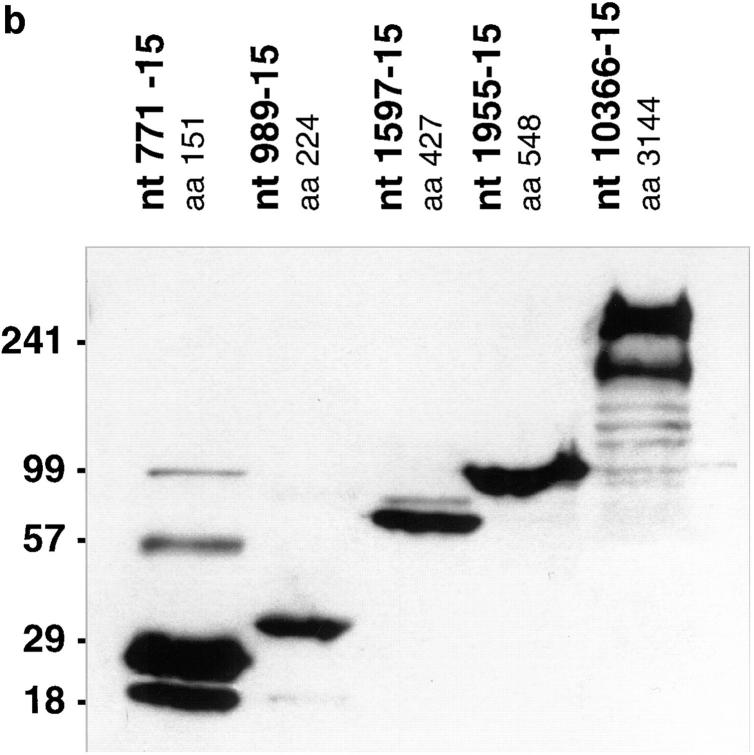
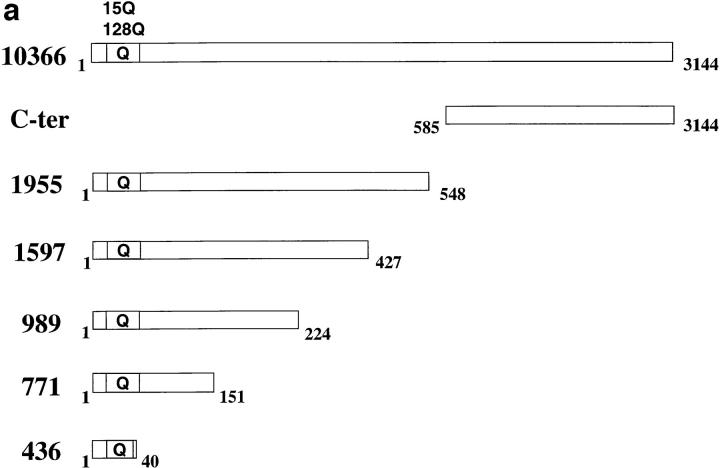
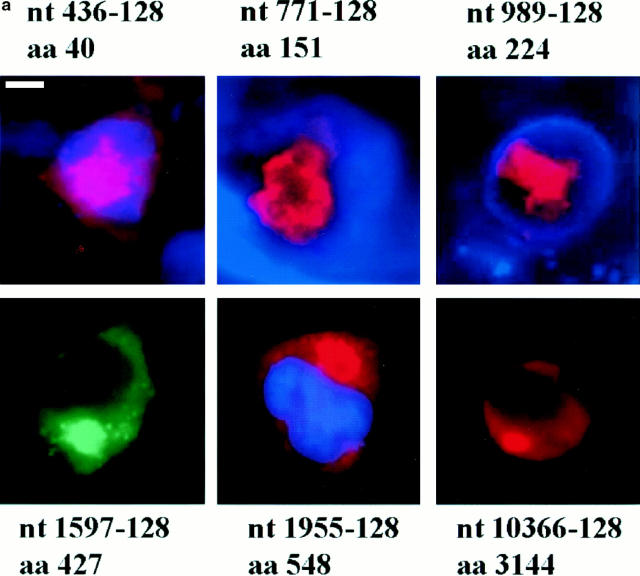
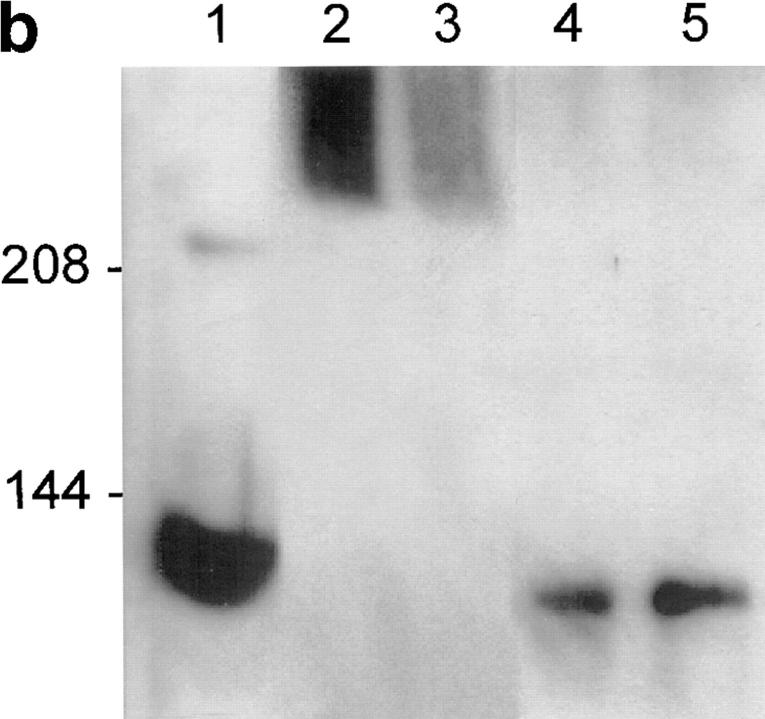
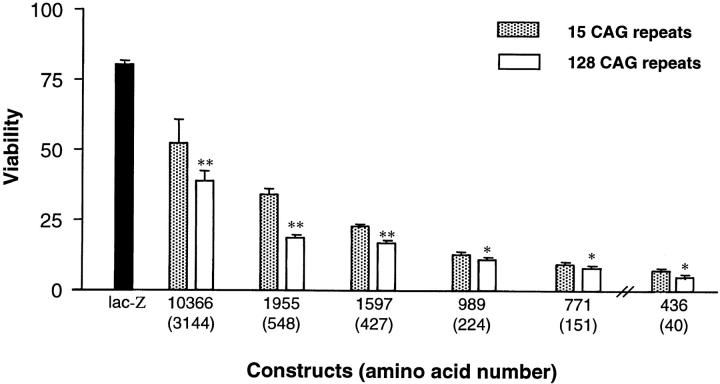
Huntington disease is an autosomal dominant neurodegenerative disorder caused by the pathological expansion of a polyglutamine tract. In this study we directly assess the influence of protein size on the formation and subcellular localization of huntingtin aggregates. We have created numerous deletion constructs expressing successively smaller fragments of huntingtin and show that these smaller proteins containing 128 glutamines form both intranuclear and perinuclear aggregates. In contrast, larger NH2-terminal fragments of huntingtin proteins with 128 glutamines form exclusively perinuclear aggregates. These aggregates can form in the absence of endogenous huntingtin. Furthermore, expression of mutant huntingtin results in increased susceptibility to apoptotic stress that is greater with decreasing protein length and increasing polyglutamine size. As both intranuclear and perinuclear aggregates are clearly associated with increased cellular toxicity, this supports an important role for toxic polyglutamine-containing fragments forming aggregates and playing a key role in the pathogenesis of Huntington disease.
Figures
References
-
- Andrew SE, Goldberg YP, Hayden MR. Commentary: rethinking genotype and phenotype correlations in polyglutamine expansion disorders. Hum Mol Genet. 1997;6:2005–2010. - PubMed
-
- Becher, M.W., J.A. Kotzuk, A.H. Sharp, S.W. Davies, G.P. Bates, D.L. Price, and C.A. Ross. 1997. Intranuclear neuronal inclusions in Huntington's disease and dentatorubral and palidoluysian atrophy: correlation between the density of inclusions and IT15 CAG triplet repeat length. Neurobiol. Dis. In press. - PubMed
-
- Carmichael J, DeGraff WG, Gazdar AF, Minna JD, Mitchell JB. Evaluation of a tetrazolium-based semiautomated colorimetric assay: assessment of chemosensitivity testing. Cancer Res. 1987;47:936–942. - PubMed
-
- Chen CF, Li S, Chen Y, Chen PL, Sharp ZD, Lee WH. The nuclear localization sequences of the BRCA1 protein interact with the importin-α subunit of the nuclear transport signal receptor. J Biol Chem. 1996;271:32863–32868. - PubMed
-
- Cooper JK, Schilling G, Peters MF, Herring WJ, Sharp AH, Kaminsky Z, Masone J, Khan FA, Delanoy M, Borchelt DR, et al. Truncated N-terminal fragments of huntingtin with expanded glutamine repeats form nuclear and cytoplasmic aggregates in cell culture. Hum Mol Genet. 1998;7:783–790. - PubMed
Publication types
MeSH terms
Substances
LinkOut - more resources
Full Text Sources
Medical
Research Materials
