. 1998 Jun 1;141(5):1169-79.
doi: 10.1083/jcb.141.5.1169.

The yeast spindle pole body component Spc72p interacts with Stu2p and is required for proper microtubule assembly

Affiliations

The yeast spindle pole body component Spc72p interacts with Stu2p and is required for proper microtubule assembly

X P Chen et al. J Cell Biol. .

Abstract

We have previously shown that Stu2p is a microtubule-binding protein and a component of the Saccharomyces cerevisiae spindle pole body (SPB). Here we report the identification of Spc72p, a protein that interacts with Stu2p. Stu2p and Spc72p associate in the two-hybrid system and can be coimmunoprecipitated from yeast extracts. Stu2p and Spc72p also interact with themselves, suggesting the possibility of a multimeric Stu2p-Spc72p complex. Spc72p is an essential component of the SPB and is able to associate with a preexisting SPB, indicating that there is a dynamic exchange between soluble and SPB forms of Spc72p. Unlike Stu2p, Spc72p does not bind microtubules in vitro, and was not observed to localize along microtubules in vivo. A temperature-sensitive spc72 mutation causes defects in SPB morphology. In addition, most spc72 mutant cells lack cytoplasmic microtubules; the few cytoplasmic microtubules that are observed are excessively long, and some of these are unattached to the SPB. spc72 cells are able to duplicate and separate their SPBs to form a bipolar spindle, but spindle elongation and chromosome segregation rarely occur. The chromosome segregation block does not arrest the cell cycle; instead, spc72 cells undergo cytokinesis, producing aploid cells and polyploid cells that contain multiple SPBs.


Figures
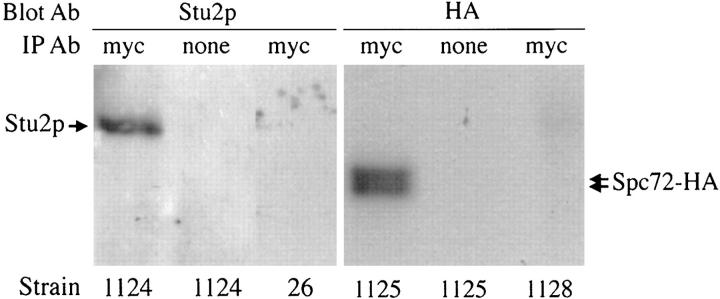
Figure 1
Figure 1
Spc72p coimmunoprecipitates with Stu2p and itself. Protein extracts from the yeast strains indicated were immunoprecipitated (IP) with anti-myc antibody or were mock-immunoprecipitated without antibody. Immunoprecipitates were subjected to SDS-PAGE, and the gels were immunoblotted with anti-Stu2p or anti-HA antibodies as indicated. CUY1124 contains Spc72-myc, CUY26 contains no epitope-tagged constructs, CUY1125 contains Spc72-myc and Spc72-HA, and CUY1128 contains Spc72-HA.
Figure 2
Figure 2
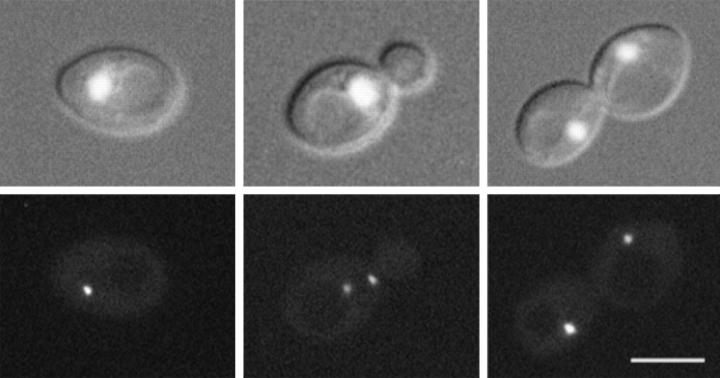
Localization of Spc72-GFP. GFP fluorescence was visualized in living yeast cells that contain a disruption of the chromosomal SPC72 gene and carry SPC72-GFP on a plasmid (CUY1113). To visualize chromosomal DNA, cells were grown in the presence of 1 μg/ml DAPI for 2 h. (Top) Both DNA staining and differential interference contrast (DIC) image of cells; (bottom) fluorescence of Spc72-GFP. Bar, 5 μm.
Figure 3
Figure 3
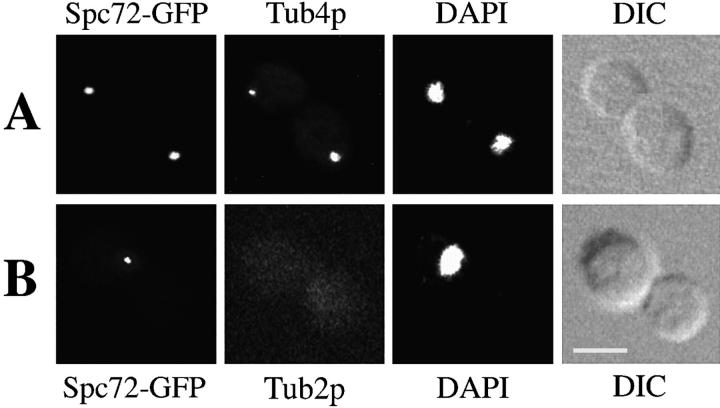
Spc72p localization to the SPBs is independent of microtubules. Yeast strain CUY1115, expressing SPC72-GFP under control of the GAL1 promoter, was grown in YPGal at 26°C. (A) Cells were fixed for immunofluorescence and stained with anti-Tub4p antibodies. (B) Cells were treated with nocodazole to depolymerize microtubules, and were stained with anti-β-tubulin antibody. DAPI staining and DIC images are also shown. Bar, 5 μm.
Figure 4
Figure 4
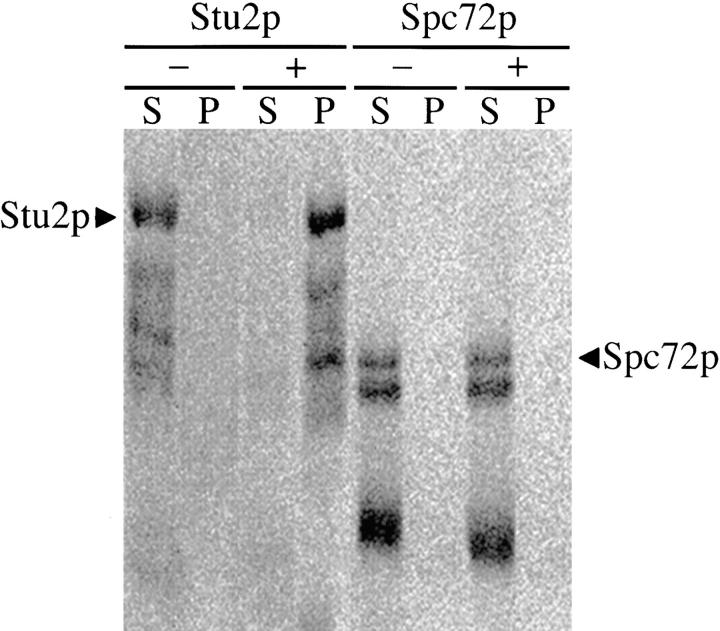
Spc72p does not bind microtubules in vitro. 35S-labeled in vitro–translated Stu2p and Spc72p were incubated without microtubules (−) and with 5 μM taxol-stabilized bovine brain microtubules (+). Microtubules were then pelleted by centrifugation, and pellet (P) and supernatant (S) fractions were subjected to SDS-PAGE analysis. Bands were visualized and quantitated using a phosphoimager.
Figure 6
Figure 6
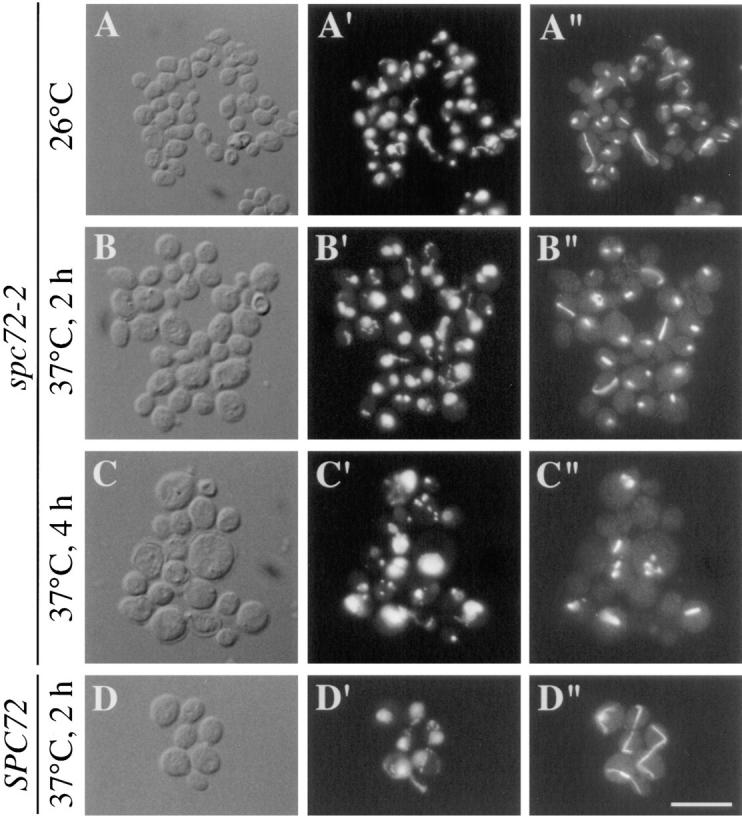
Phenotype of spc72-2 cells. spc72-2 (CUY1123) and SPC72 (CUY26) cells were grown at 26°C, and were then shifted to 37°C for the times indicated. (A) spc72-2 cells at 26°C; (B) spc72-2 cells after 2 h at 37°C; (C) spc72-2 cells after 4 h at 37° C; (D) SPC72 cells after 2 h at 37°C. (A–D) DIC; (A′–D′), DAPI staining; (A′′–D′′), immunofluorescence with Tub2p antibody. Bar, 10 μm.
Figure 5
Figure 5
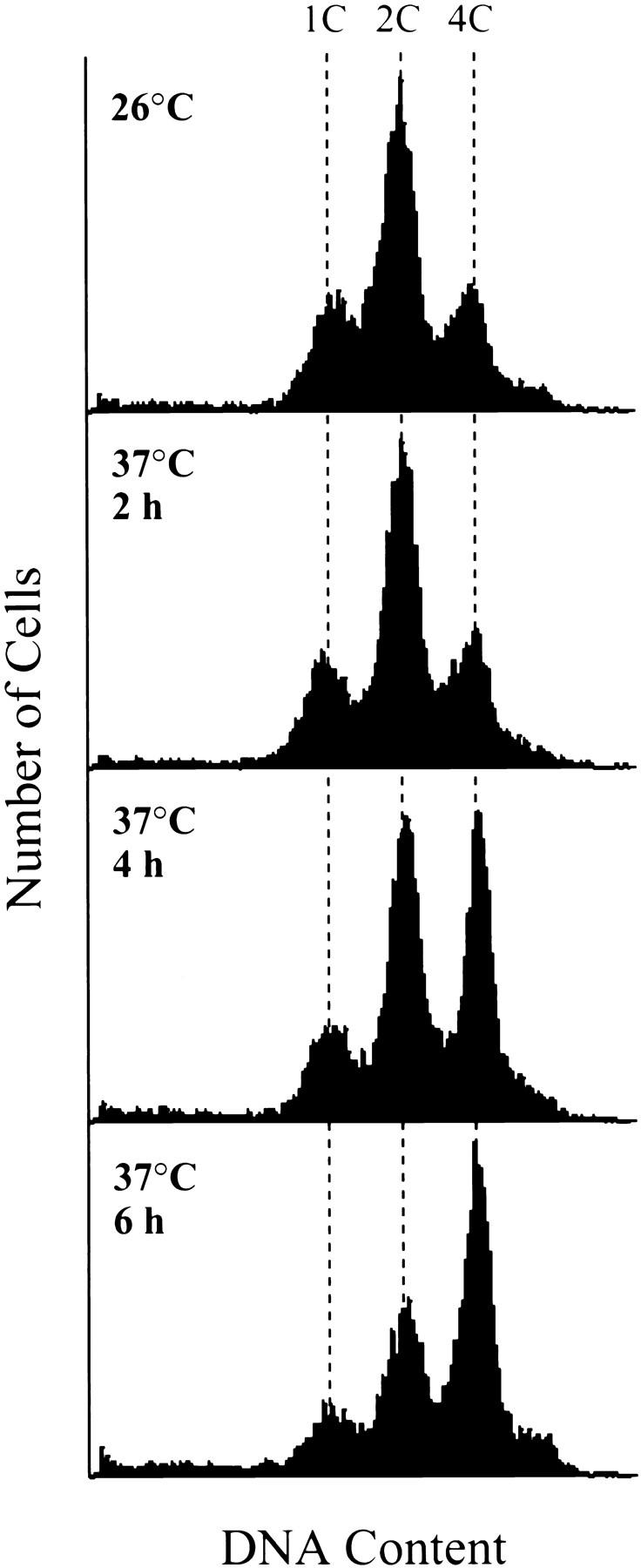
DNA content of spc72-2 cells. CUY1123 cells were grown to logarithmic phase at 26°C, and were then shifted to 37°C. Aliquots of cells were taken 2, 4, and 6 h after the temperature shift. Flow cytometry was performed as described by Hutter and Eipel (1979). The positions of cells with 1C and 2C DNA content were determined by flow cytometry of SPC72 cells (CUY26); the position of cells with a 4C DNA content was extrapolated from this data.
Figure 7
Figure 7
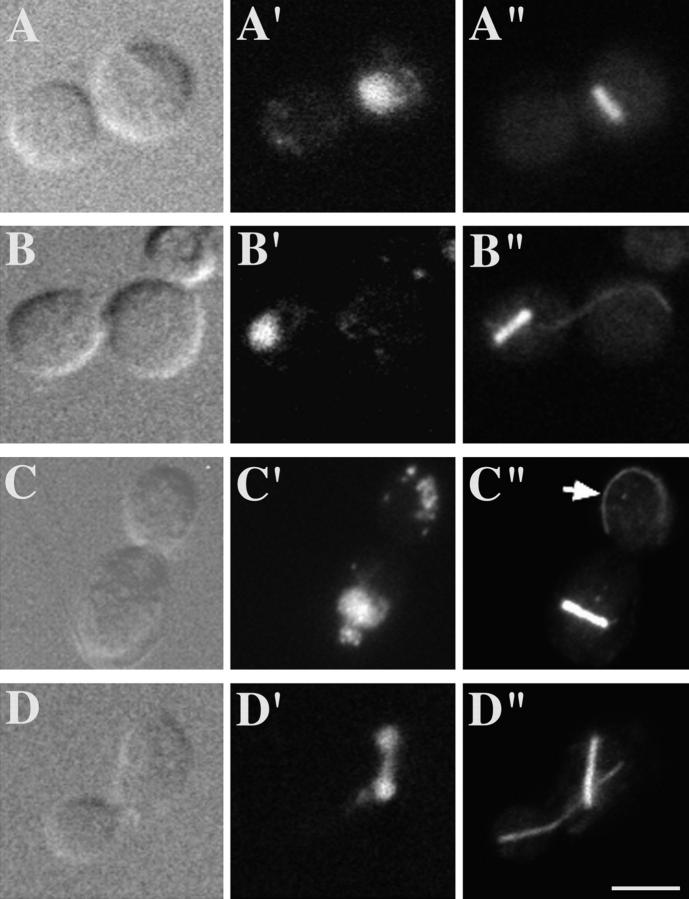
Phenotype of large-budded spc72-2 cells. spc72-2 cells (CUY1123) were grown at 26°C, and were then shifted to 37°C for 2 h. (A–D), DIC; (A′–D′), DAPI staining; (A′′–D′′), immunofluorescence with Tub2p antibody. Arrow indicates microtubule that is unattached to the SPB. Bar, 5 μm.
Figure 8
Figure 8
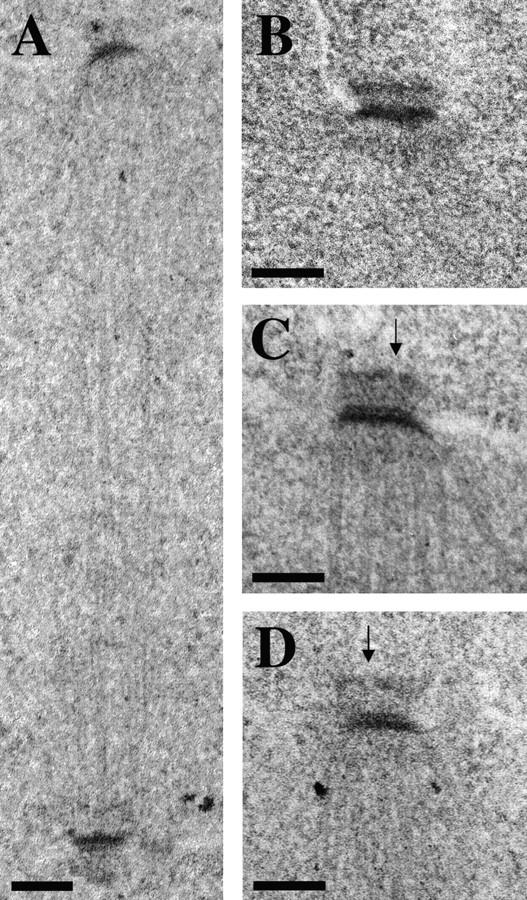
Spindle and SPB morphology in spc72-2 cells. SPC72 (CUY1130) and spc72-2 (CUY1116) were arrested with α-factor at 26°C, and were then released from the arrest at 37°C for 90 min. (A) spc72-2 spindle; (B) SPC72 SPB; (C and D) spc72-2 SPBs. Arrows indicate gaps in the outer plaque of spc72-2 cells. Bars, 0.1 μm.

References

    1. Ault JG, Rieder CL. Centrosome and kinetochore movement during mitosis. Curr Opin Cell Biol. 1994;6:41–49. - PubMed
    1. Baum P, Furlong C, Byers B. Yeast gene required for spindle pole body duplication: homology of its product with calcium-binding proteins. Proc Natl Acad Sci USA. 1986;83:5512–5516. - PMC - PubMed
    1. Berlin V, Styles C, Fink G. BIK1, a protein required for microtubule function during mating and mitosis in Saccharomyces cerevisiae, colocalizes with tubulin. J Cell Biol. 1990;111:2573–2586. - PMC - PubMed
    1. Boeke J, LaCroute F, Fink G. A positive selection for mutants lacking orotidine-5′-phosphate decarboxylase activity in yeast: 5-fluoro-orotic acid resistance. Mol Gen Genet. 1984;197:345–346. - PubMed
    1. Bullitt E, Rout MP, Kilmartin JV, Akey CW. The yeast spindle pole body is assembled around a central crystal of Spc42p. Cell. 1997;89:1077–1086. - PubMed

Publication types

MeSH terms

Substances