Biofeedback provides long-term benefit for patients with intractable, slow and normal transit constipation
- PMID: 9616314
- PMCID: PMC1727071
- DOI: 10.1136/gut.42.4.517
Biofeedback provides long-term benefit for patients with intractable, slow and normal transit constipation
Abstract
Background: Many patients with idiopathic constipation do not respond to conventional medical treatments. Recently biofeedback has been proposed as an alternative treatment but the long-term results, and which patients benefit, are unknown. Treatment has usually been restricted to patients with normal colonic transit and impaired pelvic floor coordination on straining.
Aims: To determine the efficacy and long-term outcome of biofeedback treatment in idiopathic constipation.
Methods: One hundred consecutive contactable patients who had completed a course of biofeedback more than 12 months previously were identified. Pretreatment details of bowel function and symptoms, whole gut transit time, and anorectal physiological testing, which had been previously prospectively collected, were collated. Follow up consisted of structured interview. Sixty five per cent had slow transit and 59% had paradoxical pelvic floor contraction on straining.
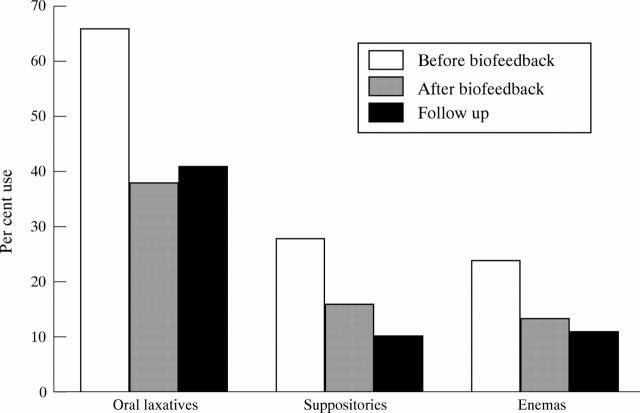
Results: Median follow up was 23 months (range 12-44). On long-term follow up 55% felt that biofeedback had helped and 57% felt their constipation was improved. There was a significant reduction in need to strain, abdominal pain, bloating, and oral laxative use. Spontaneous bowel frequency was significantly improved by treatment. Patients with slow and normal transit, males and females, and those with and without paradoxical contraction of the anal sphincter on straining, benefited equally from treatment. Anorectal testing did not predict outcome.
Conclusion: This study suggests that biofeedback is an effective long term treatment for the majority of patients with idiopathic constipation unresponsive to traditional treatments. Pelvic floor abnormalities and transit time should not form selection criteria for treatment.
Figures
References
MeSH terms
LinkOut - more resources
Full Text Sources
Medical