


Geographic discrimination of Paracoccidioides brasiliensis strains by randomly amplified polymorphic DNA analysis
- PMID: 9620409
- PMCID: PMC104909
- DOI: 10.1128/JCM.36.6.1733-1736.1998
Geographic discrimination of Paracoccidioides brasiliensis strains by randomly amplified polymorphic DNA analysis
Abstract
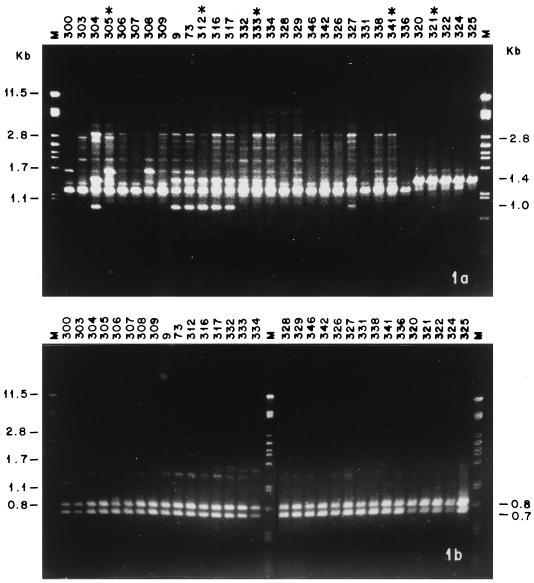
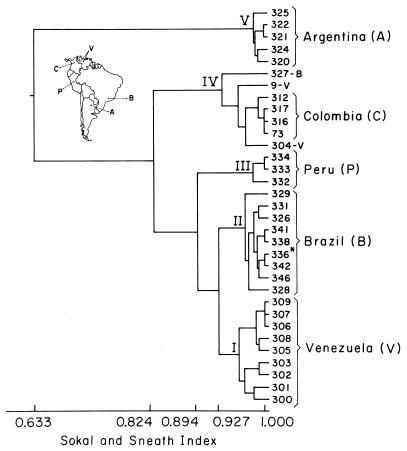
Randomly amplified polymorphic DNA (RAPD) analysis of 33 Paracoccidioides brasiliensis strains from Argentina, Brazil, Colombia, Peru, and Venezuela produced reproducible amplification products which were sufficiently polymorphic to allow differentiation of the strains. Types generated with five primers (OPG 03, OPG 05, OPG 14, OPG 16, and OPG 18) resulted in a high discriminatory index (0.956). The discriminatory index was slightly reduced (0.940) when only two primers (OPG 3 and OPG 14) were used. A dendrogram based on these results showed a high degree of similarity among the strains, and genetic differences were expressed in clusters related to geographical regions but not to pathological features of the disease. With a few exceptions, strains were sorted into five groups by geographical origin as follows: group I, Venezuelan strains; group II, Brazilian strains; group III, Peruvian strains; group IV, Colombian strains; and group V, Argentinian strains. The group containing the most disparate strains was group V (discriminatory index, 0.633); the discriminatory index for the other four groups was 0.824. The use of primer OPG 18 by itself was sufficient to discriminate species specificity, and the use of primer OPG 14 by itself was sufficient to discriminate among the geographical locations of the strains in the sample. This method may be helpful for epidemiological studies of P. brasiliensis.
Figures
References
-
- Albornoz M B. Paracoccidioidomycosis. Proceedings of the First Pan American Symposium. Scientific publication no. 254. Washington, D.C: Pan American Health Organization; 1972. Isolation of Paracoccidioides brasiliensis from rural soil in Venezuela; pp. 71–75.
-
- Carbonell L M, Pollak L. Ultrastructura del Paracoccidioides brasiliensis en cultivos de la fase levaduriforme. Mycopathol Mycol Appl. 1963;19:184–204. - PubMed
-
- Einsenstein B I. New molecular techniques for microbial epidemiology and the diagnosis of infectious diseases. J Infect Dis. 1990;161:595–602. - PubMed
-
- Franco M F. Host-parasite relationship in paracoccidioidomycosis. J Med Vet Mycol. 1987;25:5–18. - PubMed
Publication types
MeSH terms
Substances
LinkOut - more resources
Full Text Sources
