


Pharmacokinetics of sparfloxacin in the serum and vitreous humor of rabbits: physicochemical properties that regulate penetration of quinolone antimicrobials
- PMID: 9624487
- PMCID: PMC105615
- DOI: 10.1128/AAC.42.6.1417
Pharmacokinetics of sparfloxacin in the serum and vitreous humor of rabbits: physicochemical properties that regulate penetration of quinolone antimicrobials
Abstract
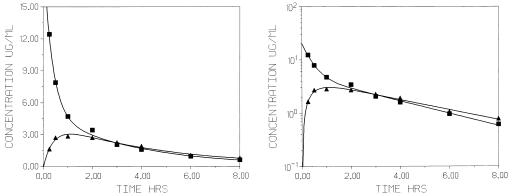
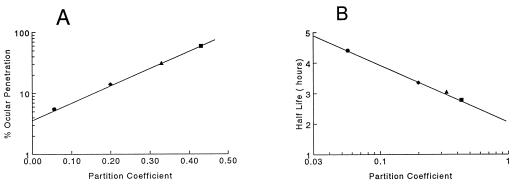
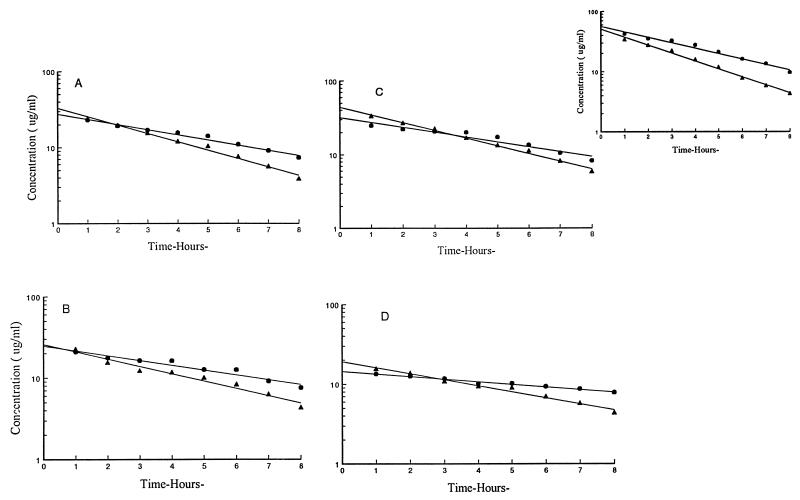
We have used a recently described animal model to characterize the ocular pharmacokinetics of sparfloxacin in vitreous humor of uninfected albino rabbits following systemic administration and direct intraocular injection. The relationships of lipophilicity, protein binding, and molecular weight to the penetration and elimination of sparfloxacin were compared to those of ciprofloxacin, fleroxacin, and ofloxacin. To determine whether elimination was active, elimination rates following direct injection with and without probenecid or heat-killed bacteria were compared. Sparfloxacin concentrations were measured in the serum and vitreous humor by a biological assay. Protein binding and lipophilicity were determined, respectively, by ultrafiltration and oil-water partitioning. Pharmacokinetic parameters were characterized with RSTRIP, an iterative, nonlinear, weighted, least-squares-regression program. The relationship between each independent variable and mean quinolone concentration or elimination rate in the vitreous humor was determined by multiple linear regression. The mean concentration of sparfloxacin in the vitreous humor was 59.4% +/- 12.2% of that in serum. Penetration of sparfloxacin, ciprofloxacin, fleroxacin, and ofloxacin into, and elimination from, the vitreous humor correlated with lipophilicity (r2 > 0.999). The linear-regression equation describing this relationship was not improved by including the inverse of the square root of the molecular weight and/or the degree of protein binding. Elimination rates for each quinolone were decreased by the intraocular administration of probenecid. Heat-killed Staphylococcus epidermidis decreased the rate of elimination of fleroxacin. Penetration of sparfloxacin into the noninflamed vitreous humor was greater than that of any quinolone previously examined. There was an excellent correlation between lipophilicity and vitreous entry or elimination for sparfloxacin as well as ciprofloxacin, fleroxacin, and ofloxacin. There are two modes of quinolone translocation into and out of the vitreous humor: diffusion into the eye and both diffusion and carrier-mediated elimination out of the vitreous humor.
Figures
References
-
- Akaike H A. A new look at the statistical model identification. IEEE. 1973;19:716–723.
-
- Bacon A S, Davison C R, Patel B C, Frazer D G, Ficker L A, Dart J K. Infective endophthalmitis following vitreoretinal surgery. Eye. 1993;7:529–534. - PubMed
-
- Barza M, Kane A, Baum J. The effects of infection and probenecid on the transport of carbenicillin from the rabbit vitreous humor. Investig Ophthalmol Vis Sci. 1982;22:720–726. - PubMed
-
- Barza M, Kane A, Baum J. Pharmacokinetics of intravitreal carbenicillin, cefazolin, and gentamicin in rhesus monkeys. Investig Ophthalmol Vis Sci. 1983;24:1602–1606. - PubMed
Publication types
MeSH terms
Substances
Grants and funding
LinkOut - more resources
Full Text Sources
Other Literature Sources
