


Spatial and temporal variation of phenanthrene-degrading bacteria in intertidal sediments
- PMID: 9647830
- PMCID: PMC106426
- DOI: 10.1128/AEM.64.7.2560-2565.1998
Spatial and temporal variation of phenanthrene-degrading bacteria in intertidal sediments
Abstract
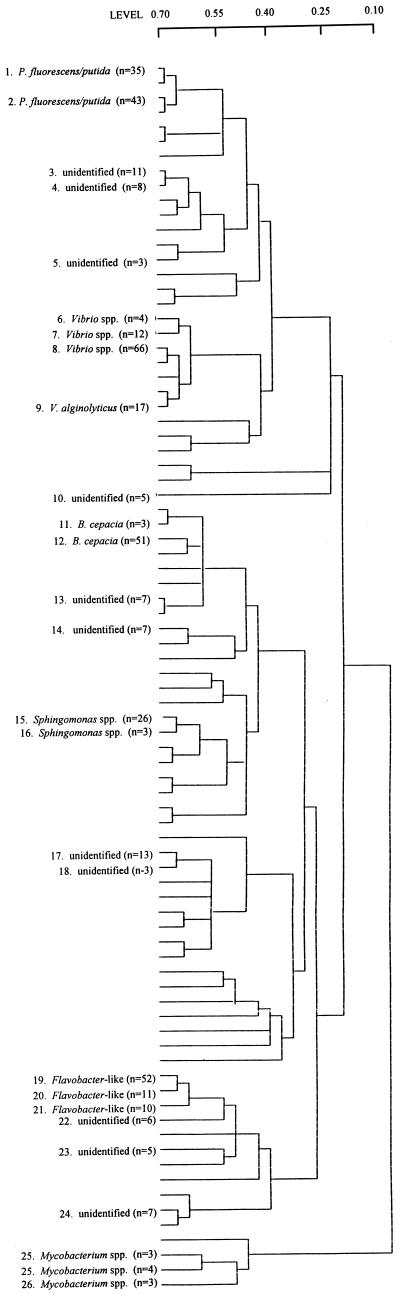
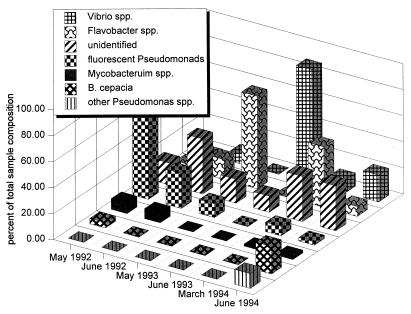
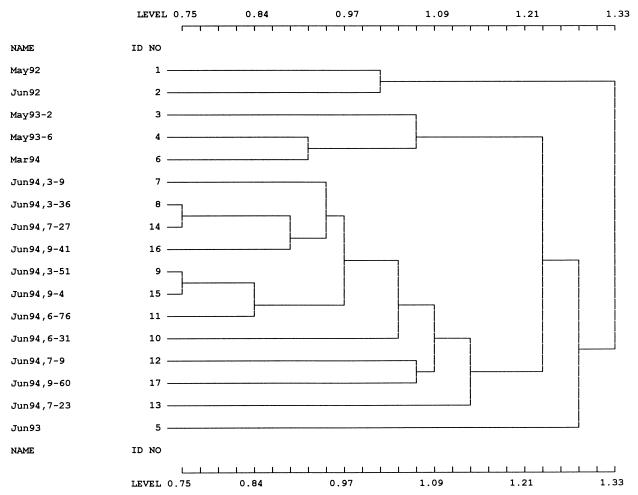
Phenanthrene-degrading bacteria were isolated from a 1-m2 intertidal sediment site in Boston Harbor. Samples were taken six times over 2 years. A total of 432 bacteria were isolated and characterized by biochemical testing. When clustered on the basis of phenotypic characteristics, the isolates could be separated into 68 groups at a similarity level of approximately 70%. Several groups (a total of 200 isolates) corresponded to well-characterized species belonging the genera Vibrio and Pseudomonas. Only 51 of the 437 isolates (< 11.7% of the total) hybridized to a DNA probe that encodes the upper pathway of naphthalene and phenanthrene degradation in Pseudomonas putida NCIB 9816. A cluster analysis indicated that the species composition of the phenanthrene-degrading community changed significantly from sampling date to sampling date. At one sampling time, 12 6-mm-diameter core subsamples were taken within the 1-m2 site to determine the spatial variability of the degrading communities. An analysis of molecular variance, performed with the phenotypic characteristics, indicated that only 6% of the variation occurred among the 12 subsamples, suggesting that the subsamples were almost identical in composition. We concluded that the communities of phenanthrene-degrading bacteria in the sediments are very diverse, that the community structure undergoes significant change with time but does not vary significantly on a spatial scale of centimeters, and that the predominant genes that encode phenanthrene degradation in the communities are not well-characterized.
Figures
References
-
- Anderson J I W. Studies on micrococci isolated from the North Sea. J Appl Bacteriol. 1962;25:362–368.
-
- Cerniglia C E, Heitkamp M A. Microbial degradation of polycyclic aromatic hydrocarbons (PAH) in the aquatic environment. In: Varanasi U, editor. Metabolism of polycyclic aromatic hydrocarbons (PAH) in the aquatic environment. Boca Raton, Fla: CRC Press; 1989. pp. 41–68.
Publication types
MeSH terms
Substances
LinkOut - more resources
Full Text Sources
Molecular Biology Databases
