


Cloning and expression of the inositol monophosphatase gene from Methanococcus jannaschii and characterization of the enzyme
- PMID: 9647837
- PMCID: PMC106433
- DOI: 10.1128/AEM.64.7.2609-2615.1998
Cloning and expression of the inositol monophosphatase gene from Methanococcus jannaschii and characterization of the enzyme
Abstract
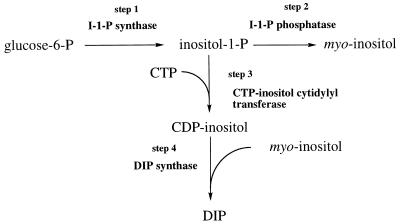
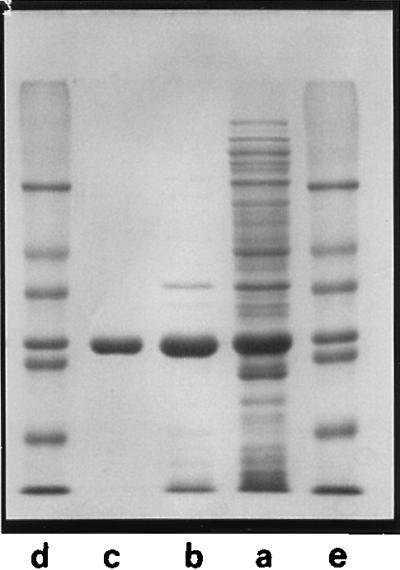
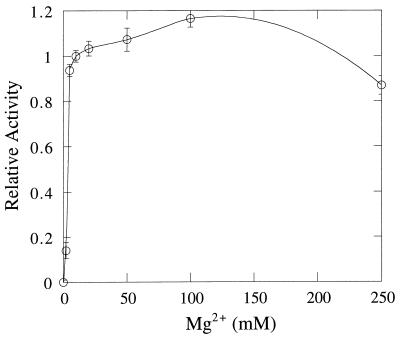
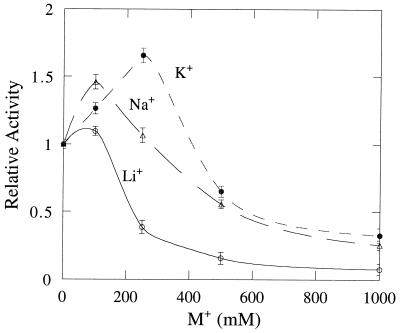
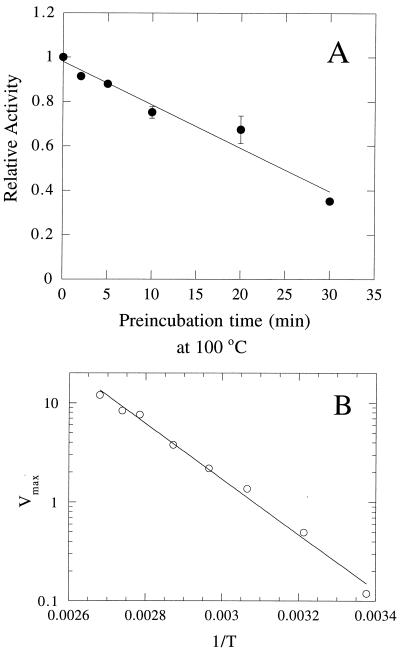
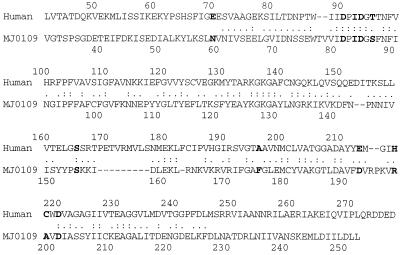
Inositol monophosphatase (EC 3.1.3.25) plays a pivotal role in the biosynthesis of di-myo-inositol-1,1'-phosphate, an osmolyte found in hyperthermophilic archaeal. Given the sequence homology between the MJ109 gene product of Methanococcus jannaschii and human inositol monophosphatase, the MJ109 gene was cloned and expressed in Escherichia coli and examined for inositol monophosphatase activity. The purified MJ109 gene product showed inositol monophosphatase activity with kinetic parameters (K(m) = 0.091 +/- 0.016 mM; Vmax = 9.3 +/- 0.45 mumol of Pi min-1 mg of protein-1) comparable to those of mammalian and E. coli enzymes. Its substrate specificity, Mg2+ requirement, Li+ inhibition, subunit association (dimerization), and heat stability were studied and compared to those of other inositol monophosphatases. The lack of inhibition by low concentrations of Li+ and high concentrations of Mg2+ and the high rates of hydrolysis of glucose-1-phosphate and p-nitrophenylphosphate are the most pronounced differences between the archaeal inositol monophosphatase and those from other sources. The possible causes of these kinetic differences are discussed, based on the active site sequence alignment between M. jannaschii and human inositol monophosphatase and the crystal structure of the mammalian enzyme.
Figures
References
-
- Berridge M J, Irvine R F. Inositol phosphates and cell signaling. Nature. 1989;341:197–205. - PubMed
-
- Bone R, Frank L, Springer J P, Pollack S J, Osborn S, Atack J R, Knowles M R, McAllister G, Ragan C I, Broughton H B, Baker R, Fletcher S R. Structure analysis of inositol monophosphatase complexes with substrates. Biochemistry. 1994;33:9460–9467. - PubMed
-
- Bone R, Frank L, Springer J P, Pollack S J, Osborn S, Atack J R. Structural studies of metal binding by inositol monophosphatase: evidence for two metal ion catalysis. Biochemistry. 1994;33:9468–9476. - PubMed
Publication types
MeSH terms
Substances
LinkOut - more resources
Full Text Sources
Other Literature Sources
Molecular Biology Databases
Research Materials
Miscellaneous
