


Detection of Echinococcus multilocularis in the definitive host: coprodiagnosis by PCR as an alternative to necropsy
- PMID: 9650927
- PMCID: PMC104943
- DOI: 10.1128/JCM.36.7.1871-1876.1998
Detection of Echinococcus multilocularis in the definitive host: coprodiagnosis by PCR as an alternative to necropsy
Abstract
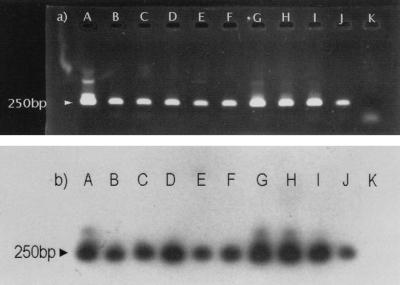
Recently, extensions of the range of Echinococcus multilocularis in Europe and North America and drastic increases in fox populations in Europe put an increasing proportion of the human population at risk of alveolar echinococcosis. To obtain data on the local infection pressure, studies of the prevalence of the parasite in the animals that transmit the parasite, foxes, dogs, and cats, are urgently required. Such investigations, however, have been hampered by the need for necropsy of the host animal to specifically diagnose infection with the parasite. In this study, a nested PCR and an improved method for DNA extraction were developed to allow the sensitive and specific diagnosis of E. multilocularis infections directly from diluted fecal samples from foxes. The target sequence for amplification is part of the E. multilocularis mitochondrial 12S rRNA gene. The specificity of the method was 100% when it was tested against 18 isolates (metacestodes and adult worms) of 11 cestode species, including E. granulosus. The sensitivity of the method was evaluated by adding egg suspensions and individual eggs to samples of diluted feces from uninfected foxes. The presence of one egg was sufficient to give a specific signal. To confirm the PCR results, an internal probe which hybridized only with E. multilocularis amplification products but not with the DNA of other cestodes was constructed. In order to investigate the applicability of this method for epidemiological studies, 250 wild foxes from a area in southern Germany where echinococcosis is highly endemic were examined by both necropsy and PCR of rectal contents. The sensitivity correlated with the parasites' number and stage of maturity. It ranged from 100% (>1,000 gravid worms) to 70% (<10 nongravid worms). On the basis of positive PCR results for 165 foxes, the sensitivity of the traditional and widely used necropsy method was found to be not higher than 76%. We therefore present this PCR system as an alternative method for the routine diagnosis of E. multilocularis in carnivores.
Figures
References
-
- Allan J C, Craig P S, Garcia Noval J, Mencos F, Liu D, Wang Y, Wen H, Zhou P, Stringer R, Rogan M, Zeyhle E. Coproantigen detection for immunodiagnosis of echinococcosis and taeniasis in dogs and humans. Parasitology. 1992;104:347–355. - PubMed
-
- Ausubel F M, Brent R, Kingston R E, Moore D D, Seidman J G, Smith J A, Struhl K, editors. Current protocols in molecular biology. New York, N.Y: Wiley Interscience; 1987. pp. 2.1.1–2.1.2.
-
- Bretagne S, Guillou J-P, Morand M, Houin R. Detection of Echinococcus multilocularis DNA in fox faeces using DNA amplification. Parasitology. 1993;106:193–199. - PubMed
-
- Craig P S, Macpherson C N L, Watson-Jones D L, Nelson G S. Immunodetection of Echinococcus eggs from naturally infected dogs and from environmental contamination sites in settlements in Turkana, Kenya. Trans R Soc Trop Med Hyg. 1988;82:268–274. - PubMed
Publication types
MeSH terms
Substances
LinkOut - more resources
Full Text Sources
Other Literature Sources
Miscellaneous
