


Vascular endothelial growth factors VEGF-B and VEGF-C are expressed in human tumors
- PMID: 9665470
- PMCID: PMC1852959
- DOI: 10.1016/S0002-9440(10)65550-2
Vascular endothelial growth factors VEGF-B and VEGF-C are expressed in human tumors
Abstract
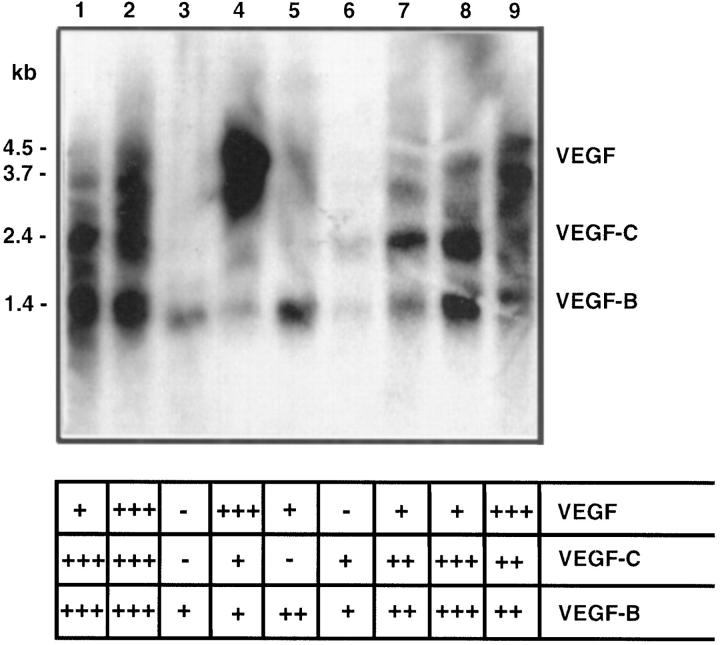
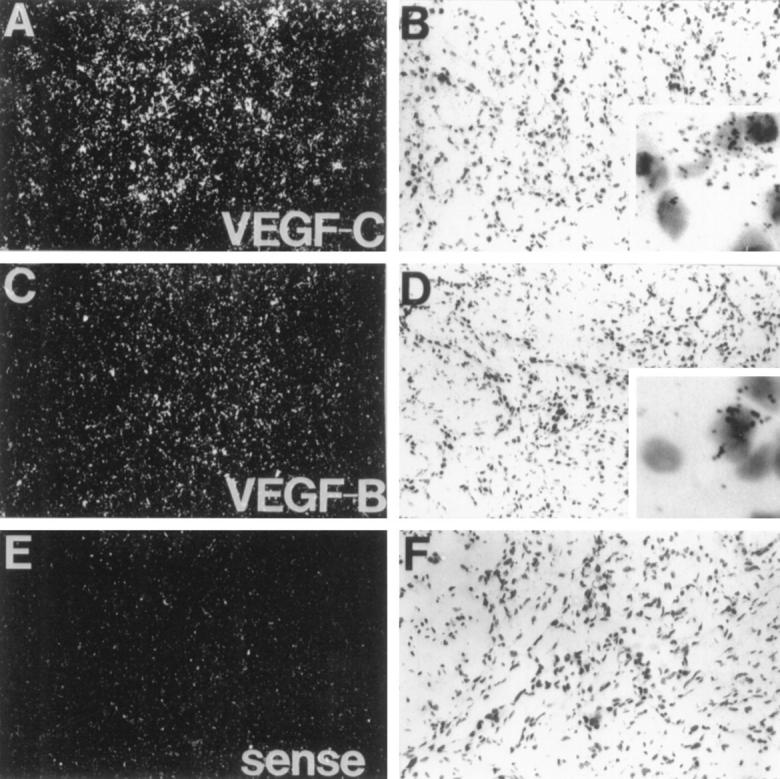
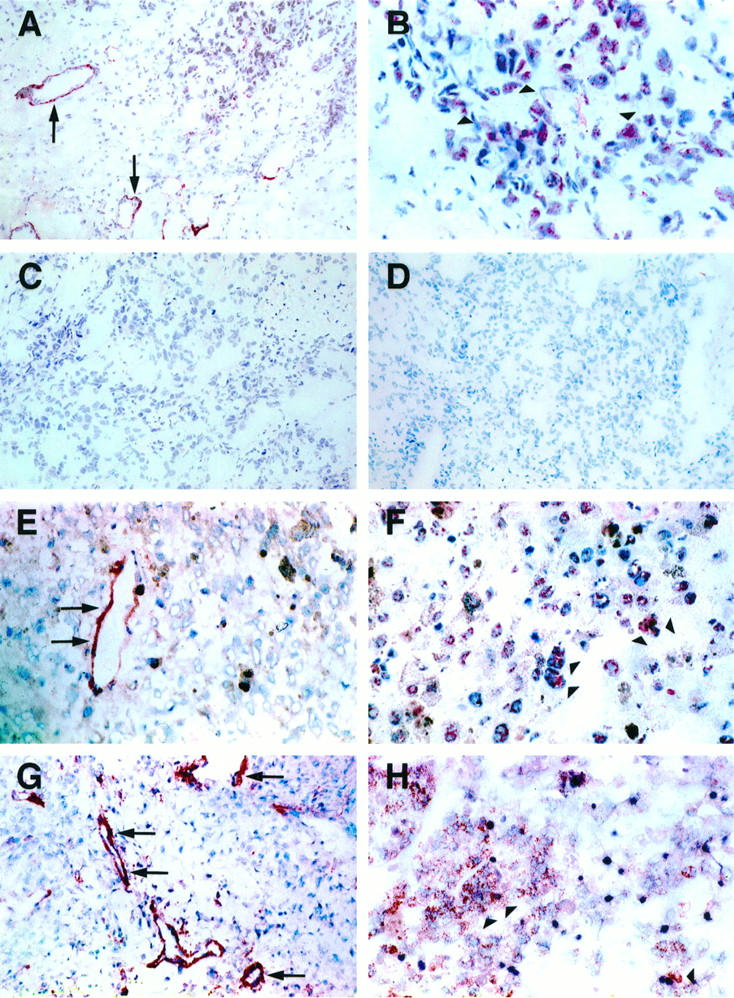
The growth of solid tumors is dependent on angiogenesis, the formation of new blood vessels. Vascular endothelial growth factor (VEGF) is a secreted endothelial-cell-specific mitogen. We have recently characterized two novel endothelial growth factors with structural homology to VEGF and named them VEGF-B and VEGF-C. To further define the roles of VEGF-B and VEGF-C, we have studied their expression in a variety of human tumors, both malignant and benign. VEGF-B mRNA was detected in most of the tumor samples studied, and the mRNA and the protein product were localized to tumor cells. Endothelial cells of tumor vessels were also immunoreactive for VEGF-B, probably representing the binding sites of the VEGF-B polypeptide secreted by adjacent tumor cells. VEGF-C mRNA was detected in approximately one-half of the cancers analyzed. Via in situ hybridization, VEGF-C mRNA was also localized to tumor cells. All lymphomas studied contained low levels of VEGF-C mRNA, possibly reflecting the cell-specific pattern of expression of the VEGF-C gene in the corresponding normal cells. The expression of VEGF-C is associated with the development of lymphatic vessels, and VEGF-C could be an important factor regulating the mutual paracrine relationships between tumor cells and lymphatic endothelial cells. Furthermore, VEGF-C and VEGF-B can, similarly to VEGF, be involved in tumor angiogenesis.
Figures
Comment in
-
What is the role of vascular endothelial growth factor-related molecules in tumor angiogenesis?Am J Pathol. 1998 Jul;153(1):11-6. doi: 10.1016/S0002-9440(10)65539-3. Am J Pathol. 1998. PMID: 9665459 Free PMC article. No abstract available.
References
-
- Folkman J: Angiogenesis in cancer, vascular, rheumatoid and other disease. Nature Med 1995, 1:27-31 - PubMed
-
- Ferrara N: Vascular endothelial growth factor. Eur J Cancer 1996, 32A:2413-2422 - PubMed
-
- Neufeld G, Tessler S, Gitay-Goren H, Cohen T, Levi BZ: Vascular endothelial growth factor and its receptors. Prog Growth Factor Res 1994, 5:89-97 - PubMed
-
- Shweiki D, Itin A, Soffer D, Keshet E: Vascular endothelial growth factor induced by hypoxia may mediate hypoxia-initiated angiogenesis. Nature 1992, 359:843-845 - PubMed
Publication types
MeSH terms
Substances
LinkOut - more resources
Full Text Sources
Other Literature Sources
