


Identification of toxin A-negative, toxin B-positive Clostridium difficile by PCR
- PMID: 9665986
- PMCID: PMC105000
- DOI: 10.1128/JCM.36.8.2178-2182.1998
Identification of toxin A-negative, toxin B-positive Clostridium difficile by PCR
Abstract
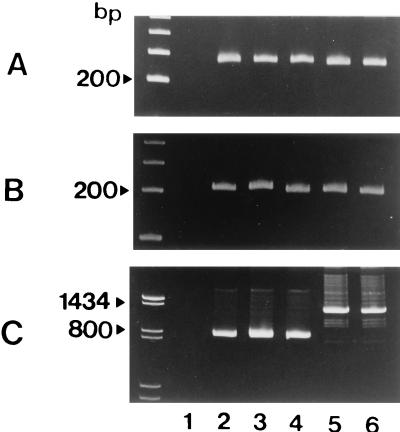
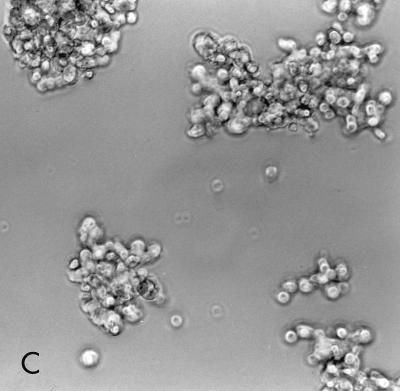
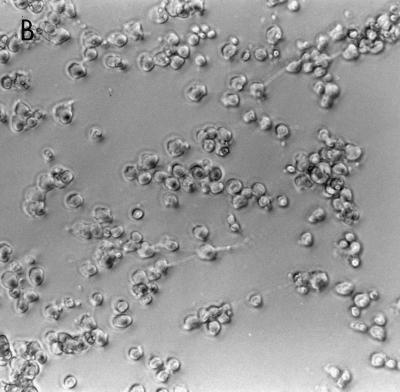
Toxigenic strains of Clostridium difficile have been reported to produce both toxins A and B nearly always, and nontoxigenic strains have been reported to produce neither of these toxins. Recent studies indicate that it is not always true. We established a PCR assay to differentiate toxin A-negative, toxin B-positive (toxin A-, toxin B+) strains from both toxin-positive (toxin A+, toxin B+) strains and both toxin-negative (toxin A-, toxin B-) strains as an alternative to cell culture assay and enzyme-linked immunosorbent assay (ELISA). By using the PCR primer set NK11 and NK9 derived from the repeating sequences of the toxin A gene, a shorter segment (ca. 700 bp) was amplified from toxin A-, toxin B+ strains compared to the size of the segment amplified from toxin A+, toxin B+ strains (ca. 1,200 bp), and no product was amplified from toxin A-, toxin B-strains. We examined a total of 421 C. difficile isolates by PCR. Of these, 48 strains showed a shorter segment by the PCR, were negative by ELISAs for the detection of toxin A, and were positive by cell culture assay. Although the cytotoxin produced by the toxin A-, toxin B+ strains was neutralized by anti-toxin B serum, the appearance of the cytotoxic effects on Vero cell monolayers was distinguishable from that of toxin A+, toxin B+ strains. By immunoblotting, the 44 toxin A-, toxin B+ strains were typed to serogroup F and the remaining four strains were serogroup X. Pulsed-field gel electrophoresis separated the 48 strains into 19 types. The PCR assay for the detection of the repeating sequences combined with PCR amplification of the nonrepeating sequences of either the toxin A or the toxin B gene is indicated to be useful for differentiating toxin A-, toxin B+ strains from toxin A+, toxin B+ and toxin A-, toxin B- strains and will contribute to elucidation of the precise role of toxin A-, toxin B+ strains in intestinal diseases.
Figures

References
-
- Allen S D, Baron E J. Clostridium. In: Balows A, Hausler W J Jr, Herrmann K L, Isenberg H D, Shadomy H J, editors. Manual of clinical microbiology. 5th ed. Washington, D.C: American Society for Microbiology; 1991. pp. 505–521.
-
- Altaie S S, Penque P H, Mookherjee S, Evans D T. Should laboratories test for toxin A-negative, toxin B-positive Clostridium difficile? Lab Med. 1996;27:468–471.
-
- Banno Y, Kobayashi T, Kono H, Watanabe K, Ueno K, Nozawa Y. Biochemical characterization and biologic actions of two toxins (D-1 and D-2) from Clostridium difficile. Rev Infect Dis. 1984;6:S11–S20. - PubMed
MeSH terms
Substances
LinkOut - more resources
Full Text Sources
Other Literature Sources
Medical
Molecular Biology Databases
