


Only viable parasites are detected by PCR following clearance of rodent malarial infections by drug treatment or immune responses
- PMID: 9673262
- PMCID: PMC108417
- DOI: 10.1128/IAI.66.8.3783-3787.1998
Only viable parasites are detected by PCR following clearance of rodent malarial infections by drug treatment or immune responses
Abstract
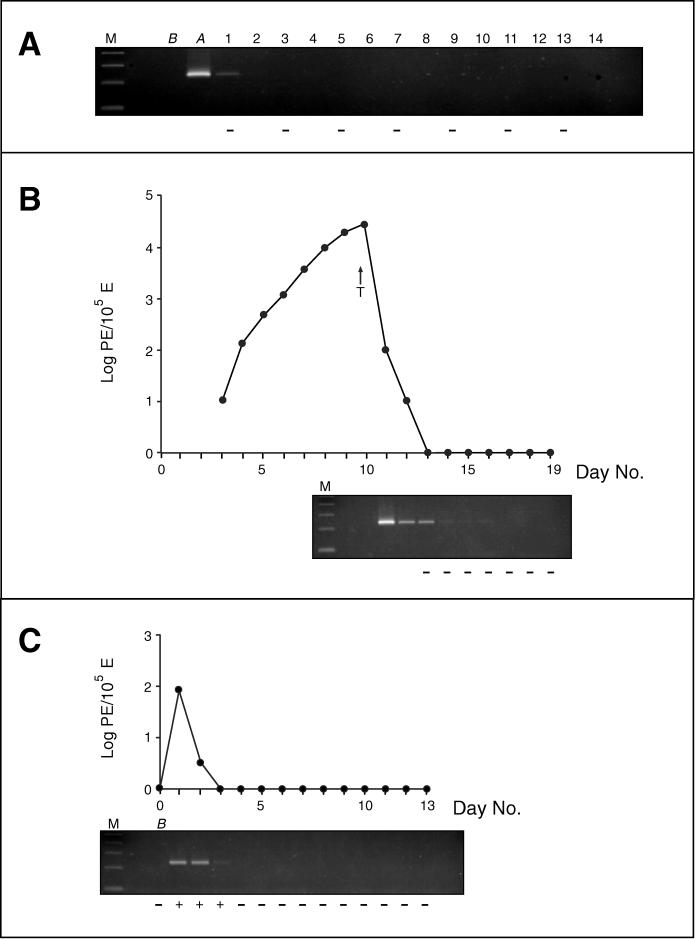
Detection and analysis of pathogens by PCR plays an important role in infectious disease research. The value of these studies would be diminished if nuclear material from dead parasites were found to remain in circulation for extended periods and thus result in positive amplification. This possibility was tested in experimental rodent malaria infections. Blood samples were obtained from infected mice during and following drug or immune clearance of Plasmodium chabaudi chabaudi parasitemias. Detection of parasite DNA by a sensitive Plasmodium-specific PCR amplification assay was associated with the presence of viable parasites, as detected by subinoculation. No parasite DNA could be detected by PCR 48 h after the injection of killed parasites into mice. Nuclear material from parasites removed by drug or immune responses is rapidly cleared from the circulation and does not contribute significantly to amplification. Thus, results from PCR analysis of malaria-infected blood accurately reflect the presence of live parasites.
Figures
References
-
- Babiker H, Ranford-Cartwright L, Sultan A, Satti G, Walliker D. Genetic evidence that RI chloroquine resistance of Plasmodium falciparum is caused by recrudescence of resistant parasites. Trans R Soc Trop Med Hyg. 1994;88:328–331. - PubMed
-
- Babiker H A, Ranford-Cartwright L C, Currie D, Charlwood J D, Billingsley P, Teuscher T, Walliker D. Random mating in a natural population of the malaria parasite Plasmodium falciparum. Parasitology. 1994;109:413–421. - PubMed
-
- Barker R H J, Banchongaksorn T, Courval J M, Suwonkerd W, Rimwungtragoon K, Wirth D F. A simple method to detect Plasmodium falciparum directly from blood samples using the polymerase chain reaction. Am J Trop Med Hyg. 1992;46:416–426. - PubMed
-
- Bottius E, Guanzirolli A, Trape J-F, Rogier C, Konate L, Druilhe P. Malaria: even more chronic in nature than previously thought; evidence for subpatent parasitaemia detectable by the polymerase chain reaction. Trans R Soc Trop Med Hyg. 1996;90:15–19. - PubMed
MeSH terms
Substances
LinkOut - more resources
Full Text Sources
Medical
