


Specific ribosomal DNA sequences from diverse environmental settings correlate with experimental contaminants
- PMID: 9687486
- PMCID: PMC106828
- DOI: 10.1128/AEM.64.8.3110-3113.1998
Specific ribosomal DNA sequences from diverse environmental settings correlate with experimental contaminants
Abstract
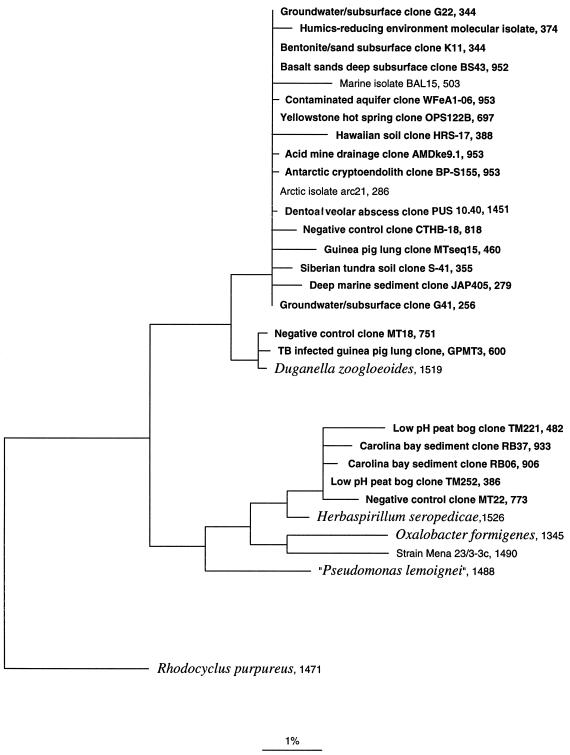
Phylogenetic analysis of 16S ribosomal DNA (rDNA) clones obtained by PCR from uncultured bacteria inhabiting a wide range of environments has increased our knowledge of bacterial diversity. One possible problem in the assessment of bacterial diversity based on sequence information is that PCR is exquisitely sensitive to contaminating 16S rDNA. This raises the possibility that some putative environmental rRNA sequences in fact correspond to contaminant sequences. To document potential contaminants, we cloned and sequenced PCR-amplified 16S rDNA fragments obtained at low levels in the absence of added template DNA. 16S rDNA sequences closely related to the genera Duganella (formerly Zoogloea), Acinetobacter, Stenotrophomonas, Escherichia, Leptothrix, and Herbaspirillum were identified in contaminant libraries and in clone libraries from diverse, generally low-biomass habitats. The rRNA sequences detected possibly are common contaminants in reagents used to prepare genomic DNA. Consequently, their detection in processed environmental samples may not reflect environmentally relevant organisms.
Figures
References
-
- Bahr M, Hobbie J E, Sogin M L. Bacterial diversity in an arctic lake: a freshwater SAR11 cluster. Aquat Microb Ecol. 1996;11:271–277.
Publication types
MeSH terms
Substances
Associated data
- Actions
- Actions
- Actions
- Actions
- Actions
- Actions
- Actions
- Actions
- Actions
- Actions
- Actions
- Actions
- Actions
- Actions
- Actions
- Actions
- Actions
- Actions
- Actions
LinkOut - more resources
Full Text Sources
Other Literature Sources
Molecular Biology Databases
