


The area code hypothesis revisited: olfactory receptors and other related transmembrane receptors may function as the last digits in a cell surface code for assembling embryos
- PMID: 9689035
- PMCID: PMC33877
- DOI: 10.1073/pnas.95.16.9072
The area code hypothesis revisited: olfactory receptors and other related transmembrane receptors may function as the last digits in a cell surface code for assembling embryos
Abstract
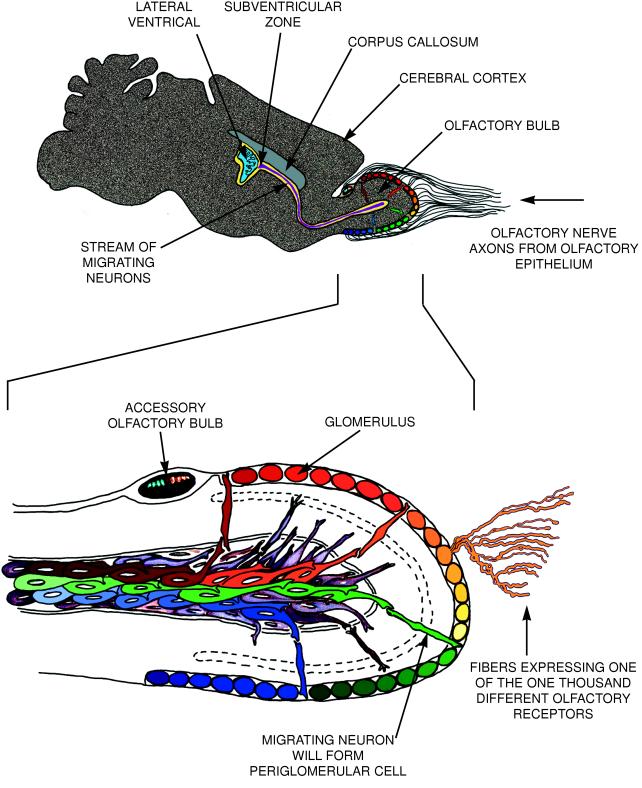
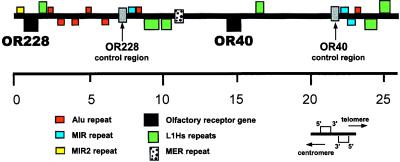
Recent evidence emerging from several laboratories, integrated with new data obtained by searching the genome databases, suggests that the area code hypothesis provides a good heuristic model for explaining the remarkable specificity of cell migration and tissue assembly that occurs throughout embryogenesis. The area code hypothesis proposes that cells assemble organisms, including their brains and nervous systems, with the aid of a molecular-addressing code that functions much like the country, area, regional, and local portions of the telephone dialing system. The complexity of the information required to code cells for the construction of entire organisms is so enormous that we assume that the code must make combinatorial use of members of large multigene families. Such a system would reuse the same receptors as molecular digits in various regions of the embryo, thus greatly reducing the total number of genes required. We present the hypothesis that members of the very large families of olfactory receptors and vomeronasal receptors fulfill the criteria proposed for area code molecules and could serve as the last digits in such a code. We discuss our evidence indicating that receptors of these families are expressed in many parts of developing embryos and suggest that they play a key functional role in cell recognition and targeting not only in the olfactory system but also throughout the brain and numerous other organs as they are assembled.
Figures
References
-
- Hood L, Huang H V, Dreyer W J. J Supramol Struct. 1977;7:531–559. - PubMed
-
- Dreyer W J. In: The Impact of Protein Chemistry on the Biomedical Sciences. Schechter A N, Dan A, Goldberger R F, editors. New York: Academic; 1984.
-
- Dreyer W, Roman J M. In: Advances in Experimental Medicine and Biology. Gene Expression and Cell–Cell Interactions in the Developing Nervous System. Lauder J M, Nelson P, editors. Vol. 181. New York: Plenum; 1984. pp. 87–97.
-
- Kayyem J F, Roman J M, Von Boxberg Y, Schwarz U, Dreyer W J. Eur J Biochem. 1992;208:1–8. - PubMed
Publication types
MeSH terms
Substances
LinkOut - more resources
Full Text Sources
