Dietary fibre and intestinal microflora: effects on intestinal morphometry and crypt branching
- PMID: 9691918
- PMCID: PMC1727135
- DOI: 10.1136/gut.42.6.799
Dietary fibre and intestinal microflora: effects on intestinal morphometry and crypt branching
Abstract
Background: Fermentable dietary fibre has many effects on the gastrointestinal tract. One is to alter epithelial crypt cell proliferation, especially in the colon. A discrepancy between epithelial cell production rates and intestinal weights has been noted previously: crypt cell production rates only increase if bacterial fermentation occurs, but intestinal wet weight can increase in the same animals without bacterial fermentation of fibre.
Aims: To quantify intestinal cell populations in order to resolve the above paradox.
Methods: Conventional and germ-free rats were fed fibre-free or fibre supplemented diets and their intestines were quantified by morphometry.
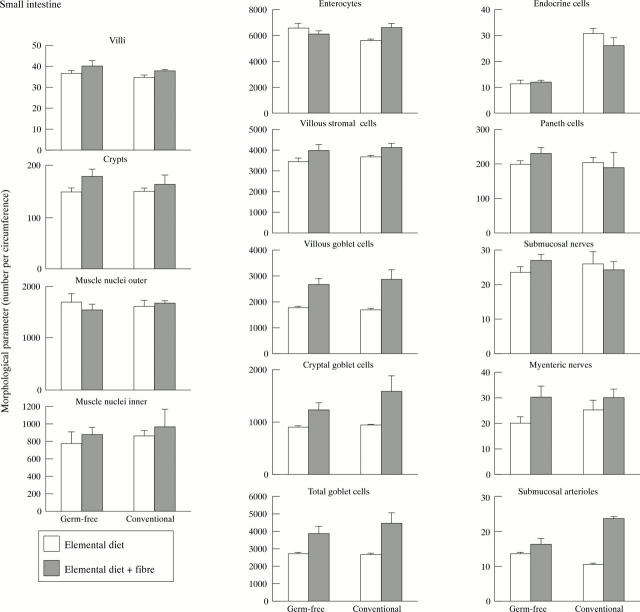
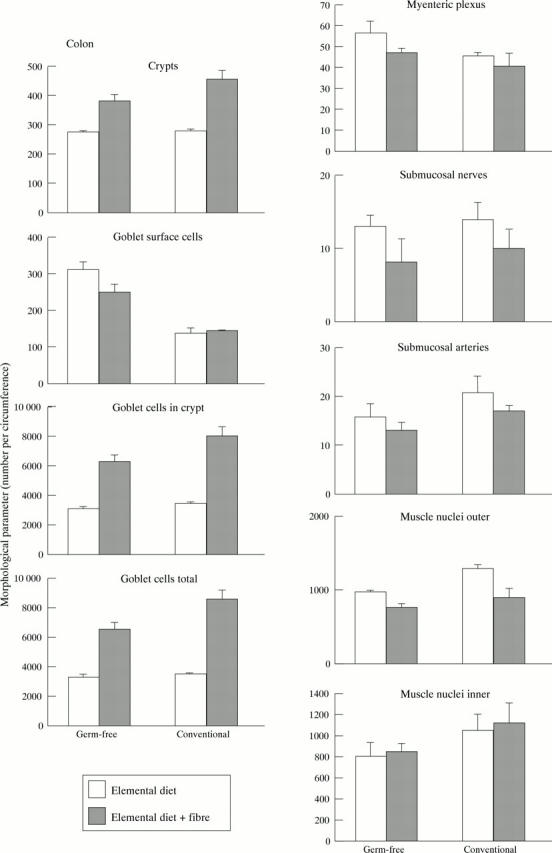
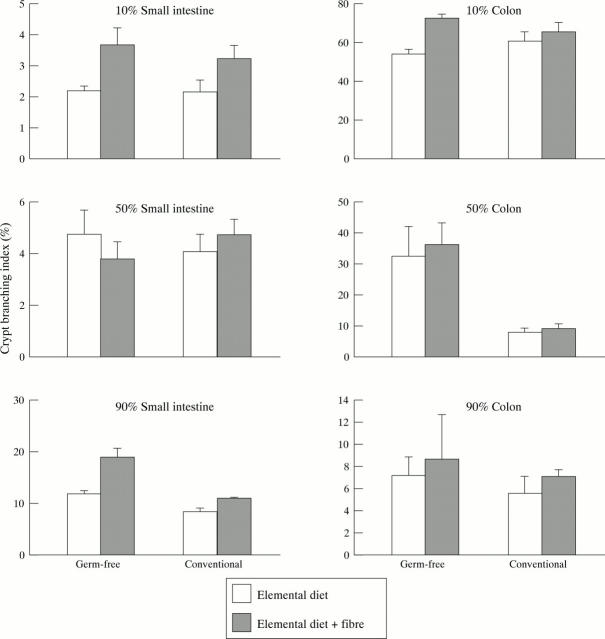
Results: There was evidence of fibre associated muscle hypertrophy in the colon, but the main effect of fibre was an increase in the number of crypts per circumference and also the number of branched crypts in the proximal colon in both groups. There was also a large increase in the number of branched crypts in the mid colon of the germ-free rats (both fibre-free and fibre supplemented). Fibre had a direct (bacteria independent) effect on goblet cells in the small intestine and a direct effect on the goblet cells in the colon, which was attenuated by the presence of bacteria. There was a notable decline in the number of enteroendocrine cells in the small intestine of the germ-free animals.
Conclusions: Fibre has several direct and indirect effects on the gut. In the proximal colon it can directly increase the number of crypts present. This provides a means for increasing intestinal mass in addition to intestinal crypt cell production.
Figures
References
MeSH terms
LinkOut - more resources
Full Text Sources
Medical