


Cooperative oligonucleotides mediating direct capture of hepatitis C virus RNA from serum
- PMID: 9705373
- PMCID: PMC105143
- DOI: 10.1128/JCM.36.9.2454-2459.1998
Cooperative oligonucleotides mediating direct capture of hepatitis C virus RNA from serum
Abstract
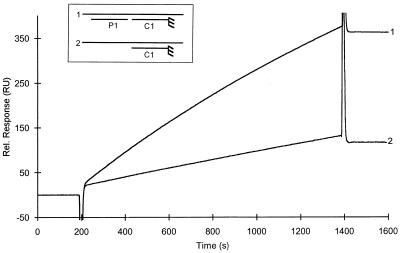
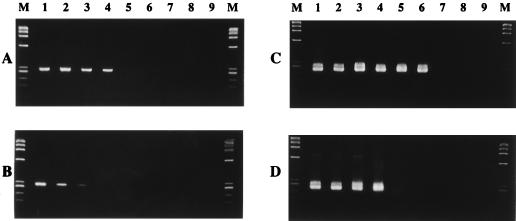
A novel method for direct capture of hepatitis C virus (HCV) RNA from clinical samples has been developed. This approach takes advantage of the cooperative interactions between adjacently hybridized oligonucleotides. Here, this cooperative effect was combined with solid-phase technology, whereby a capture probe was covalently coupled to magnetic beads and a second probe, which anneals adjacent to the capture probe site, was prehybridized in solution to the target. When these contiguously hybridized probes were used for the extraction of HCV RNA from clinical samples, the capture efficiency was increased up to 25-fold in comparison to capture with a single probe. The applicability of this sample preparation assay was further investigated by performing a comparative study with both a conventional guanidinium extraction method and a commercial quantitative assay.
Figures



References
-
- Beaulieux F, See D M, Leparc-Goffart I, Aymard M, Lina B. Use of magnetic beads versus guanidinium thiocyanate-phenol-chloroform RNA extraction followed by polymerase chain reaction for the rapid, sensitive detection of enterovirus RNA. Res Virol. 1997;148:11–15. - PubMed
-
- Chomczynski P, Sacchi N. Single-step method of RNA isolation by acid guanidinium thiocyanate-phenol-chloroform extraction. Anal Biochem. 1987;162:156–159. - PubMed
Publication types
MeSH terms
Substances
LinkOut - more resources
Full Text Sources
Other Literature Sources
Medical
