


Comparison of amplified ribosomal DNA restriction analysis, random amplified polymorphic DNA analysis, and amplified fragment length polymorphism fingerprinting for identification of Acinetobacter genomic species and typing of Acinetobacter baumannii
- PMID: 9705386
- PMCID: PMC105156
- DOI: 10.1128/JCM.36.9.2522-2529.1998
Comparison of amplified ribosomal DNA restriction analysis, random amplified polymorphic DNA analysis, and amplified fragment length polymorphism fingerprinting for identification of Acinetobacter genomic species and typing of Acinetobacter baumannii
Abstract
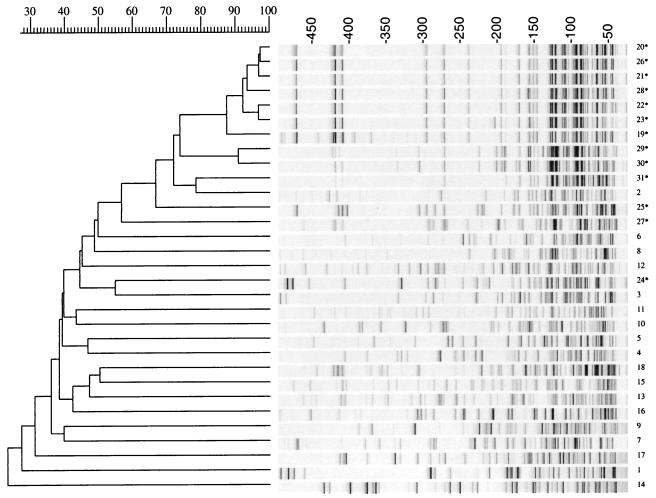
Thirty-one strains of Acinetobacter species, including type strains of the 18 genomic species and 13 clinical isolates, were compared by amplified ribosomal DNA restriction analysis (ARDRA), random amplified polymorphic DNA analysis (RAPD), and amplified fragment length polymorphism (AFLP) fingerprinting. ARDRA, performed with five different enzymes, showed low discriminatory power for differentiating Acinetobacter at the species and strain level. The standardized commercially available RAPD kit clearly enabled the discrimination of all Acinetobacter genomic species but showed great polymorphism between isolates of Acinetobacter baumannii. AFLP fingerprinting with radioactively as well as fluorescently labelled primers showed high discriminatory power for the identification of 18 Acinetobacter genomic species and typing of 13 clinical Acinetobacter isolates. Compared to radioactive AFLP, fluorescent AFLP was technically fast and simple to perform, and it permitted analysis with an automated DNA sequencer. Fluorescent AFLP seems particularly well suited for studying the epidemiology of nosocomial infections and outbreaks caused by Acinetobacter species.
Figures


Comment in
-
Considerations in evaluation of the applicability of DNA fingerprinting techniques for species differentiation.J Clin Microbiol. 1999 Oct;37(10):3428-9. doi: 10.1128/JCM.37.10.3428-3429.1999. J Clin Microbiol. 1999. PMID: 10515737 Free PMC article. No abstract available.
References
-
- Amyes S G B, Young H K. Mechanisms of antibiotic resistance in Acinetobacter spp.—genetics of resistance. In: Bergogne-Berezin E, Joly-Guillou M L, editors. Acinetobacter: microbiology, epidemiology, infections, management. Boca Raton, Fla: CRC Press, Inc.; 1996. pp. 185–223.
-
- Bouvet P J M, Grimont P A D. Taxonomy of the genus Acinetobacter with the recognition of Acinetobacter baumannii sp. nov., Acinetobacter haemolyticus sp. nov., Acinetobacter johnsonii sp. nov., and Acinetobacter junii sp. nov., and emended descriptions of Acinetobacter calcoaceticus and Acinetobacter lwoffii. Int J Syst Bacteriol. 1986;36:228–240.
Publication types
MeSH terms
Substances
LinkOut - more resources
Full Text Sources
Molecular Biology Databases
