


p53-regulated apoptosis is differentiation dependent in ultraviolet B-irradiated mouse keratinocytes
- PMID: 9708817
- PMCID: PMC1852971
- DOI: 10.1016/S0002-9440(10)65600-3
p53-regulated apoptosis is differentiation dependent in ultraviolet B-irradiated mouse keratinocytes
Abstract
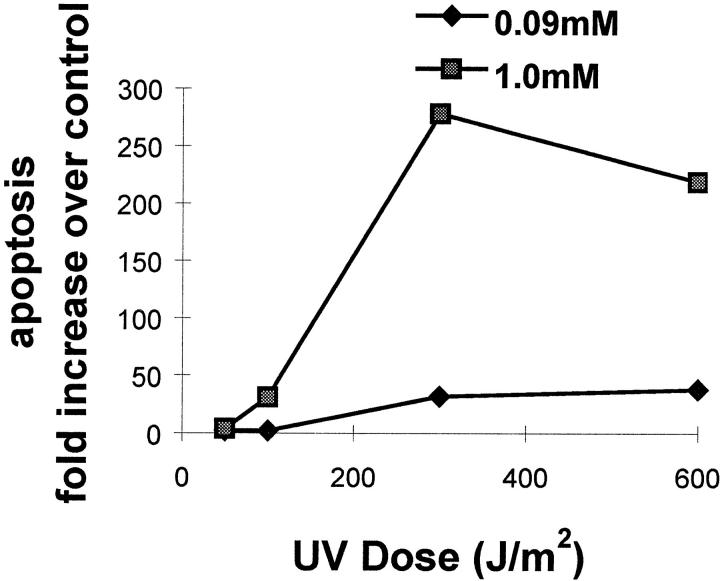
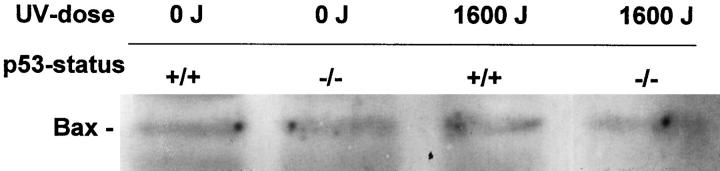
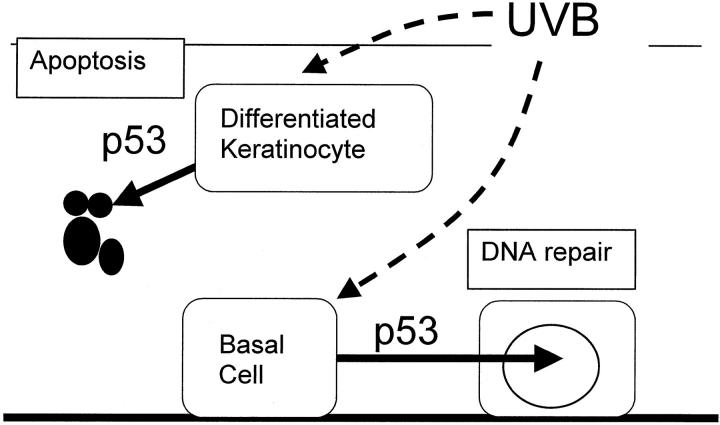
Previous studies from our laboratory, using p53 transgenic mice, have suggested that ultraviolet (UV) light-induced keratinocyte apoptosis in the skin is not affected by overexpression of mutant p53 protein. To further elucidate a possible role for p53 in UV-induced keratinocyte cell death, we now examine apoptosis in skin and isolated keratinocytes from p53 null (-/-) mice and assess the influence of cell differentiation on this process. In vivo, using this knockout model, epidermal keratinocytes in p53-/- mice exhibited only a 5.2-fold increase in apoptosis after 2000 J/m2 UVB irradiation compared with a 26.3-fold increase in normal control animals. If this p53-dependent apoptosis is important in elimination of precancerous, UV-damaged keratinocytes, then it should be active in the undifferentiated cells of the epidermal basal layer. To test this hypothesis, we examined the effect of differentiation on UV-induced apoptosis in primary cultures of murine and human keratinocytes. Apoptosis was p53-independent in undifferentiated murine keratinocytes, which exhibited relative resistance to UVB-induced killing with only a 1.5-fold increase in apoptosis in p53+/+ cells and a 1.4-fold increase in p53-/- cells. Differentiated keratinocytes, in contrast, showed a 9.4-fold UVB induction of apoptosis in p53+/+ cells, almost three times the induction observed in p53-/- cells. This UV-induced difference in apoptosis was observed when keratinocytes were cultured on type IV collagen substrate, but not on plastic alone. Western blotting of UV-irradiated, differentiated keratinocytes did not support a role for either Bax or Bcl-2 in this process. In support of these findings in mice, cell death in human cultured keratinocytes also occurred in a differentiation-associated fashion. We conclude that p53-induced apoptosis eliminates damaged keratinocytes in the differentiated cell compartment, but this mechanism is not active in the basal, undifferentiated cells and is therefore of questionable significance in protection against skin cancer induction.
Figures
References
-
- Murphy GF: Histology of the skin. Elder D eds. Histopathology of the skin. 1997, :pp 5-11 Lippincott-Raven, Philadelphia,
-
- Gilchrest BA, Soter NA, Stoff JS, Mihm MC, Jr: The human sunburn reaction: histologic and biochemical studies. J Am Acad Dermatol 1981, 5:411-422 - PubMed
-
- Daniels F: Acute cutaneous effects of light. Ben-Hur E Rosenthal I eds. Photomedicine. 1990, :pp 45-61 CRC Press, Inc., Boca Raton, FL,
-
- Hollstein M, Sidransky D, Vogelstein B, Harris CC: p53 mutations in human cancers. Science 1991, 253:49-53 - PubMed
-
- Kastan MB, Onyine O, Sidransky D, Vogelstein B, Craig RW: Participation of p53 protein in the cellular response to DNA damage. Cancer Res 1991, 51:6304-6311 - PubMed
Publication types
MeSH terms
Substances
LinkOut - more resources
Full Text Sources
Other Literature Sources
Research Materials
Miscellaneous
