Routine protein energy supplementation in adults: systematic review
- PMID: 9712593
- PMCID: PMC28640
- DOI: 10.1136/bmj.317.7157.495
Routine protein energy supplementation in adults: systematic review
Abstract
Objectives: To determine whether routine oral and enteral nutritional supplementation can improve the weight, anthropometry, and survival of adult patients.
Design: Systematic review of randomised controlled trials of oral or enteral protein supplementation in adults. Trials were identified from Medline (Silver Platter 3.11, 1966-96), reference lists of identified studies and review articles, and communication with feed manufacturers.
Subjects: Randomised controlled trials comparing oral or enteral protein supplementation with no routine supplementation. All trials of adult subjects were included except those addressing nutrition in pregnancy.
Main outcome measures: Change in body weight and anthropometry (mid-arm muscle circumference), and all cause case fatality recorded at the end of scheduled follow up. Body weight and anthropometry were analysed as the weighted mean difference and 95% confidence intervals of the percentage change in these variables. Case fatality was analysed with odds ratio and 95% confidence intervals.
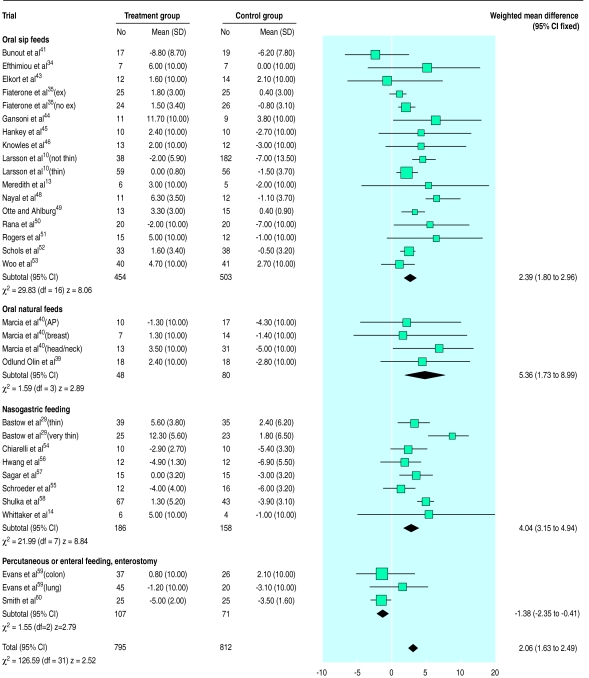
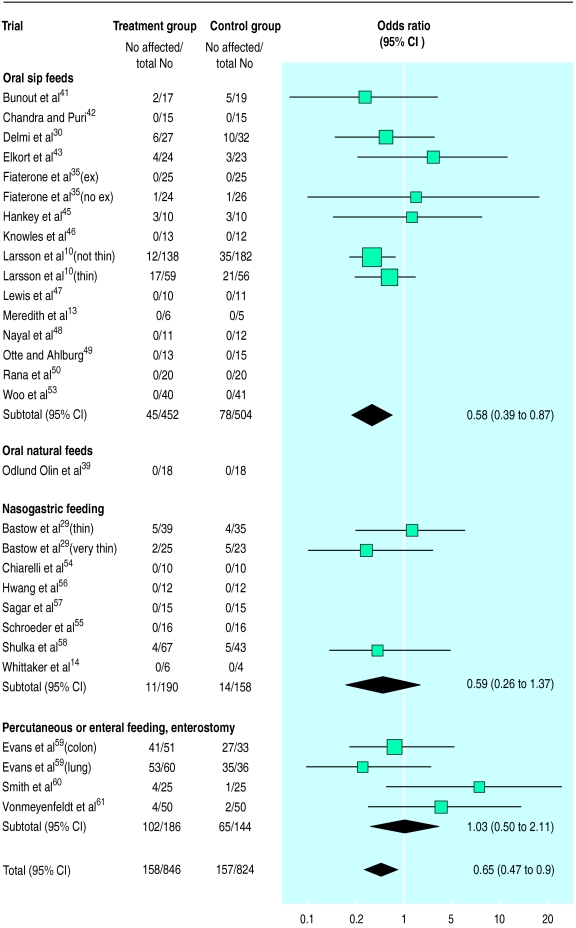
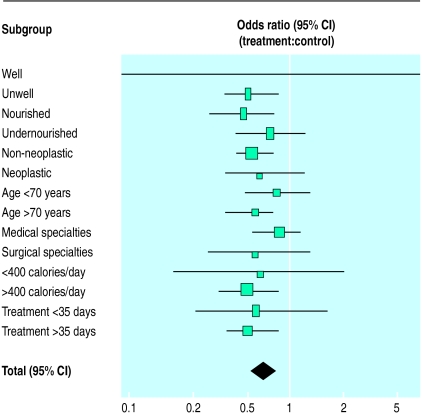
Results: 32 eligible reports (2286 randomised patients) published between February 1979 and July 1996 were identified, of which 30 (93.8%) (2062 randomised patients) reported outcomes of interest. Case fatality data were available for 1670 (81%) patients, and continuous variable data for up to 1607 (78%) patients. The treatment group receiving routine nutritional supplementation showed consistently improved changes in body weight and anthropometry compared with controls; weighted mean difference 2.06% (95% confidence interval 1.63% to 2.49%) and 3.16% (2.43% to 3.89%) respectively. The pooled odds ratio for death in the treatment group was 0.66 (0.48 to 0.91, 2P<0.01). Apparent benefits were observed in several prespecified subgroups of patients, treatment settings, and interventions, but were not evident if trials with less robust methodology were excluded.
Conclusions: Routine oral or enteral supplementation seems to improve the nutritional indices of adult patients, but there are insufficient data in trials which meet strict methodological criteria to be certain if mortality is reduced. Benefits were not restricted to particular patient groups. Further large pragmatic randomised controlled trials of routine nutritional supplementation are justified.
Figures
Comment in
-
Prescribing of nutritional supplements is increasing in general practice.BMJ. 1999 Mar 20;318(7186):808. doi: 10.1136/bmj.318.7186.808. BMJ. 1999. PMID: 10082719 Free PMC article. No abstract available.
References
-
- Potter JM, Klipstein K, Reilly JJ, Roberts MA. The nutritional status and clinical course of acute admissions to a geriatric unit. Age Ageing. 1995;24:131–136. - PubMed
-
- Allison SP. Malnutrition in hospital patients. Hospital Update 1995;Feb:55-60.
-
- Lennard-Jones JE. A positive approach to nutrition as treatment. London: Kings Fund; 1992.
-
- Klipstein-Grobusch K, Reilly JJ, Potter JM, Edwards CA, Roberts MA. Energy intake and expenditure in elderly patients admitted to hospital with acute illness. Br J Nutr. 1995;73:323–340. - PubMed
Publication types
MeSH terms
Substances
LinkOut - more resources
Full Text Sources
Medical