


Pigeon fanciers' lung: effects of smoking on serum and salivary antibody responses to pigeon antigens
- PMID: 9717964
- PMCID: PMC1905045
- DOI: 10.1046/j.1365-2249.1998.00653.x
Pigeon fanciers' lung: effects of smoking on serum and salivary antibody responses to pigeon antigens
Abstract
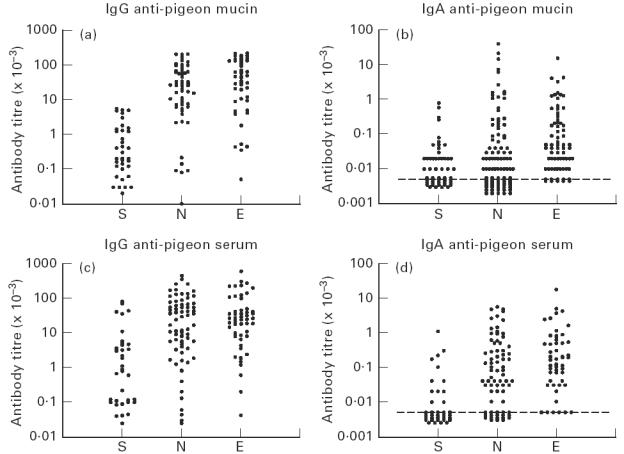
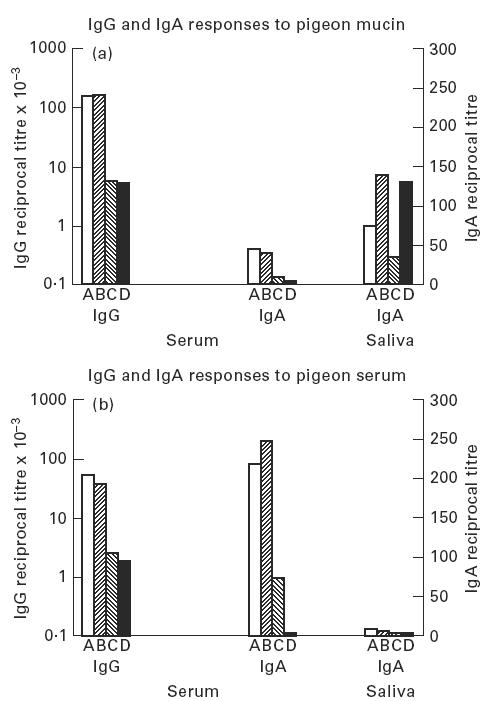
A reduced prevalence of pigeon fanciers' lung has been reported in pigeon breeders who smoke cigarettes. Serum and salivary antibodies to pigeon intestinal mucin and pigeon serum proteins were investigated in 227 pigeon fanciers, subdivided according to smoking habit and clinical status. Smokers had a lower incidence of precipitating antibodies to pigeon antigens and lower titres of serum IgG and IgA antibodies to mucin and to pigeon serum proteins in ELISA compared with non-smokers and ex-smokers. In contrast, IgG antibody titres to tetanus toxoid were similar in smoking and non-smoking groups. In contrast to serum antibodies, salivary IgA antibody titres to pigeon antigens were similar in smokers and non- or ex-smokers. Approximately one third of the smokers reported symptoms consistent with pigeon fanciers' lung but did not have precipitating antibodies. Only some individuals with precipitating antibodies had disease symptoms, and IgG antibody titres in these individuals were not significantly higher than in many asymptomatic individuals. Salivary IgA titres against pigeon mucin were significantly higher in asymptomatic individuals, consistent with a protective role for these antibodies. The results confirm that smoking is associated with a decreased serum antibody response to inhaled pigeon antigens, affecting IgG1, IgG2 and IgA responses, but this impairment does not extend to salivary IgA or to antibody responses to a parenterally administered protein antigen. The fact that responses to pigeon serum proteins and to pigeon intestinal mucin were similarly affected suggests that cigarette smoking depresses both T-independent and T-dependent responses to inhaled antigens.
Figures
References
-
- Barboriak JJ, Sosman AJ, Reed CE. Serological studies in pigeon breeders' disease. J Lab Clin Med. 1965;65:600–4. - PubMed
-
- Fink JN, Tebo T, Barboriak JJ. Differences in immune responses of pigeon breeders to pigeon serum proteins. J Lab Clin Med. 1969;74:325–30. - PubMed
-
- Hargreave FE, Pepys J. Allergic respiratory reactions in bird fanciers provoked by allergen inhalation provocation tests. J Allergy Clin Immunol. 1972;50:157–73. - PubMed
-
- Tebo HT, Fredricks WW, Roberts RC. The antigens of pigeon breeders disease. II. Isolation and characterisation of antigen PDE I. Int Arch Allergy Appl Immunol. 1977;54:553–9. - PubMed
-
- Banham SW, MacKenzie H, McSharry C, Lynch PP, Boyd G. Antibody against a pigeon bloom extract: a further antigen in pigeon fanciers' lung. Clin Allergy. 1982;12:173–8. - PubMed
Publication types
MeSH terms
Substances
Grants and funding
LinkOut - more resources
Full Text Sources
Miscellaneous
