


Confirmation of the human-pathogenic microsporidia Enterocytozoon bieneusi, Encephalitozoon intestinalis, and Vittaforma corneae in water
- PMID: 9726879
- PMCID: PMC106729
- DOI: 10.1128/AEM.64.9.3332-3335.1998
Confirmation of the human-pathogenic microsporidia Enterocytozoon bieneusi, Encephalitozoon intestinalis, and Vittaforma corneae in water
Abstract
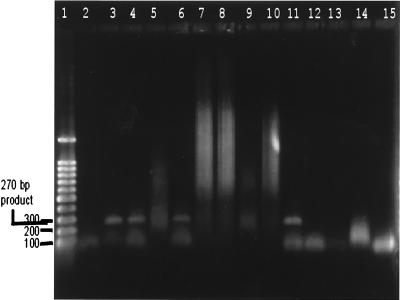
Microsporidia, as a group, cause a wide range of infections, though two species of microsporidia in particular, Enterocytozoon bieneusi and Encephalitozoon intestinalis, are associated with gastrointestinal disease in humans. To date, the mode of transmission and environmental occurrence of microsporidia have not been elucidated due to lack of sensitive and specific screening methods. The present study was undertaken with recently developed methods to screen several significant water sources. Water concentrates were subjected to community DNA extraction followed by microsporidium-specific PCR amplification, PCR sequencing, and database homology comparison. A total of 14 water concentrates were screened; 7 of these contained human-pathogenic microsporidia. The presence of Encephalitozoon intestinalis was confirmed in tertiary sewage effluent, surface water, and groundwater; the presence of Enterocytozoon bieneusi was confirmed in surface water; and the presence of Vittaforma corneae was confirmed in tertiary effluent. Thus, this study represents the first confirmation, to the species level, of human-pathogenic microsporidia in water, indicating that these human-pathogenic microsporidia may be waterborne pathogens.
Figures
References
-
- Curry A, Canning E U. Human microsporidiosis. J Infect. 1993;27:229–236. - PubMed
-
- Dowd, S. E. Unpublished results.
-
- Dowd S E, Faries F C, Mitchell F, Wickersham L, Kinney A, Pillai S D. Abstracts of the 97th General Meeting of the American Society for Microbiology. Washington, D.C: American Society for Microbiology; 1997. The occurrence and fate of Cryptosporidium sp. and Giardia sp. around confined animal feeding operations (CAFOs), abstr. Q-28; p. 460.
-
- Enriquez, F. J. (University of Arizona). Personal communication.
MeSH terms
Substances
LinkOut - more resources
Full Text Sources
